

On the importance of satire
The Hindu
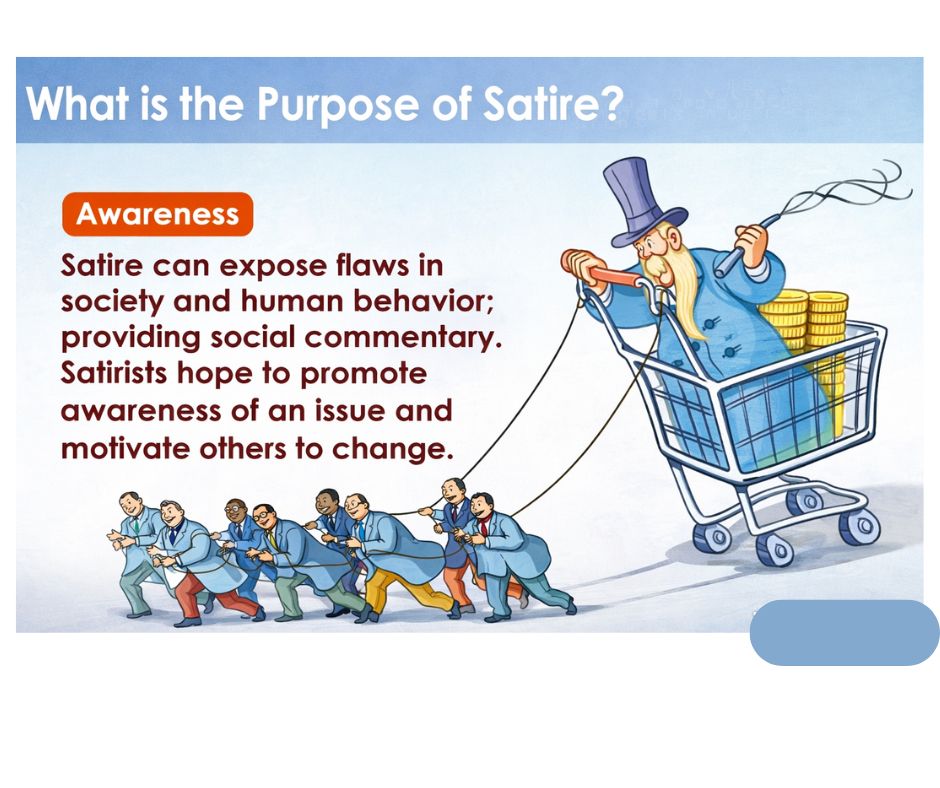
I. Central Thesis of the Article
The article argues that satire is not a threat to national security or constitutional order but an essential democratic instrument that exposes hypocrisy, absurdity and abuse of power. It critiques the growing tendency to treat satire as subversive or destabilising and situates the debate within constitutional free speech jurisprudence.
The core message: satire strengthens democracy by challenging authority and provoking public reflection.
II. Key Arguments Presented
1. Satire as a Democratic Corrective
- Satire questions authority and punctures inflated power narratives.
- It acts as a mirror reflecting contradictions in governance and society.
- Democracies require space for discomfort and dissent.
The article implies that satire performs a civic function by stimulating informed debate.
2. Judicial Protection of Satire
- Supreme Court precedents affirm that free speech includes artistic and political expression.
- Restrictions must pass the test of “reasonable restrictions” under Article 19(2).
- Offence alone cannot justify censorship.
The article aligns satire within constitutional morality rather than moral policing.
3. Misuse of Security or Public Order Justifications
- Governments often invoke national security or public order to suppress criticism.
- There is a creeping conflation of satire with sedition or destabilisation.
This suggests institutional overreach.
4. Global Democratic Norms
- Mature democracies tolerate satire as part of free political culture.
- Suppression risks signalling democratic backsliding.
III. Author’s Stance
The stance is clearly pro-free speech and pro-satire. It is normative, defending liberal constitutionalism and warning against authoritarian impulses.
The tone reflects concern over shrinking civic space and expanding state intervention in expression.
IV. Possible Biases or Limitations
1. Underestimation of Harm
The article may downplay the potential of satire to:
- Spread misinformation
- Reinforce stereotypes
- Trigger communal tensions
In deeply polarised societies, satire can sometimes be weaponised.
2. Limited Attention to Digital Virality
Modern satire circulates instantly via social media. Its reach and impact differ from traditional print satire, raising regulatory complexities not fully explored.
3. Binary Framing
The piece frames the issue as democracy versus suppression, potentially overlooking nuanced regulatory needs.
V. Constitutional and Legal Dimensions
Article 19(1)(a): Freedom of Speech
- Protects artistic and political expression.
Article 19(2): Reasonable Restrictions
- Public order
- Decency or morality
- Security of the State
- Defamation
Satire falls within protected speech unless it directly incites violence or hatred.
Judicial trends favour proportionality and narrow interpretation of restrictions.
VI. Pros of Protecting Satire
- Encourages political accountability.
- Prevents concentration of unchecked power.
- Strengthens democratic resilience.
- Fosters critical thinking in society.
Satire often communicates complex critique in accessible form.
VII. Risks and Counter-Concerns
- Potential communal polarisation.
- Deepfake satire blurring truth and parody.
- Digital echo chambers amplifying outrage.
- Risk of incitement disguised as humour.
Hence, a balance is required between liberty and responsibility.
VIII. Policy Implications
1. Clear Free Speech Guidelines
Ambiguity in laws such as sedition, criminal defamation, and IT-related regulations must be reduced.
2. Proportional Enforcement
Police and administrative authorities require training on constitutional limits.
3. Platform Accountability
Digital intermediaries must ensure transparency without over-censorship.
4. Civic Literacy
Promoting media literacy can help citizens distinguish satire from misinformation.
IX. Real-World Impact
- Chilling effect on artists and comedians if arbitrary action persists.
- Shrinking democratic discourse space.
- International perception of India’s democratic health.
- Youth political engagement affected by digital satire regulation.
X. UPSC GS Paper Linkages
GS Paper II
- Fundamental Rights
- Judiciary and constitutional interpretation
- Role of civil society
GS Paper IV
- Ethics in public life
- Tolerance and dissent
- Moral courage
GS Paper I
- Society: freedom, pluralism, social harmony
Essay
- Freedom vs responsibility
- Democracy and dissent
XI. Balanced Conclusion and Future Perspective
Satire, by its nature, unsettles power and questions certainties. A confident democracy absorbs criticism rather than criminalising it. However, in a digital age marked by polarisation and misinformation, the defence of satire must be accompanied by responsible expression and proportionate regulation.
The constitutional vision of India rests on liberty balanced with order. Preserving space for satire is ultimately a test of democratic maturity. A robust republic is not weakened by humour—it is weakened when humour becomes fear-driven and silenced.
