

Organ Donors Largely Women, Recipients Are Men: India's Gender Gap

Organ Donors Largely Women, Recipients Are Men: India's Gender Gap
Relevance: GS Paper II (Health, Gender Issues, Government Policies)
Why in the News?
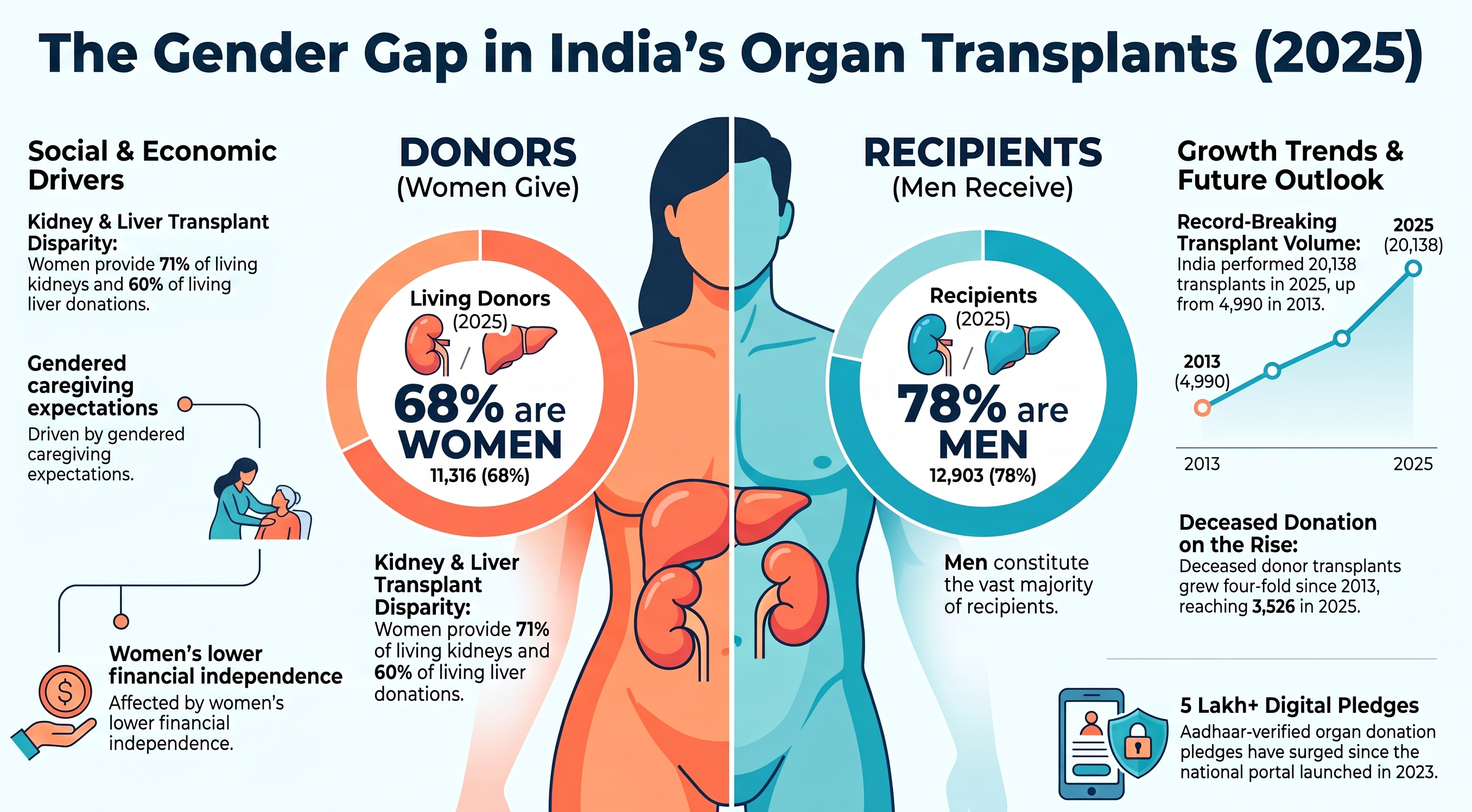
- There is a clear gender gap among living organ donors in India: 68% of donors are women, while 78% of recipients in 2025 were men, per the latest data from the Union Health Ministry.
- Only 22% of living organ recipients in 2025 were women, according to the annual report from the National Organ and Tissue Transplant Organisation (NOTTO).
The Overall Gender Data (2025)
- 11,316 women (68%) were living organ donors, compared to just 5,298 men (32%).
- 12,903 men (78%) were recipients, compared to 3,707 women (22%).
- Kidney and liver transplants are the most common in India, and many women donate these organs to male relatives; in 2025, a woman was also recorded donating a small bowel to a male family member.
Kidney Transplant Gender Breakdown
- 71% of living kidney donors were women (8,835), while only 29% were men (3,656).
- 77% of kidney recipients were men (9,656), and just 23% were women (2,835).
Liver Transplant Gender Breakdown
- 60% of living liver donors were women (2,480), while 40% were men (1,642).
- Among recipients, 79% were men (3,248) and 21% were women (871).
Overall Transplant Volume Trends
- Kidney transplants made up 62.03% of all organ transplants in India in 2025, followed by liver transplants at 20.46%.
- India performed 20,138 organ transplants in 2025 — the highest ever in a single year.
- This is four times the 4,990 transplants performed in 2013, and a 6.5% increase from 18,911 in 2024.
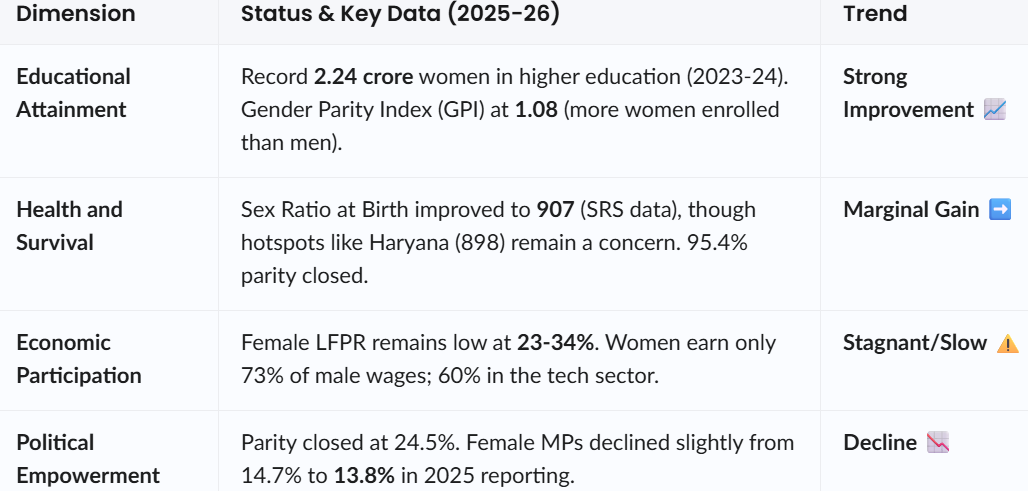
The Four Pillars of the Gender Gap (Current Status)

Deceased Donor Transplants
- Deceased donor organ transplants grew significantly — from 837 in 2013 to 3,526 in 2025, more than a four-fold increase.
- Deceased donor kidney transplants: 1,986 in 2025, up from 1,918 (2024), 1,635 (2023), and 1,541 (2022).
Living Donor Transplant Trends by Year
- Kidney (living donor): 12,491 (2025), 11,558 (2024), 11,791 (2023), 10,164 (2022).
- Liver (total): 5,154 (2025), 4,901 (2024), 4,491 (2023), 3,920 (2022).
- Kidney-pancreas: saw a dip — 26 (2025) vs. 37 (2024); 23 (2023) vs. 22 (2022).
- Small bowel: saw a jump — 23 (2025) vs. just 9 (2024); 16 (2023) vs. 3 (2022).
Organ Donation Pledges
- Since the national digital pledge portal launched in 2023, over five lakh people in India have made Aadhaar-verified organ donation pledges.
- One deceased donor can potentially save up to eight lives.
Significance
- The stark gender gap — women overwhelmingly serving as donors while men predominantly receive organs — points to underlying social and economic factors, including women's lower access to healthcare decision-making, financial dependency, and gendered family expectations around caregiving and self-sacrifice.
- This pattern is consistent with global literature on gendered organ donation trends, but the scale of the imbalance in India (68% vs. 32% donor split; 78% vs. 22% recipient split) is notably pronounced.
- The record transplant numbers reflect improving transplant infrastructure and awareness, but the growth in deceased donor transplants (still a fraction of living donor transplants) suggests significant room remains to reduce reliance on living donors — which could help address the gender imbalance by reducing the burden placed disproportionately on female family members.
