

PM: India poised to lead world as growth engine
Hindustan Times
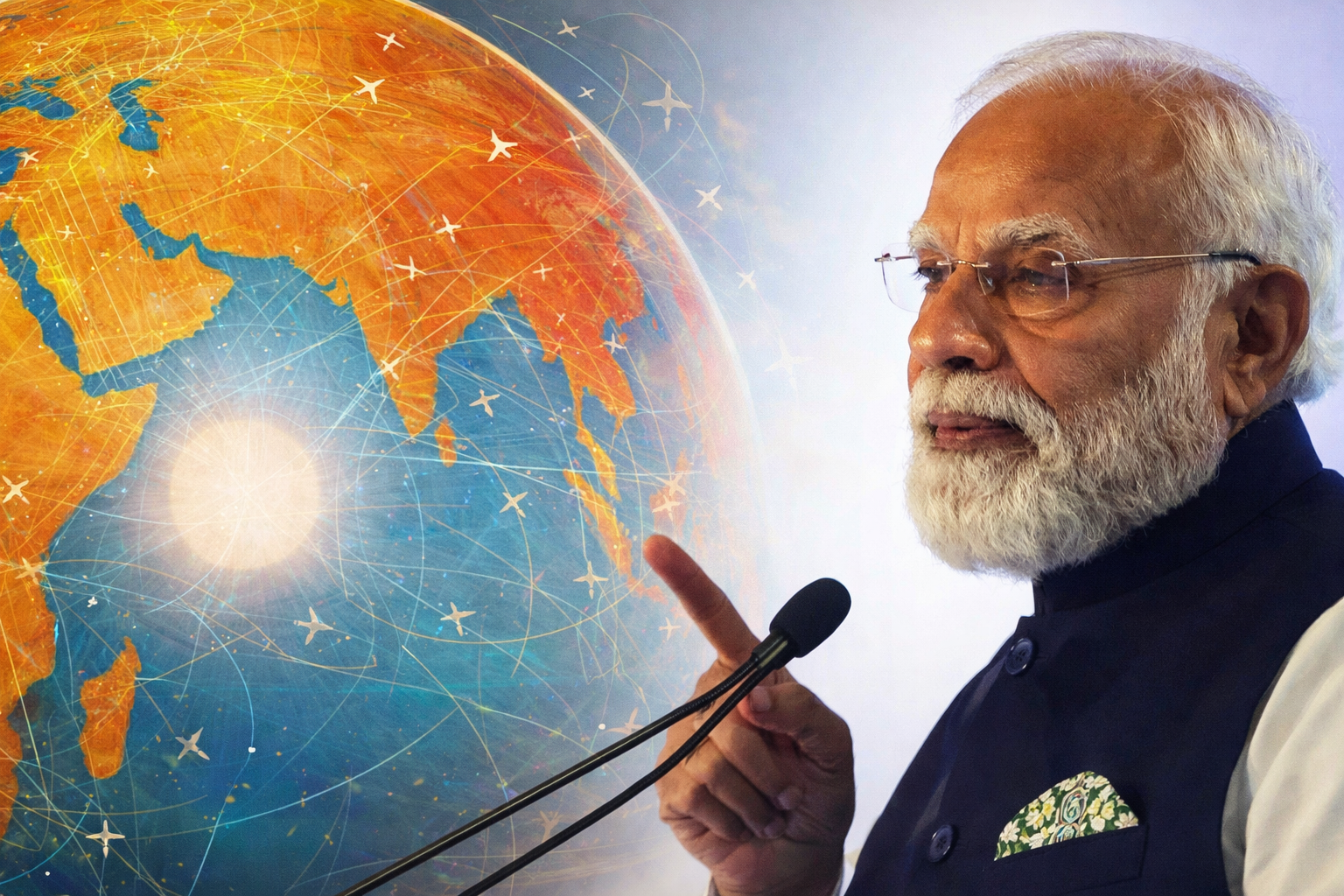
Context and Core Theme
The article reports the Prime Minister’s assertion that India is positioned to become a leading driver of global economic growth. The narrative situates India’s rise within structural reforms, digital public infrastructure, demographic dividend, macroeconomic stability, and global supply-chain realignment.
The central claim: India’s domestic reform momentum and geopolitical positioning have created conditions for sustained high growth and global economic leadership.
Key Arguments Presented
Digital public infrastructure as competitive advantage
The article highlights UPI and broader digital governance reforms as transformative, improving efficiency, inclusion, and delivery. India’s digital stack is framed as globally significant.
Macroeconomic resilience post-pandemic
India’s recovery from COVID-19 and global shocks is cited as evidence of structural strength and reform credibility.
Demographic dividend and workforce potential
A young population is portrayed as a long-term growth engine if matched with skilling and employment generation.
Reform continuity and political stability
Policy predictability and continuity are presented as key enablers of investment and global confidence.
Global context of supply-chain diversification
With multinational firms seeking alternatives to China-centric manufacturing, India is positioned as an attractive destination.
Author’s Stance
The tone is largely affirmative and forward-looking, reflecting the Prime Minister’s optimistic framing. The article presents achievements and projections without deep interrogation of countervailing risks.
Biases and Perspective
Pro-government narrative bias
The emphasis is on reform achievements and growth potential, with limited engagement on unemployment, inequality, or sectoral stress.
Growth-centric framing
The focus is on macroeconomic momentum rather than distributional outcomes.
Limited global comparative scrutiny
The claim of global leadership is asserted more than analytically benchmarked.
Pros and Cons Highlighted
Pros
- Showcases India’s digital governance innovation
- Reinforces investor confidence
- Signals reform continuity
- Aligns growth narrative with geopolitical opportunity
Cons
- Growth optimism may understate structural constraints
- Employment elasticity of growth remains uncertain
- Manufacturing competitiveness gaps persist
- Regional disparities may widen without targeted intervention
Policy Implications
Sustained structural reforms
Ease of doing business, logistics reform, judicial efficiency, and regulatory simplification must deepen.
Human capital investment
Education, skilling, and healthcare remain critical to convert demographic advantage into productivity.
Manufacturing ecosystem development
Supply-chain integration requires infrastructure, export facilitation, and stable trade policy.
Inclusive growth agenda
Rural distress, MSME financing, and job creation need parallel emphasis.
Real-World Impact
- Investors may perceive India as a stable growth destination
- Youth population faces both opportunity and pressure for employment generation
- Global supply chains may increasingly integrate Indian manufacturing
- Policy discourse shifts toward growth leadership narratives
UPSC GS Paper Alignment
GS Paper III (Economy)
- Growth drivers and structural reforms
- Digital economy and public infrastructure
- Demographic dividend
GS Paper II (International Relations)
- India’s role in global economic governance
- Supply-chain realignment
Essay Paper
- “India as a global growth engine: promise and paradox”
- “Demographic dividend: window of opportunity or challenge?”
Balanced Conclusion and Future Perspective
The article articulates a confident vision of India as a central pillar of global growth. Digital innovation, reform continuity, and demographic strength provide tangible foundations for optimism.
However, global leadership in growth is not secured by narrative alone. It demands sustained productivity gains, employment-intensive expansion, institutional depth, and inclusive outcomes. If structural bottlenecks are addressed with equal urgency as digital innovation, India’s aspiration to become a global growth engine may transition from projection to durable reality.
