

Putin’s Visit to India and the Aftermath
The Hindu
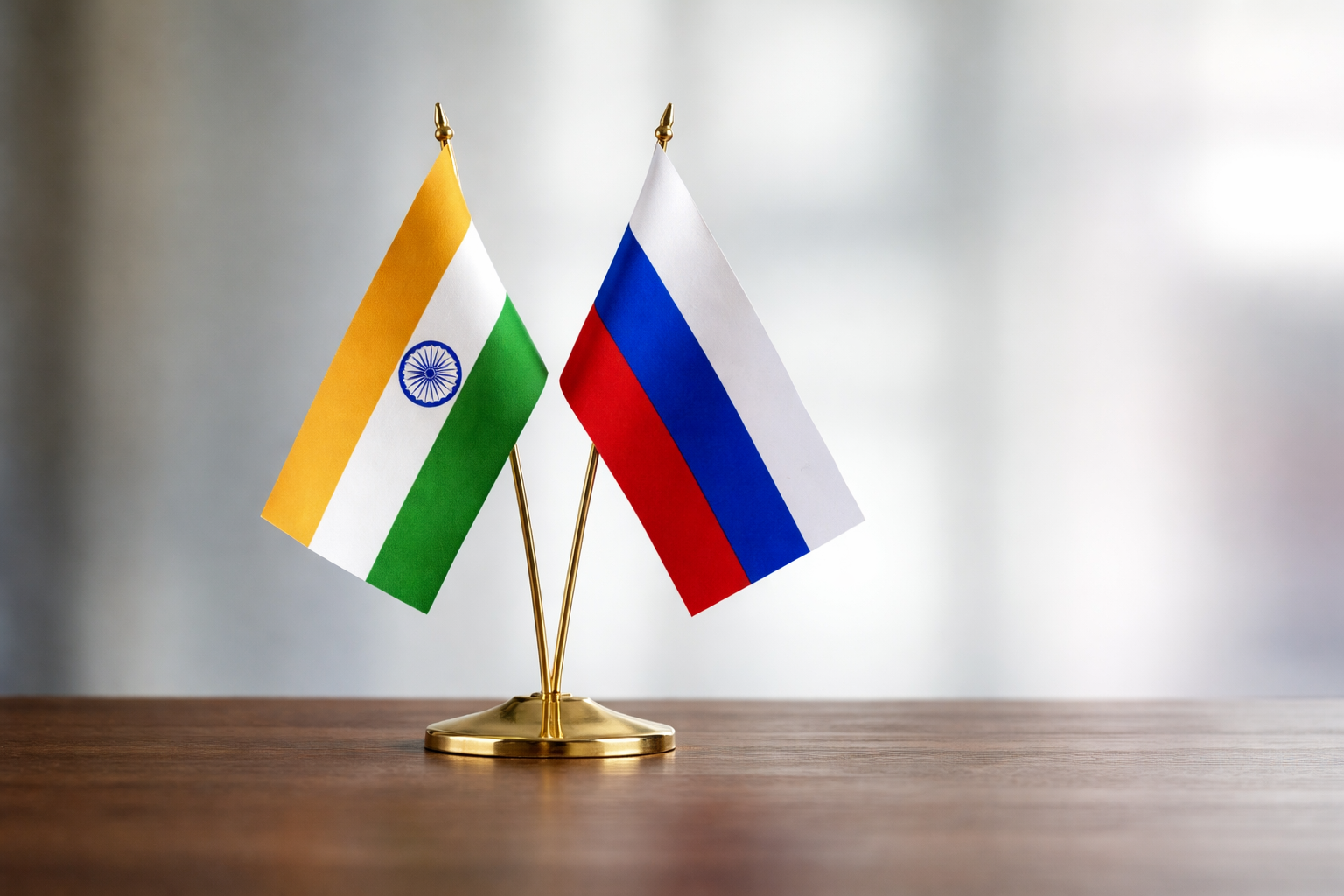
I. Context and Central Theme
The article examines the strategic, diplomatic, and geopolitical implications of Russian President Vladimir Putin’s visit to India, situating it against the backdrop of global flux marked by the Ukraine war, Western sanctions on Russia, and shifting power alignments. It seeks to interpret not merely the visit, but the signals embedded in India’s conduct before, during, and after the engagement.
The piece operates at the intersection of India’s strategic autonomy, great-power diplomacy, and regional security calculations.
II. Key Arguments Advanced
1. India–Russia Relationship as a Legacy Strategic Partnership
The article reiterates that India–Russia ties are historically deep, built on defence cooperation, diplomatic support in multilateral forums, and mutual trust cultivated over decades.
2. Strategic Autonomy as the Core Driver
India’s engagement with Russia is framed as an extension of its long-standing policy of strategic autonomy, not alignment. The visit is portrayed as a calibrated assertion of independence amid Western pressure.
3. Diplomatic Signalling to the West
The article suggests that India’s handling of the visit sends a subtle message: India will not outsource its foreign policy decisions, even during periods of intense global polarisation.
4. Limits of the Relationship
While acknowledging continuity, the article notes silences and omissions—particularly on defence announcements and explicit political declarations—indicating a relationship under quiet recalibration.
5. Ukraine War as the Shadow Context
The conflict in Ukraine is treated as the unspoken but dominant factor reshaping the India–Russia equation, constraining overt closeness while not severing cooperation.
III. Author’s Stance
The author adopts a measured realist stance, neither celebratory nor alarmist. The tone is analytical, suggesting that:
• India values Russia but is cautious
• The relationship is stable, not static
• Symbolism matters, but restraint matters more
The article ultimately defends India’s diplomatic discretion while warning against complacency.
IV. Biases and Editorial Slant
1. Pro–Strategic Autonomy Bias
The article clearly privileges India’s non-aligned tradition, viewing Western criticism as largely external pressure rather than legitimate concern.
2. Underplaying Moral Dimensions
Ethical questions arising from the Ukraine conflict—humanitarian costs, international law—are not foregrounded, reflecting a realist rather than normative lens.
3. Elite Diplomatic Perspective
The focus is on statecraft and signalling, with limited attention to economic spillovers or public opinion implications.
V. Strengths of the Article
1. Strong Geopolitical Framing
Successfully places the visit within a multi-polar, post-Ukraine global order.
2. Nuanced Reading of Silence
The emphasis on what was not said or announced is a strong editorial technique, revealing diplomatic subtlety.
3. High UPSC Utility
The article is directly relevant to GS-II and GS-III, especially for questions on foreign policy, strategic autonomy, and defence diplomacy.
4. Avoidance of Binary Thinking
Rejects simplistic “India vs West” or “India with Russia” narratives.
VI. Weaknesses and Gaps
1. Limited Economic Analysis
Trade, energy security, and sanctions-related financial risks receive insufficient attention.
2. Russia’s Relative Decline Underexplored
The long-term consequences of Russia’s growing dependence on China are not adequately interrogated.
3. Absence of Indo-Pacific Linkage
The implications for India’s Indo-Pacific strategy and Quad engagements are only indirectly addressed.
VII. Policy Implications
For Indian Foreign Policy
• Reinforces strategic autonomy as a guiding principle
• Necessitates careful balancing between legacy partners and emerging alignments
• Encourages quiet diplomacy over public posturing
For Defence and Security
• Highlights the need to diversify defence procurement
• Raises questions about long-term reliability of Russian supplies under sanctions
For Global Positioning
• Positions India as a pragmatic, non-ideological actor in a fragmented world order
VIII. Real-World Impact
Positive Outcomes
• Preserves diplomatic space with all major powers
• Maintains continuity in defence and energy cooperation
• Reinforces India’s image as an independent power
Potential Risks
• Western perception of ambiguity
• Over-reliance on legacy defence platforms
• Diplomatic tightrope as global polarisation deepens
IX. UPSC GS Paper Alignment
GS Paper II – International Relations
• India–Russia relations
• Strategic autonomy
• India’s response to global conflicts
GS Paper III – Security & Defence
• Defence procurement diversification
• Geopolitical risks to supply chains
GS Paper IV – Ethics in International Relations
• National interest vs moral responsibility
• Pragmatism in foreign policy
X. Balanced Conclusion
The article presents Putin’s visit not as a diplomatic spectacle, but as a carefully managed engagement in a turbulent global environment. It underscores that India is neither abandoning old partners nor ignoring new realities. Instead, it is navigating continuity amid change.
The aftermath, marked by restraint rather than rhetoric, reflects maturity in Indian diplomacy.
XI. Future Perspectives
• India–Russia ties will become more transactional, less ideological
• Defence cooperation will persist but gradually diversify
• India will continue engaging Russia without endorsing its global conduct
• Strategic autonomy will face increasing stress tests as polarisation sharpens
