

Recalling martyrs of Dombari Buru
The Statesman
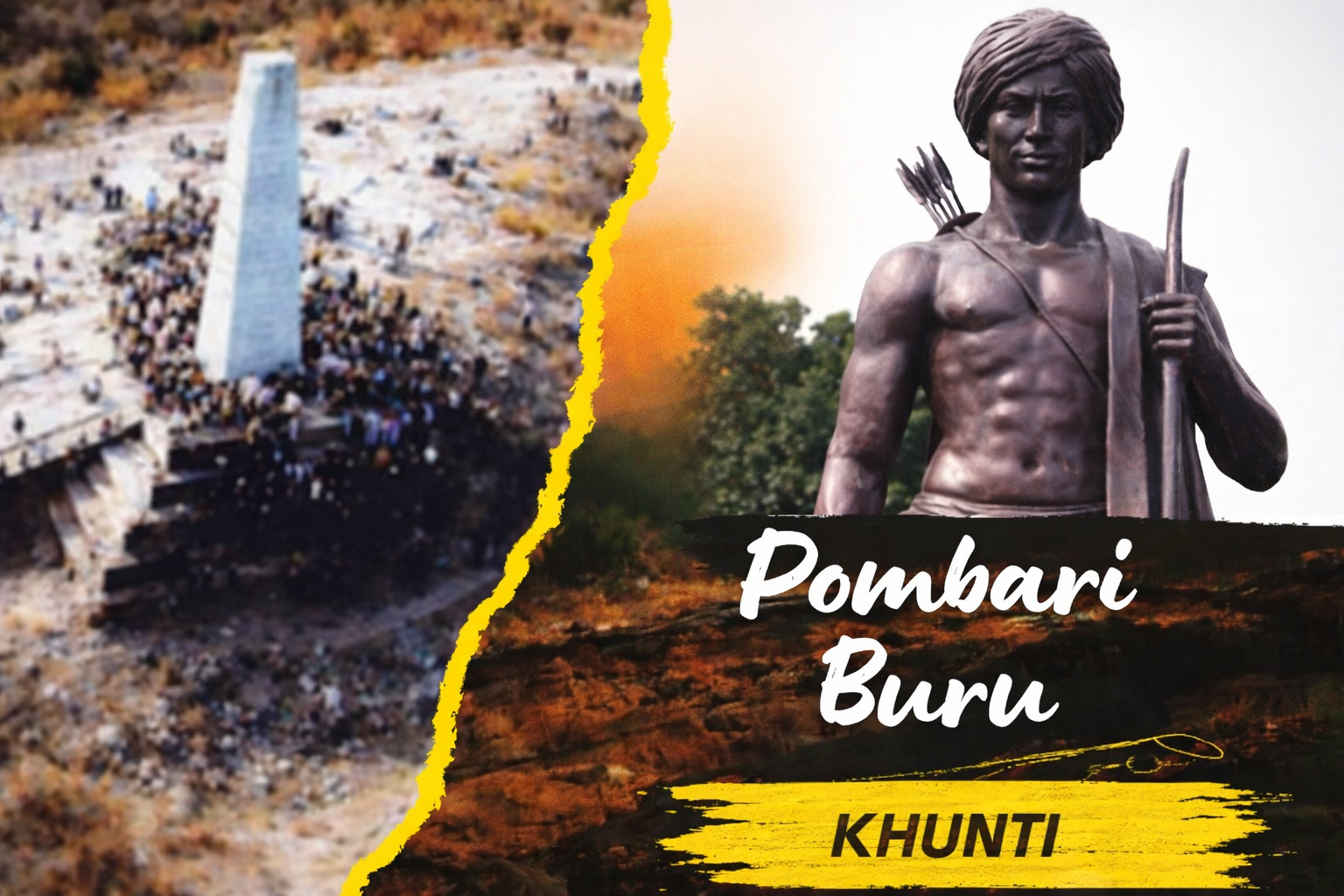
Context and Core Theme
The article revisits the Dombari Buru massacre (1900) in present-day Jharkhand, where Adivasis protesting colonial exploitation were killed by British forces. It frames the episode as a forgotten chapter of India’s freedom struggle, arguing that tribal resistance movements have been marginalised in mainstream nationalist historiography.
At its core, the piece seeks to reclaim historical memory, foregrounding Adivasi agency, sacrifice, and resistance against imperial rule.
Key Arguments Presented
1. Dombari Buru as an Early Anti-Colonial Resistance
The article positions the Dombari Buru uprising alongside other early tribal rebellions, stressing that:
- Tribal resistance pre-dated organised nationalist movements
- Adivasi struggles were rooted in opposition to land alienation, forest laws, and exploitative colonial governance
The argument challenges the narrow, elite-centric narrative of India’s freedom movement.
2. Marginalisation in Mainstream Historiography
A central claim is that colonial and post-colonial histories have:
- Under-represented tribal movements
- Prioritised urban, leadership-centric nationalist narratives
- Treated Adivasi resistance as “local disturbances” rather than political struggles
This selective remembrance, the article argues, amounts to historical injustice.
3. Memory, Martyrdom, and Identity
The article emphasises the symbolic role of Dombari Buru:
- As a site of martyrdom for tribal communities
- As a locus of cultural memory and identity
- As a reminder of the costs borne by marginalised groups in nation-building
Remembering such events is presented as essential to a more inclusive national consciousness.
4. Contemporary Relevance
The article implicitly links historical neglect to present-day issues:
- Continued marginalisation of tribal voices
- Struggles over land, forests, and resources
- The need for recognition beyond tokenism
Historical erasure is thus connected to ongoing structural exclusion.
Author’s Stance
The author adopts a normative and corrective stance:
- Clearly sympathetic to Adivasi perspectives
- Strongly critical of dominant historical narratives
- Advocates moral and symbolic restitution through remembrance
The tone is commemorative, assertive, and consciously political in reclaiming space for subaltern histories.
Biases and Editorial Leanings
1. Subaltern-Centric Bias
The article prioritises tribal narratives, which is justified given historical neglect, but it:
- Offers limited engagement with how mainstream historiography has evolved
- Does not sufficiently acknowledge recent academic efforts to integrate tribal histories
2. Moral Framing over Analytical Detachment
The use of martyrdom and sacrifice language strengthens emotional appeal but:
- Leaves less room for critical examination of internal dynamics within tribal movements
- Risks romanticising resistance without contextual complexity
3. Implicit Binary Framing
Colonial oppression versus tribal resistance is presented in stark terms, which, while historically grounded, simplifies:
- Varied colonial administrative responses
- Diverse tribal experiences across regions
Pros and Cons of the Argument
Pros
- Corrects historical invisibility of tribal resistance
- Strengthens inclusive understanding of the freedom struggle
- Resonates with contemporary debates on representation and memory
- Encourages decentralised and people-centric historiography
Cons
- Limited comparative engagement with other tribal uprisings
- Insufficient discussion on institutionalising such histories in curricula
- Emotional tone may reduce perceived academic neutrality
Policy Implications
1. Curriculum and Pedagogy Reform
The article implicitly supports:
- Greater inclusion of tribal movements in textbooks
- Decentralised historical narratives reflecting regional struggles
2. Cultural Recognition and Memorialisation
There is a case for:
- Official recognition of sites like Dombari Buru
- Community-led memorial practices
- Preservation of oral histories
3. Governance and Tribal Policy
Acknowledging historical injustice strengthens arguments for:
- Rights-based tribal development
- Participatory governance
- Respect for indigenous knowledge systems
Real-World Impact
- Reinforces tribal identity and dignity
- Challenges dominant nationalist narratives
- Encourages public discourse on historical justice
- May influence academic research and public memory practices
For society at large, such narratives broaden the moral foundations of Indian nationalism.
UPSC GS Paper Alignment
GS Paper I – History & Indian Society
- Tribal uprisings
- Freedom struggle beyond mainstream nationalism
- Cultural diversity and historical memory
GS Paper II – Polity & Governance
- Rights of Scheduled Tribes
- Recognition, representation, and inclusion
GS Paper IV – Ethics
- Justice to marginalised groups
- Moral responsibility of historical remembrance
- Ethics of inclusion and dignity
Balanced Conclusion and Future Perspective
“Recalling martyrs of Dombari Buru” is a necessary act of historical correction, foregrounding Adivasi resistance as integral to India’s freedom struggle rather than peripheral to it. While the article’s emotive tone and normative framing limit analytical distance, its central argument is compelling and timely.
The future task lies not only in remembrance but in institutionalising such histories—through education, scholarship, and public commemoration—so that India’s national narrative reflects the full diversity of those who fought, suffered, and sacrificed for freedom. Only then can historical justice move beyond symbolism to genuine inclusion.
