

Roots of Sanskrit
The Hindu
Core Theme and Context
The article examines the origins of Sanskrit through an interview-based narrative, drawing on historical linguistics, archaeology, genetics, and comparative philology. It situates Sanskrit within broader debates on language origins, migration, and cultural continuity, addressing a topic that is academically complex and politically sensitive in India.
Key Arguments Presented
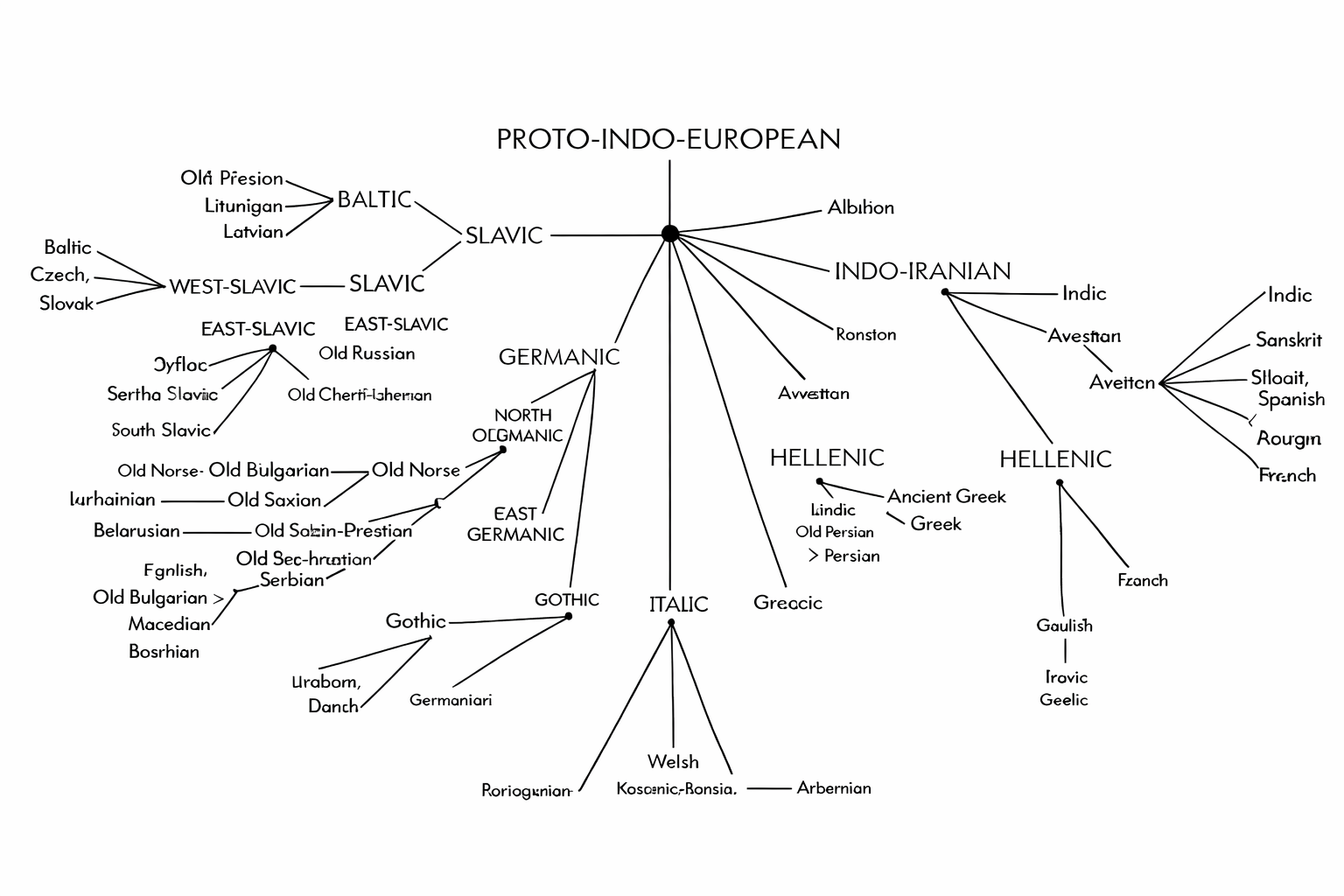
1. Sanskrit as Part of the Indo-European Language Family
The article reiterates the scholarly consensus that:
- Sanskrit belongs to the Indo-European language family
- Linguistic similarities with Greek, Latin, and Old Iranian suggest shared ancestry
- Language evolution is traced through comparative grammar, phonetics, and vocabulary
This positions Sanskrit within global linguistic history rather than as an isolated phenomenon.
2. Migration and Language Transmission
It argues that:
- Sanskrit likely spread into the subcontinent through population movements over millennia
- Migration is presented as gradual, complex, and non-violent, not as a single event
- Archaeology and genetics are invoked cautiously, not as definitive proof
The emphasis is on process over ideology.
3. Distinction Between Language, Culture, and Identity
A central claim is that:
- Language origin does not equate to cultural superiority or political legitimacy
- Sanskrit’s historical prestige does not depend on claims of absolute antiquity
- Civilisational continuity can exist alongside linguistic change
This seeks to decouple scholarship from nationalism.
4. Limits of Current Evidence
The article openly acknowledges that:
- Ancient DNA and archaeology offer incomplete answers
- Linguistic reconstruction has methodological limits
- Some questions about early Sanskrit speakers may remain unresolved
This reflects academic caution.
Author’s Stance
The author adopts a clear academic-rationalist stance:
- Strongly aligned with mainstream historical linguistics
- Explicitly rejects mythological or civilisational absolutism
- Emphasises evidence, uncertainty, and scholarly humility
The tone is explanatory rather than polemical.
Biases and Framing Issues
1. Academic Consensus Bias
- Heavily privileges Western-trained linguistic frameworks
- Alternative Indian intellectual traditions receive minimal engagement
2. Underrepresentation of Indigenous Epistemologies
- Oral traditions, Puranic chronology, and traditional Sanskrit scholarship are largely excluded
- This may alienate readers seeking plural knowledge systems
3. Cultural Sensitivity Gap
- While analytically sound, the framing underestimates the emotional and identity stakes attached to Sanskrit in India
Pros of the Article
- Clear explanation of complex linguistic methods
- Distinguishes scholarship from political narratives
- Encourages evidence-based public discourse
- Avoids sensationalism and absolutist claims
Cons and Limitations
- One-sided reliance on academic linguistics
- Limited dialogue with Indian traditional scholarship
- Risks being perceived as dismissive of civilisational pride
- Less attention to how scholarship is received in mass society
Policy and Educational Implications
1. Curriculum Design
- Supports inclusion of comparative linguistics and critical historiography
- Warns against politicisation of language history in textbooks
2. Cultural Policy
- Reinforces need to promote Sanskrit as a living classical language, not as a political symbol
- Encourages cultural confidence without historical distortion
Real-World Impact
- Shapes elite and academic discourse on language origins
- Influences debates on Aryan migration vs indigeneity
- May widen the gap between scholarly consensus and popular belief if not communicated sensitively
UPSC GS Paper Alignment
GS Paper I – Indian Culture & History
- Languages and scripts
- Cultural continuity and change
GS Paper II – Social Issues
- Identity, nationalism, and knowledge politics
GS Paper IV – Ethics
- Intellectual honesty
- Evidence vs belief
Anthropology Optional
- Linguistic anthropology
- Migration and cultural transmission
Balanced Conclusion and Future Perspective
The article offers a methodologically rigorous and intellectually honest account of Sanskrit’s origins, firmly grounded in global linguistic scholarship. However, its impact would be broader if it engaged more deeply with Indian knowledge traditions and public sentiment. The way forward lies not in rejecting scholarship or tradition, but in dialogue between evidence-based research and cultural self-understanding. Sanskrit’s value ultimately rests not on how old it is, but on how meaningfully it continues to shape India’s intellectual and cultural life.
