

Socio-Economic Position and Heart Disease in India

Socio-Economic Position and Heart Disease in India
Source: The Hindu
Why in News?
- A study of 65,364 Indians aged 45 years and above, published in the American Journal of Preventive Medicine, found that people with consistently high socio-economic status had higher odds of cardiovascular conditions than those who experienced sustained socio-economic disadvantage.
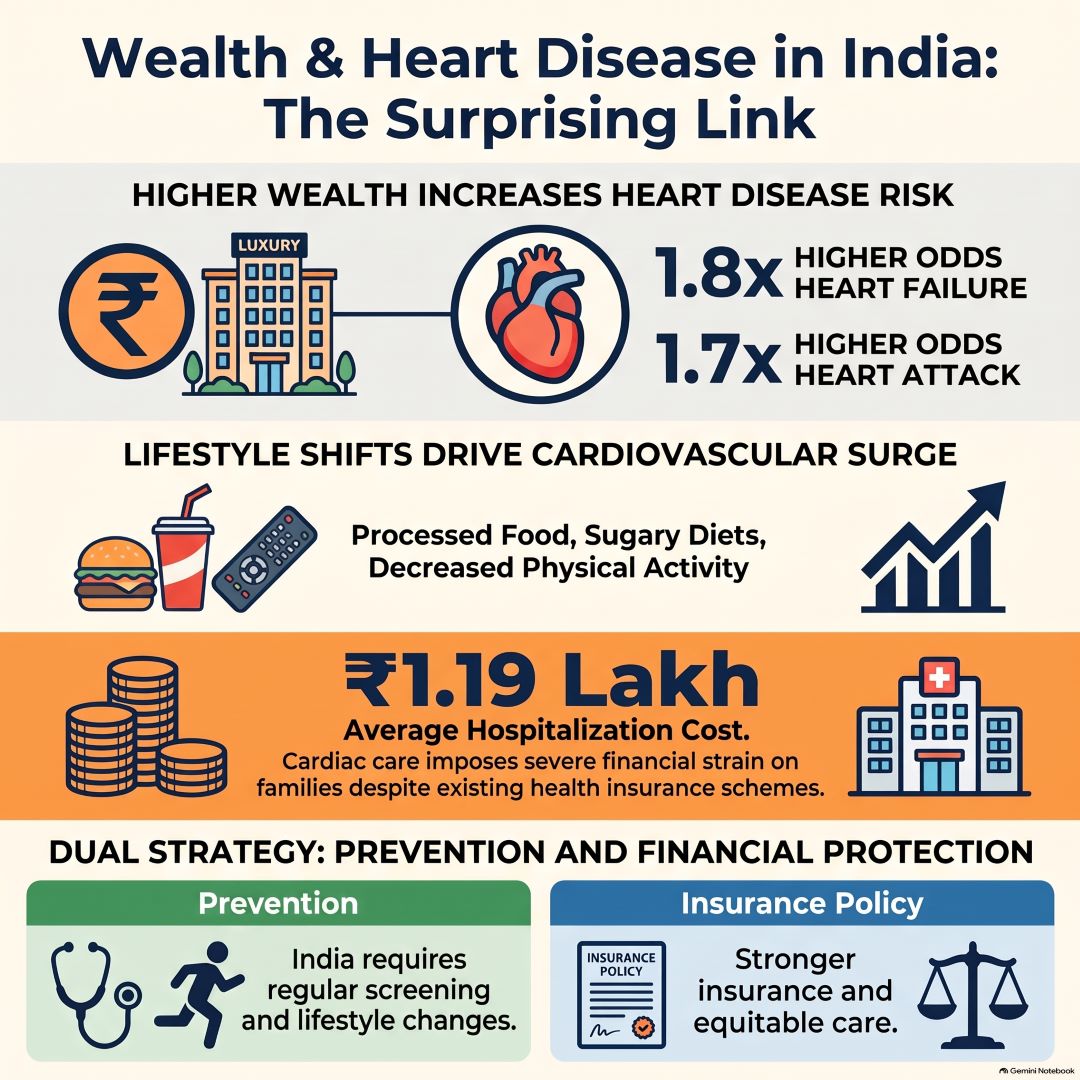
- Those with sustained socio-economic advantage had 1.8 times the odds of heart failure and 1.7 times the odds of a heart attack compared with the consistently disadvantaged group.
Key Findings of the Study
- The research was conducted by scientists from AIIMS, New Delhi, and Harvard T.H. Chan School of Public Health.
- It examined health outcomes in relation to socio-economic conditions during both childhood and adulthood.
- Four life-course categories were studied:
- Consistently high: High socio-economic position in childhood and adulthood.
- Upward mobility: Low socio-economic position in childhood but high in adulthood.
- Downward mobility: High socio-economic position in childhood but low in adulthood.
- Consistently low: Low socio-economic position in both periods.
- Higher socio-economic position was associated with a greater likelihood of heart failure, heart attack, abnormal heart rhythm and other cardiovascular conditions.
Possible Reasons
- Dietary changes: Greater access to processed foods, refined carbohydrates, sugary beverages and energy-dense diets.
- Physical inactivity: Occupational and domestic lifestyles may become less physically active with economic advancement.
- Epidemiological transition: As India’s socio-economic conditions change, cardiovascular diseases and their risk factors may increasingly affect disadvantaged populations as well.
The findings describe an association; they do not establish that higher income itself directly causes heart disease.
Financial Burden of Heart Disease
- A separate study published in Global Heart highlighted the financial consequences of heart failure among poorer Indian households.
- The average cost of a single hospitalisation for a heart failure patient was reported to be approximately ₹1.19 lakh.
- Hospitalisation can impose substantial financial pressure even after discharge.
- Social health insurance schemes provide financial protection, but families may still bear a significant share of treatment costs.
Significance and Way Forward
- Preventive healthcare: Promote regular screening for blood pressure, diabetes and other cardiovascular risk factors.
- Lifestyle interventions: Encourage balanced diets, regular physical activity and reduced consumption of highly processed foods.
- Equitable healthcare: Improve access to affordable diagnosis, treatment and long-term cardiac care.
- Financial protection: Strengthen health insurance coverage and reduce out-of-pocket expenditure.
- Public health planning: Address cardiovascular risks across socio-economic groups rather than assuming that economic disadvantage alone determines disease burden.
|
UPSC Mains Practice Q. “Cardiovascular diseases in India require both lifestyle-based prevention and protection against catastrophic health expenditure.” Discuss in the context of changing socio-economic conditions and health inequalities. |