

Strait of Hormuz, a narrow passage that powers the world
The Tribune
Key Arguments of the Article
Strategic Importance of the Strait
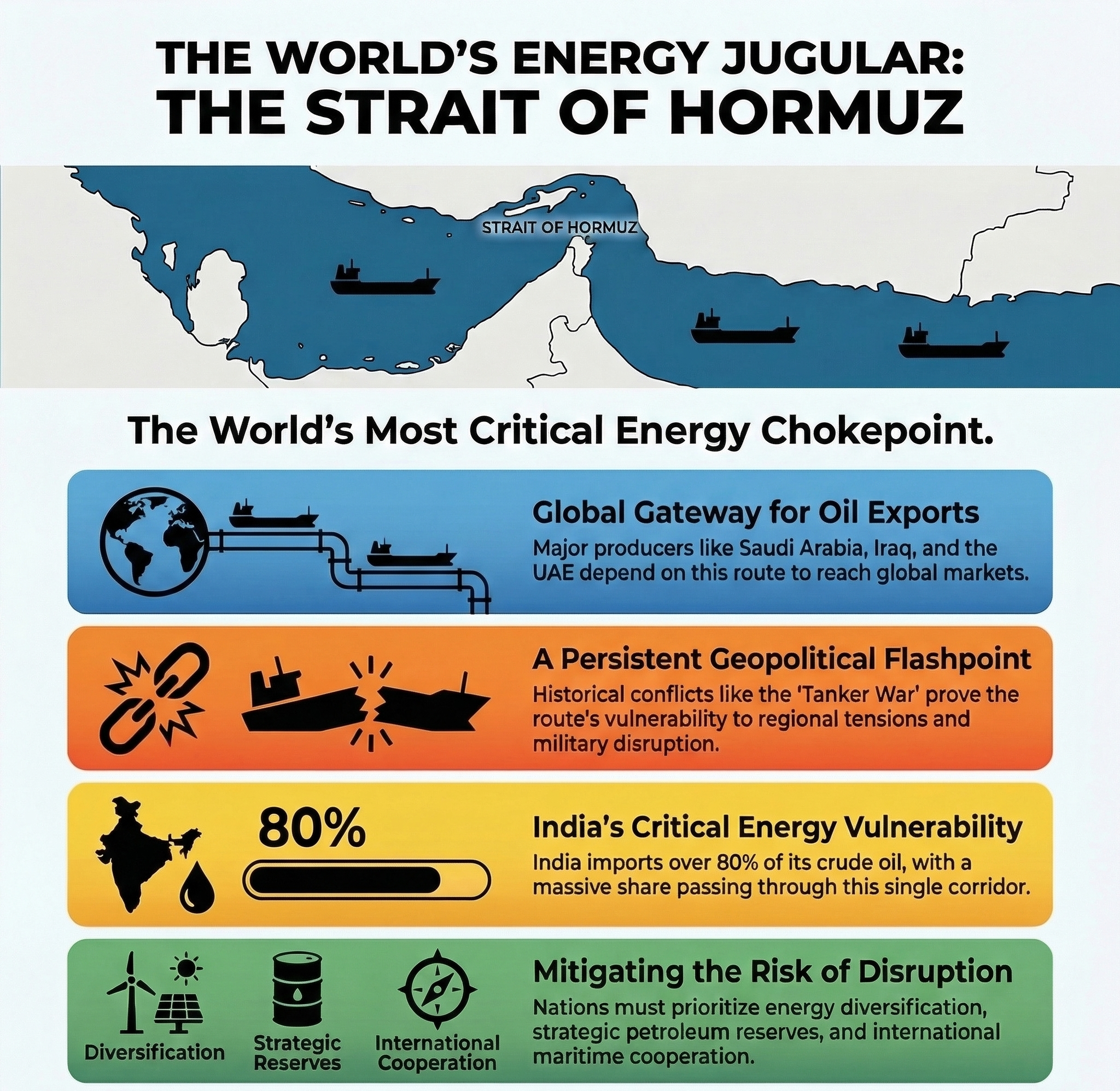
The article argues that the Strait of Hormuz functions as a critical gateway for global energy trade. Oil exports from major Gulf producers—including Saudi Arabia, Iraq, Kuwait, and the United Arab Emirates—must pass through this narrow maritime route.
A significant proportion of global oil consumption is transported through this corridor.
Geopolitical Flashpoint
The strait has historically been at the centre of regional conflicts. During the Iran–Iraq war in the 1980s, attacks on oil tankers in what became known as the “Tanker War” demonstrated the vulnerability of global energy supply routes.
Current tensions between Iran and Western powers have revived concerns about possible disruptions.
Threat of Disruption and Global Impact
The article explains that Iran has periodically threatened to block or disrupt traffic through the strait as a strategic response to geopolitical pressure.
Even without a full blockade, limited disruptions—such as attacks on ships, naval manoeuvres, or mining of sea lanes—can significantly impact global energy markets.
Practical Challenges of Closing the Strait
While Iran possesses capabilities such as missiles, naval mines, and fast attack boats, a complete closure of the strait would be difficult due to the presence of international naval forces and the economic consequences for Iran itself.
However, asymmetric tactics could still create instability and disrupt shipping.
India’s Energy Vulnerability
The article stresses that India imports more than 80 percent of its crude oil requirements, with a large share sourced from the Gulf region.
A disruption in the Strait of Hormuz would therefore have direct consequences for India’s energy security, trade, and economic stability.
Author’s Stance
The author adopts an analytical and geopolitical perspective, focusing on the strategic significance of the strait and the risks posed by regional tensions. The tone is largely explanatory rather than normative, aiming to highlight the global stakes involved in the stability of this maritime corridor.
Possible Biases
Security-Centric Perspective
The article primarily analyses the issue from a strategic and energy security standpoint, with limited discussion of environmental risks or maritime governance issues.
State-Centric Analysis
The narrative focuses on state actors and geopolitical competition, with relatively less attention to international legal frameworks governing maritime navigation.
Energy Market Emphasis
The emphasis on oil trade may overshadow the broader economic and ecological dimensions of maritime security.
Advantages of Highlighting the Issue
Awareness of Strategic Chokepoints
Understanding the significance of maritime chokepoints is crucial for analysing global trade and energy security.
Emphasis on Energy Security
The article underscores the vulnerability of energy-importing nations to geopolitical disruptions.
Insight into Regional Geopolitics
The analysis helps explain how regional conflicts can have global economic consequences.
Risks and Concerns
Energy Price Volatility
Any disruption in the strait can trigger sharp increases in global oil prices.
Maritime Security Threats
Attacks on shipping vessels or mining of sea routes can endanger international trade.
Global Economic Instability
Energy disruptions can affect global supply chains and economic growth.
Strategic Dependence
Countries heavily reliant on Gulf energy imports remain vulnerable to geopolitical shocks.
Policy Implications
Diversification of Energy Sources
Countries such as India must diversify energy imports and expand renewable energy capacity to reduce dependence on vulnerable routes.
Strategic Petroleum Reserves
Maintaining emergency oil reserves can cushion temporary disruptions.
Strengthening Maritime Security
International cooperation in naval patrols and maritime surveillance is essential to protect sea lanes.
Diplomatic Engagement
Active diplomacy with Gulf countries and regional actors is necessary to maintain stability in the region.
Real-World Impact
If the Strait remains stable:
• Continuity of global energy supply
• Stable oil prices
• Smooth functioning of international trade
If disruptions occur:
• Oil supply shocks and price spikes
• Increased shipping costs and insurance premiums
• Economic stress for energy-importing nations
• Heightened geopolitical tensions
Alignment with UPSC GS Papers
GS Paper I
Geographical significance of strategic maritime chokepoints and their influence on global trade routes.
GS Paper II
India’s foreign relations with West Asian countries and geopolitical developments in the region.
GS Paper III
Energy security, global trade networks, maritime security, and strategic resources.
GS Paper IV
Ethical considerations in international diplomacy and responsibility in maintaining global commons.
Balanced Assessment
The Strait of Hormuz represents one of the most critical strategic chokepoints in the global energy system. Its stability is essential not only for the economies of oil-exporting countries but also for energy-importing nations across Asia and Europe.
The article effectively highlights the geopolitical risks associated with this narrow passage while underlining the broader implications for global energy security.
Future Perspective
As geopolitical tensions in West Asia persist, the strategic importance of the Strait of Hormuz will likely remain high. Countries dependent on Gulf energy supplies must invest in diversification, renewable energy expansion, and strategic reserves to mitigate vulnerability.
For policymakers and civil services aspirants, the issue demonstrates how geography, geopolitics, and energy security intersect to shape global economic stability.
