

Swiping in the Dark: The Hidden Cost of Plastic Money

Swiping in the Dark: The Hidden Cost of Plastic Money
GS Paper: GS-III (Banking and Financial Inclusion) | Financial literacy and consumer protection |
Source: The Hindu
Why in News?
Rising use of credit cards and festive-season spending has put focus on the hidden costs of credit cards, such as the minimum-due trap, EMI conversion and cash withdrawal fees, which can push households into debt.
Hidden Costs of Credit Cards
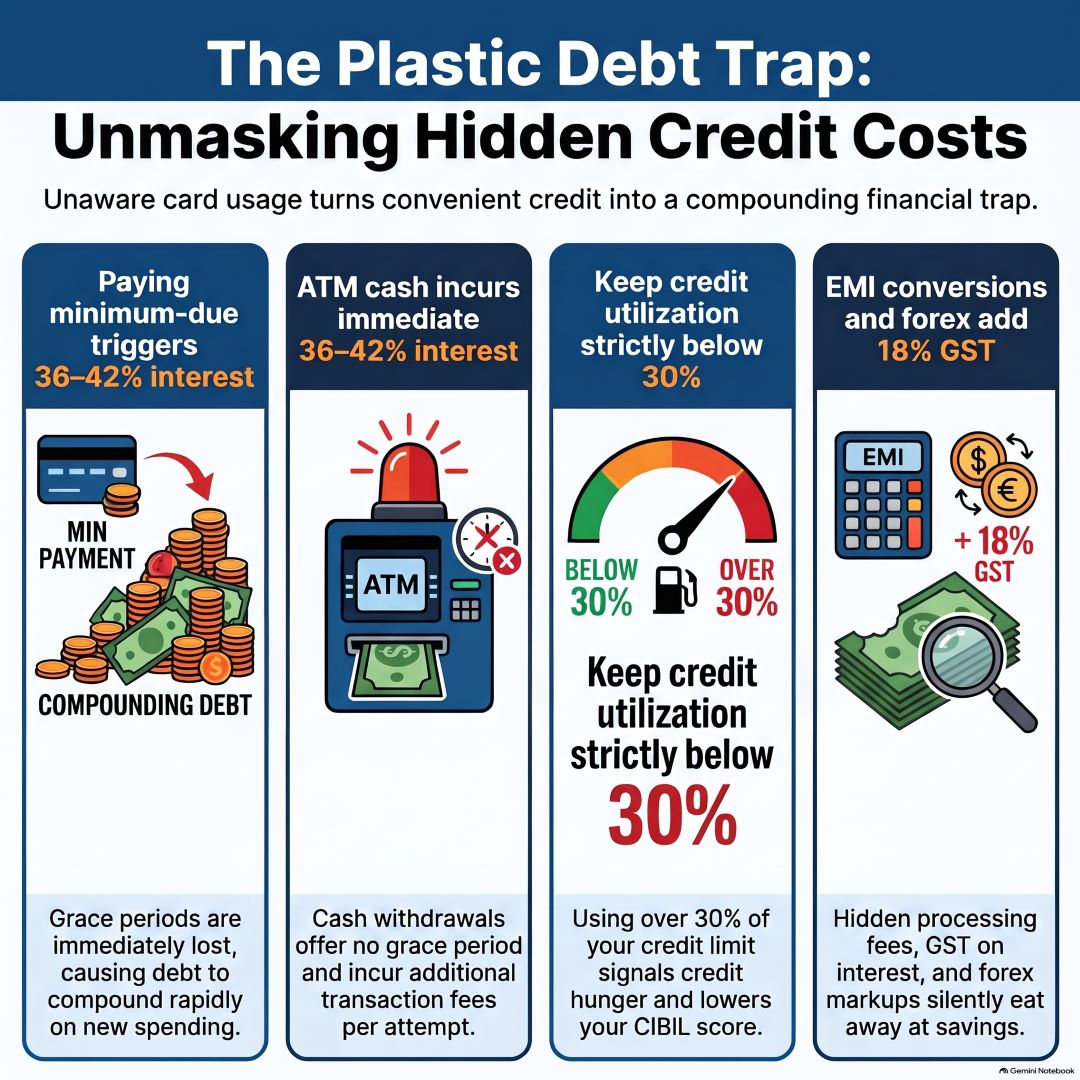
• Minimum-due trap: paying only the minimum lets the balance linger and compound. The interest-free grace period is lost, and new spending attracts interest immediately at about 36-42% annually. Non-payment leads to late fees and reporting to CIBIL, damaging the credit score.
• EMI conversion: it does not erase the cost; it locks you into a high-margin contract, forfeits upfront discounts, and 18% GST applies to the interest portion.
• Cash withdrawal: no grace period, so 36-42% interest starts at once, plus a fee of about Rs 199 + GST per ATM attempt. With a cap of Rs 10,000 per withdrawal, withdrawing Rs 50,000 costs over Rs 1,000 in fees.
• Reward ruse: banks quietly cut redemption values; processing fees and GST can eat small claims.
• Forex markup: 1.5-3.5% on foreign transactions plus 18% GST on that fee.
• Credit utilisation: usage above the 30% threshold of the limit signals credit hunger and lowers the CIBIL score.
Way Forward
• Pay the full bill on time; keep utilisation below 30%; avoid cash withdrawals on cards.
• Choose cards with zero annual and joining fees, waived forex markup and a generous interest-free window.
• Regulatory angle: transparent disclosure of charges, protection from unfair practices and strengthening financial literacy (RBI, NCFE).