

The 27th amendment, Pakistan’s democratic dilemma
The Hindu
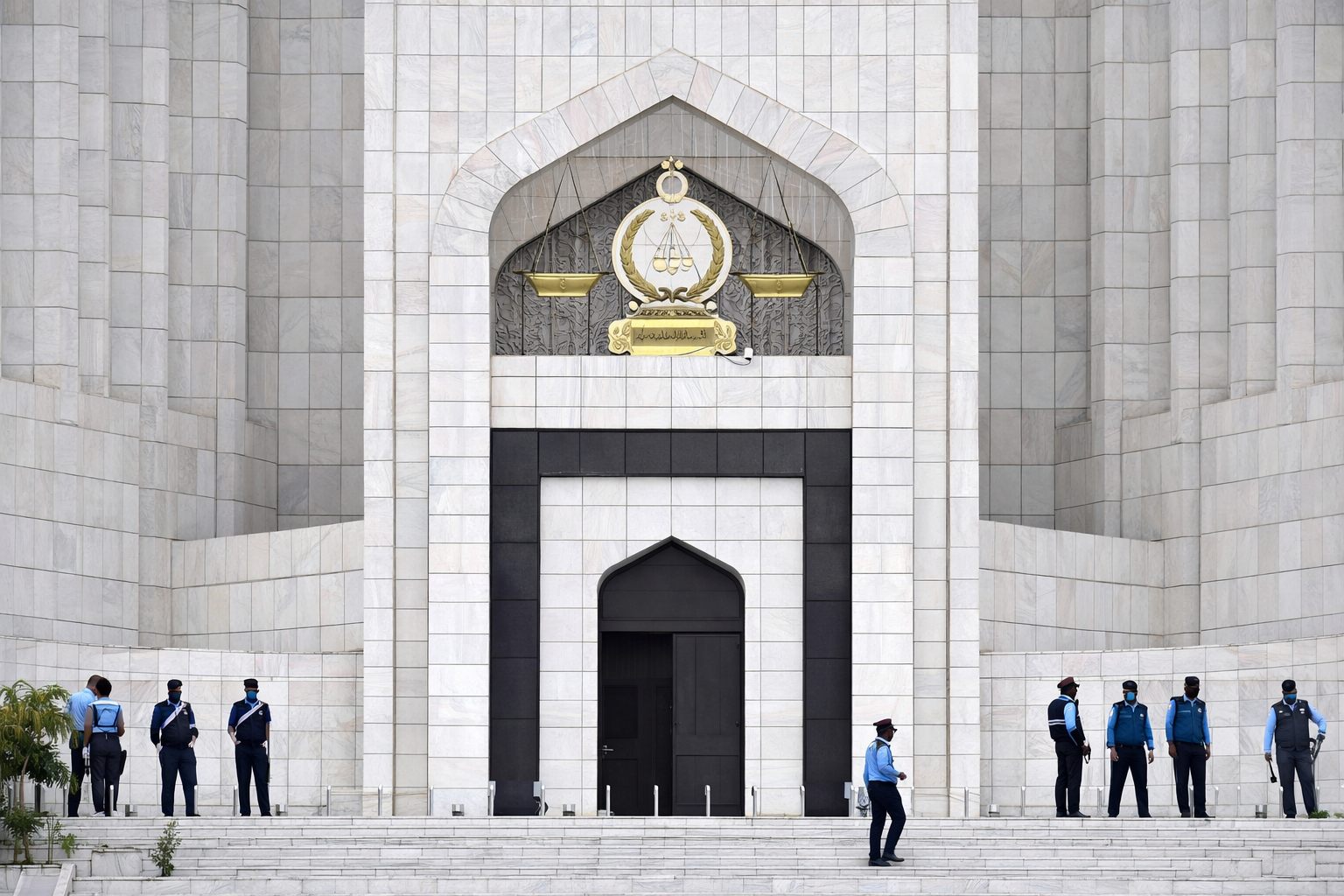
Overview of the Article
The article examines Pakistan’s 27th Constitutional Amendment (PCA) as a pivotal moment in its constitutional and democratic trajectory. It argues that the amendment, while formally legal, significantly alters the balance of power by weakening judicial independence and reconfiguring constitutional adjudication. The piece situates this development within both Pakistan’s internal political history and broader comparative constitutional theory, with explicit cautionary lessons for India and other democracies.
Key Arguments
Dilution of Supreme Court authority
The core argument is that the PCA sidelines Pakistan’s Supreme Court by transferring original jurisdiction over constitutional interpretation, fundamental rights and federal disputes to a newly constituted Federal Constitutional Court (FCC).
Threat to judicial independence
By restructuring constitutional adjudication, the amendment risks making courts more vulnerable to executive influence, undermining the judiciary’s role as a check on power.
Departure from constitutional equilibrium
Drawing on A.V. Dicey’s conception of the rule of law, the article argues that constitutional governance depends on courts acting as neutral arbiters between liberty and authority—an equilibrium the PCA unsettles.
Historical regression
The amendment is framed as reversing gains made under the 18th Constitutional Amendment, which sought to depoliticise judicial appointments and insulate courts from executive dominance.
Comparative constitutional warning
The author situates Pakistan’s experience within a global pattern where democracies hollow out institutions not through coups, but through formally valid legal changes.
Author’s Stance and Bias
Stance
The author adopts a strongly normative and cautionary stance, viewing the PCA as democratically regressive despite its procedural legality.
Biases
There is a clear bias in favour of strong judicial supremacy and liberal constitutionalism. Executive arguments for efficiency, stability or specialisation through constitutional courts are acknowledged only marginally.
Pros Highlighted (Implicit or Acknowledged)
Formal legality and institutional redesign
The amendment follows constitutional procedures and claims to rationalise adjudication through a specialised constitutional court.
Administrative clarity
Supporters may argue that separating constitutional adjudication could streamline judicial workload and improve efficiency.
Cons and Democratic Risks
Erosion of checks and balances
Weakening the Supreme Court diminishes horizontal accountability and concentrates power.
Executive overreach
Control over appointments and functioning of the FCC raises risks of politicisation of constitutional interpretation.
Precedent for democratic backsliding
Legally sanctioned institutional weakening normalises executive dominance without overt authoritarian rupture.
Loss of public trust
Judicial legitimacy derives from independence; perceived capture undermines confidence in constitutional remedies.
Policy and Governance Implications
Constitutional design
The case underscores that institutional form matters as much as democratic intent.
Judicial insulation
Safeguards around appointments, tenure and jurisdiction are central to sustaining constitutional democracy.
Regional democratic stability
Developments in Pakistan carry implications for South Asia, where institutional fragility and executive dominance remain persistent risks.
Real-World Impact
In Pakistan, the amendment could reshape how political disputes, federal tensions and rights claims are adjudicated, potentially narrowing avenues for constitutional redress. In the longer term, it risks entrenching executive authority at the expense of judicial review. For India, the article presents a mirror rather than a comparison—highlighting how constitutional erosion can occur incrementally and legally.
UPSC GS Paper Linkages
GS Paper II – Polity & Constitution
Judicial independence, separation of powers, constitutional amendments, rule of law.
GS Paper II – International Relations
Comparative constitutional developments in South Asia, democratic backsliding.
GS Paper IV – Ethics
Institutional integrity, constitutional morality, restraint in exercise of power.
Conclusion and Future Perspective
The article persuasively argues that Pakistan’s 27th Amendment exemplifies a modern democratic dilemma: how constitutions can be hollowed out from within through lawful means. While constitutional redesign is not inherently anti-democratic, weakening judicial independence undermines the very foundations of constitutional governance. The broader lesson—for Pakistan, India and other democracies—is that constitutional survival depends less on textual permanence and more on sustained respect for institutional autonomy, restraint and constitutional morality.
