

The evolving science around longevity, and its unknowns

The evolving science around longevity, and its unknowns
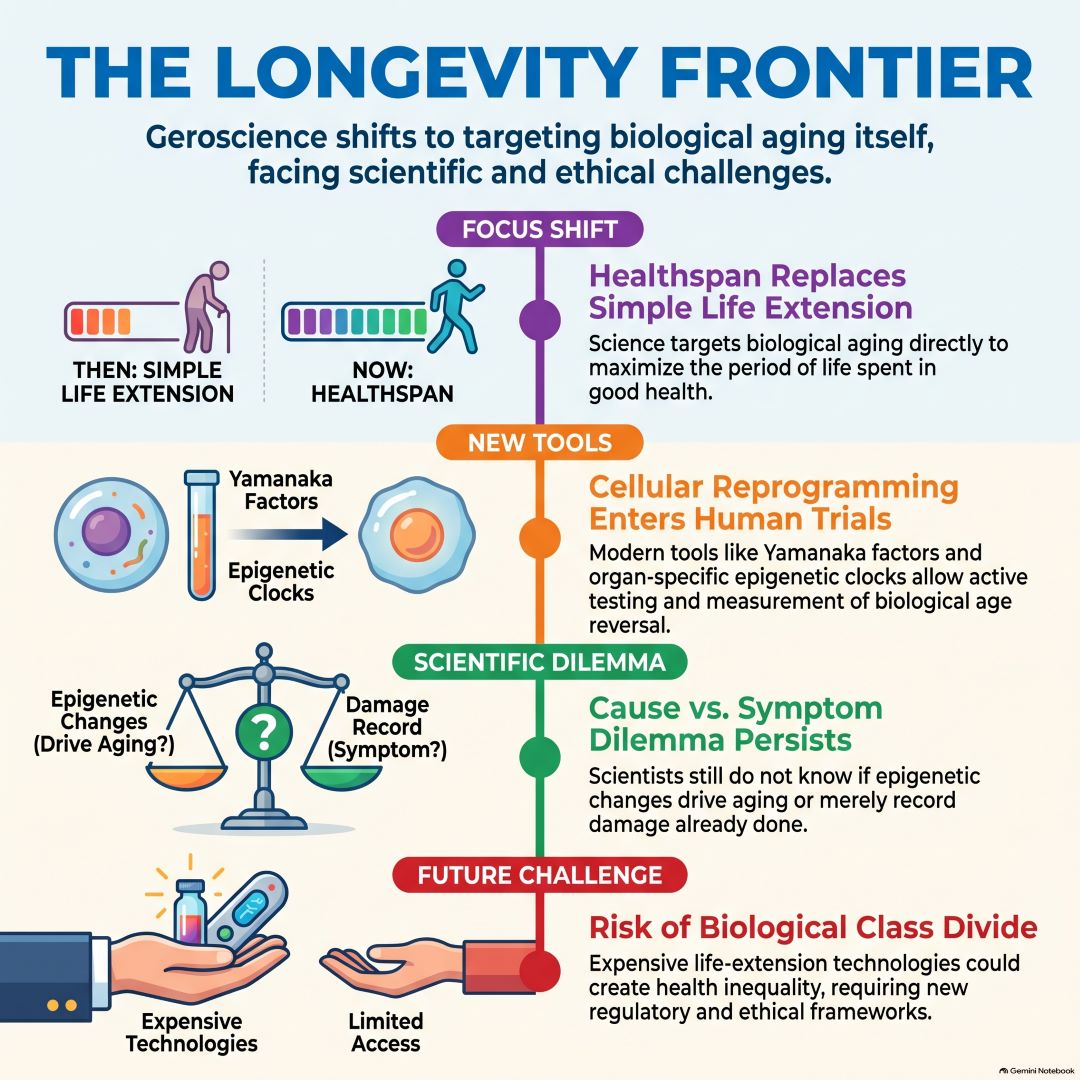
The science of longevity has shifted from "managing decline" to a proactive field of Geroscience, which aims to treat aging as a targetable biological process. As of 2026, the focus has moved beyond simple life extension to maximizing Healthspan—the period of life spent in good health.
The Evolving Science (State of 2026)
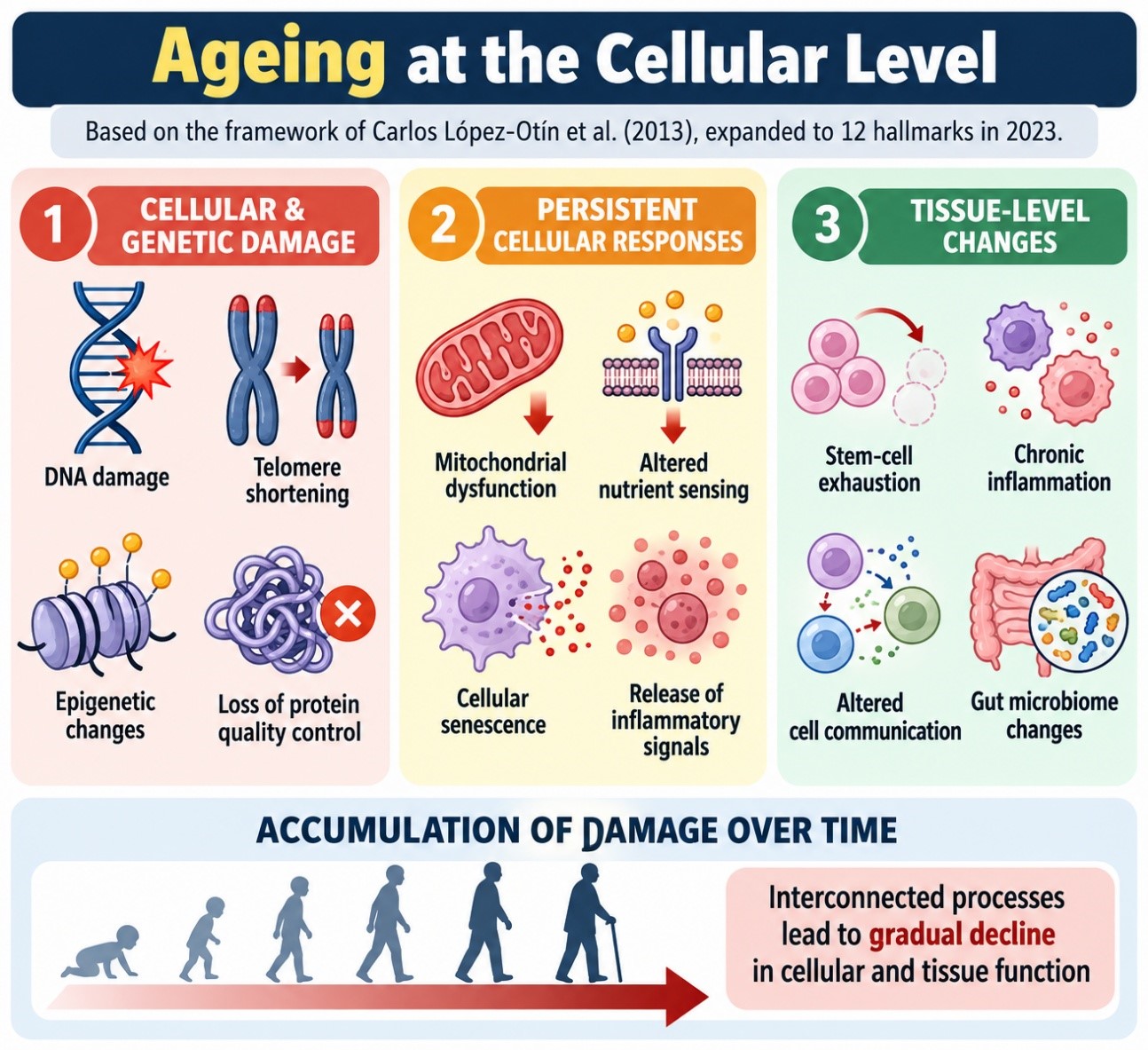
The scientific community now identifies 12 Hallmarks of Aging (updated in 2023), including genomic instability, telomere attrition, and the recent additions of chronic inflammation (inflammaging) and dysbiosis (gut bacteria imbalance).
- Epigenetic Reprogramming: In a landmark 2026 move, the FDA cleared the first human trial for cellular reprogramming (using Yamanaka factors) to treat optic neuropathies, marking the first time "age-reversal" technology has entered clinical testing.
- Biological Age vs. Chronological Age: Advancements in Epigenetic Clocks (like GrimAge and DunedinPACE) now allow individuals to measure DNA methylation patterns to see how fast they are aging. Research in 2026 shows that these clocks are becoming "organ-specific," meaning your heart or brain might be aging at different rates.
- Senolytics & Therapeutics: Drugs designed to clear "zombie" (senescent) cells are showing early signals in Alzheimer’s research. Meanwhile, the TAME (Targeting Aging with Metformin) and PEARL (Rapamycin) trials are providing the first large-scale human data on repurposed drugs for longevity.
The Critical Unknowns
Despite breakthroughs, several fundamental questions remain unanswered, posing significant risks for both science and policy:
- Cause vs. Symptom: While we can measure epigenetic changes, scientists still don't know if these chemical shifts cause aging or are just a record of damage already done. Reversing the clock might just be "treating the symptom" without stopping the underlying decay.
- Intervention Thresholds: We lack a clear "Longevity Sweet Spot." For example, 2026 studies in the British Journal of Sports Medicine found that 90–120 minutes of strength training per week is ideal, but benefits plateau afterward—highlighting that more is not always better.
- Long-term Side Effects: Biological systems are complex; what slows aging in one organ might inadvertently increase cancer risk or immune suppression in another.
Socio-Ethical Implications
For a country like India, which is currently reaping a "demographic dividend" but will eventually face a massive aging population, longevity science presents a double-edged sword:
- Inequality (Health Stratification): There is a risk that life-extension becomes a "luxury good." If only the wealthy can afford epigenetic resetting, it could create a biological class divide where the rich live significantly longer, healthier lives.
- Regulatory Hurdles: The WHO's ICD-11 currently includes an "ageing-related" extension code, but does not classify aging as a disease. This makes funding and drug approval difficult because the FDA requires a specific disease target (like Heart Disease) rather than "Aging" itself.
- Intergenerational Justice: Extended lifespans will necessitate a total rethink of retirement ages, pension schemes, and healthcare allocation.
4. Ultimately, the shift from "curing diseases" to "slowing aging" represents a paradigm shift in human history. While the molecular tools are arriving, the social and ethical frameworks to manage a "long-lived society" are still in their infancy.
