

Thousand faces of poverty
The Statesman
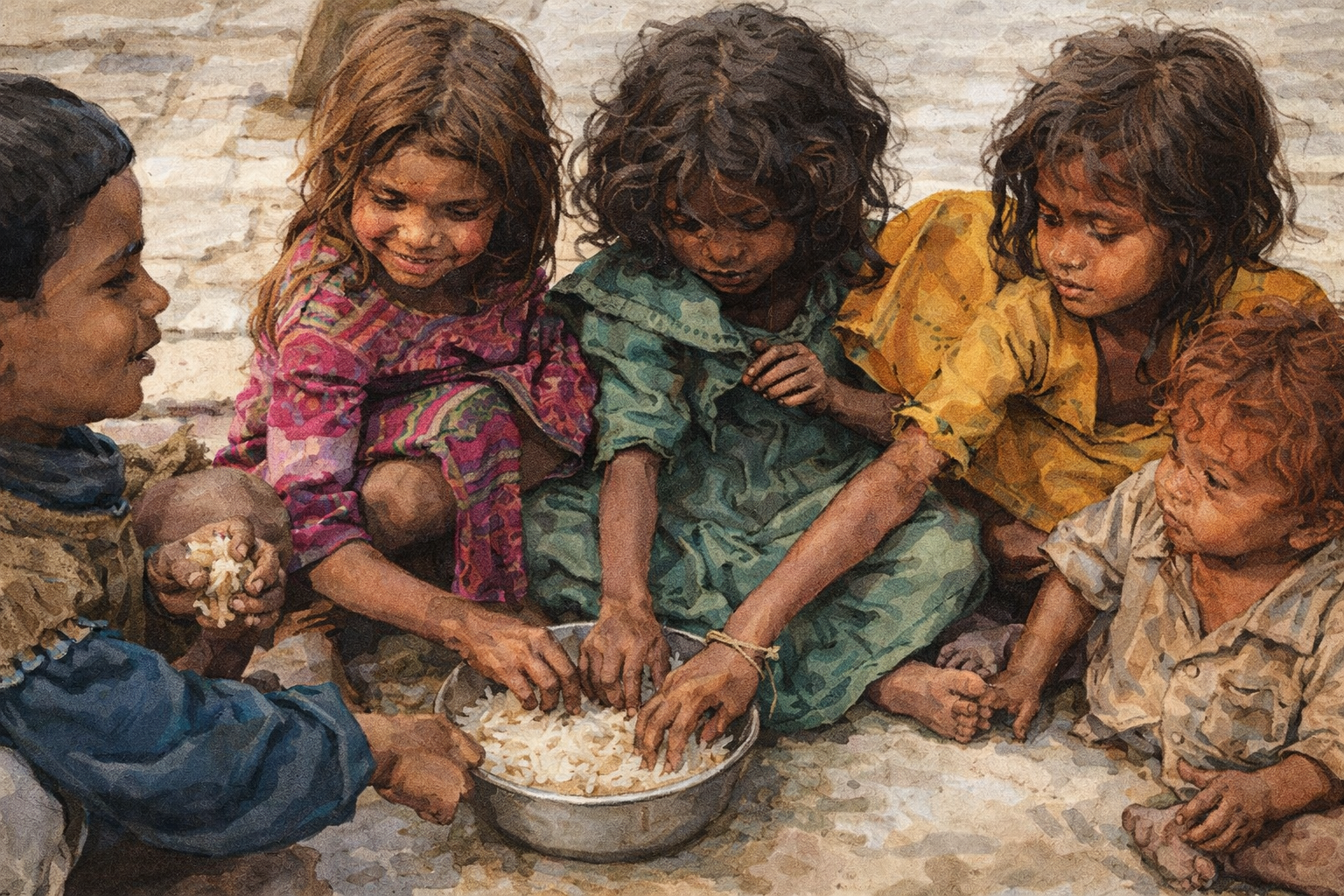
I. Central Thesis and Core Argument
The article argues that poverty is not a single, static condition but a multidimensional, evolving phenomenon, inadequately captured by headline poverty ratios alone. It critiques the over-reliance on narrow income or consumption thresholds, contending that such measures obscure the diverse lived realities of deprivation across regions, social groups, and life stages in India.
The core claim is that measurement frameworks shape policy responses, and flawed or incomplete measurement risks producing cosmetic success narratives while structural deprivation persists.
II. Key Arguments Presented
1. Poverty as a Multidimensional Phenomenon
The article emphasises that poverty extends beyond low income to include deficits in nutrition, health, education, housing, sanitation, security, and dignity. These dimensions often overlap and reinforce each other.
2. Limitations of Income and Consumption Metrics
It critiques traditional poverty lines based on calorie intake or consumption expenditure, arguing that they fail to capture rising costs of healthcare, education, housing, and urban living.
3. Measurement as a Political and Administrative Act
The article underlines that poverty measurement is not value-neutral. Choices about indicators, thresholds, and survey methods influence how many people are officially counted as poor and, consequently, who qualifies for state support.
4. Heterogeneity of Poverty
Rural, urban, tribal, migrant, and informal-sector poverty manifest differently. A single national poverty line masks regional and social disparities, especially across caste, gender, and occupational lines.
5. Dynamic Nature of Poverty
The article highlights vulnerability and transitory poverty, noting that many households oscillate around the poverty line due to shocks such as illness, job loss, climate events, or inflation.
6. Emergence of Alternative Frameworks
It refers to multidimensional poverty indices and capability-based approaches as more holistic tools, though with their own methodological challenges.
III. Author’s Stance
The author adopts a critical, reformist stance, questioning celebratory narratives around poverty reduction while acknowledging methodological progress. The tone is analytical and sceptical of simplistic claims, urging policymakers to confront complexity rather than seek convenient metrics.
The article is not anti-measurement, but strongly advocates better, context-sensitive measurement aligned with lived realities.
IV. Implicit Biases and Framing
1. Structural Bias
The article foregrounds systemic and structural causes of poverty, potentially underplaying individual mobility or localised success stories.
2. Scepticism Toward Official Estimates
There is an implicit distrust of headline poverty figures, which may understate genuine improvements in material conditions.
3. Normative Preference for Capability Approaches
The framing leans toward capability and rights-based models, which, while normatively strong, can be administratively complex.
V. Strengths of the Article
1. Conceptual Depth
Moves beyond arithmetic poverty ratios to interrogate what poverty actually means.
2. Strong Theoretical Grounding
Draws on well-established development economics and social policy debates.
3. Policy Relevance
Demonstrates how measurement choices affect targeting, budgeting, and welfare outcomes.
4. High UPSC Relevance
Aligns closely with GS-I (Society), GS-II (Social Justice), GS-III (Inclusive Growth), and Essay themes.
5. Equity-Centric Lens
Highlights how marginalised groups experience poverty differently.
VI. Limitations and Gaps
1. Implementation Challenges Underexplored
The article does not sufficiently examine the administrative burden of multidimensional measurement.
2. Fiscal Constraints Not Fully Addressed
Broader definitions of poverty imply wider beneficiary coverage, with budgetary implications that are not discussed in depth.
3. Limited Engagement with Recent Welfare Interventions
Large-scale social protection measures are not analysed in detail to assess how they mitigate multidimensional deprivation.
VII. Policy Implications (UPSC GS Alignment)
GS Paper I – Society
• Social stratification and differential poverty experiences
• Rural–urban and caste-based inequalities
GS Paper II – Social Justice
• Targeting and inclusiveness of welfare schemes
• Rights-based versus threshold-based policy design
GS Paper III – Inclusive Growth
• Human capital deficits and vulnerability
• Poverty measurement as a development tool
GS Paper IV – Ethics
• Dignity, justice, and moral responsibility of the state
VIII. Real-World Impact Assessment
Positive Implications
• Better targeting of welfare schemes
• Recognition of hidden and urban poverty
• Policy shift from survival to capability enhancement
Risks and Challenges
• Measurement complexity and data gaps
• Risk of policy paralysis due to excessive indicators
• Political resistance to broader poverty definitions
Long-Term Significance
• Improved understanding of vulnerability and inequality
• More resilient and adaptive social protection systems
IX. Balanced Conclusion
The article convincingly argues that poverty reduction cannot be meaningfully assessed through single-number metrics. By unpacking the many “faces” of poverty, it exposes the gap between statistical improvement and lived deprivation. Measurement, the article reminds us, is not merely technical—it is profoundly political.
However, while conceptual expansion is necessary, it must be matched with administrative feasibility, fiscal realism, and policy coherence. The challenge is not choosing between income and multidimensional approaches, but integrating them intelligently.
X. Future Perspectives
• Combine income metrics with multidimensional indicators for policy targeting
• Focus on vulnerability and shock-resilience, not just poverty exits
• Improve disaggregated data by region, caste, gender, and occupation
• Align poverty measurement with social protection delivery systems
• Treat poverty as a dynamic condition, not a static category
In essence, the article reinforces a core UPSC-relevant insight: poverty is not merely the absence of income, but the absence of choice, security, and dignity—and policy must measure it accordingly.
