

Vande Mataram: The musical logic behind PM Nehru’s choice
Indian Express
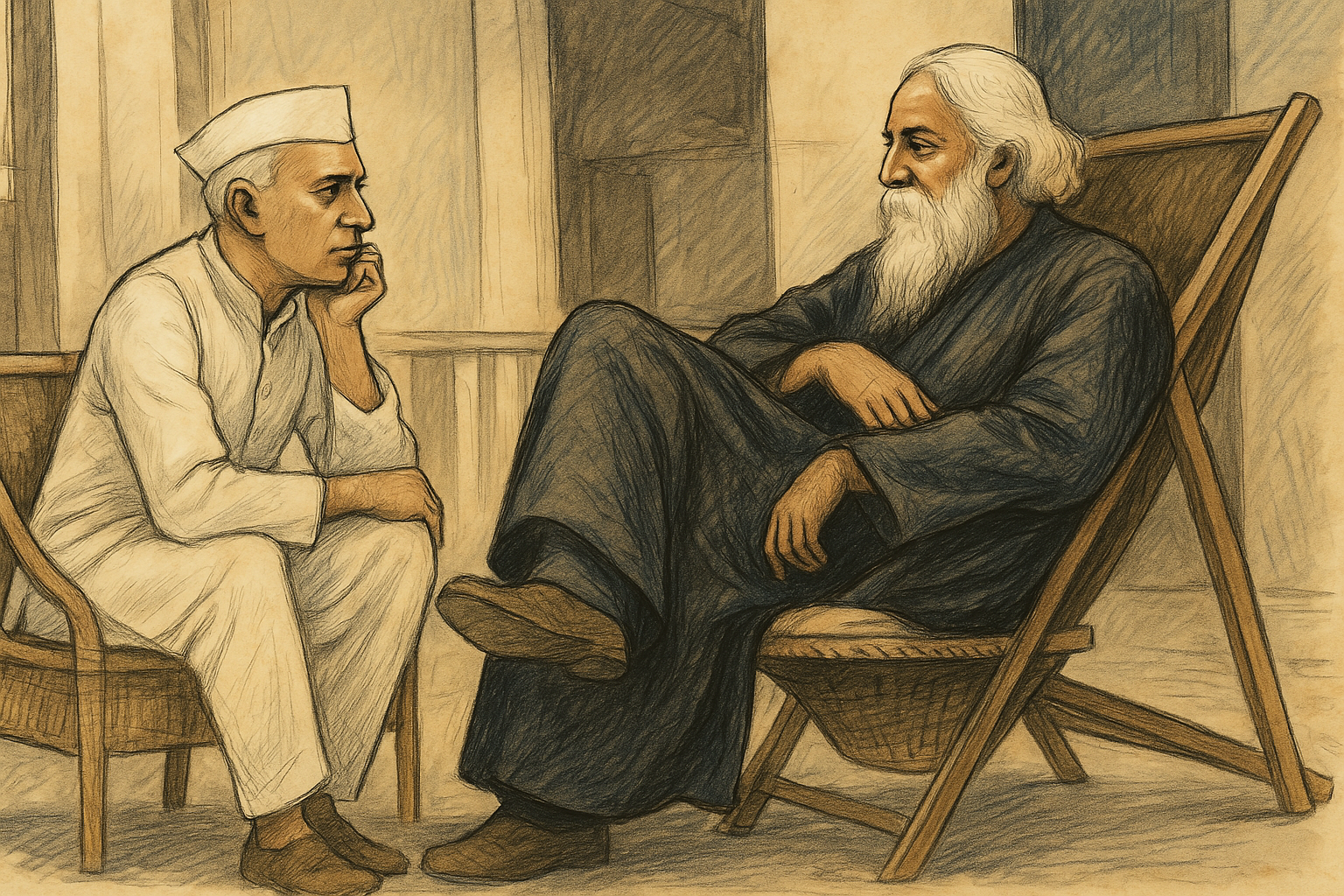
I. AUTHOR’S CENTRAL ARGUMENT
The article argues that Jawaharlal Nehru’s preference for Vande Mataram—particularly Bankim Chandra Chattopadhyay’s composition in Raga Kafi—was not merely ideological or emotional, but aesthetic and musical. The author contends that the song’s melodic structure, restraint, inclusiveness, and performative flexibility made it suitable for a diverse, plural nation. Nehru’s choice is framed as an attempt to balance national sentiment with cultural inclusivity, avoiding overt militarism or exclusionary symbolism.
At its core, the article suggests that nation-building in India consciously used cultural moderation and artistic sensibility to manage diversity.
II. KEY ARGUMENTS PRESENTED
- Musical Structure and Aesthetic Appeal
– Vande Mataram in Raga Kafi allows smooth transitions, collective singing, and emotional resonance without aggression.
– Its melodic restraint differentiates it from overtly martial or orchestral anthems. - Contrast with Jana Gana Mana
– While Jana Gana Mana is anthem-like and ceremonial, Vande Mataram is lyrical and evocative, suited to mass participation. - Nehru’s Cultural Sensibility
– Nehru’s exposure to Indian classical music and modernist aesthetics influenced his preference.
– He viewed music as a unifying, not polarising, force. - Balancing Nationalism and Pluralism
– Retaining Vande Mataram (with selective verses) allowed respect for nationalist sentiment while addressing minority concerns. - Selective Adoption of Verses
– The decision to exclude later verses with religious imagery reflects constitutional and cultural accommodation. - Symbolic Politics of Choice
– The choice reflects India’s broader post-independence approach: negotiation rather than imposition.
III. AUTHOR’S STANCE AND POSSIBLE BIASES
- Culturally Sympathetic to Nehruvian Thought
– The article presents Nehru’s decision as wise, nuanced, and farsighted. - Aesthetic Lens Over Political Contestation
– Emphasises musical logic more than political resistance or ideological conflict. - Underplays Contemporary Dissent
– Modern contestations around Vande Mataram are acknowledged but not deeply interrogated. - Elite Cultural Perspective
– Focuses on leaders, composers, and intellectuals rather than popular reception across social strata.
IV. PROS OF THE ARTICLE (Strengths)
1. Novel Analytical Angle
– Examines nationalism through musicology and aesthetics, rarely explored in political discourse.
2. Historical Depth
– Anchors the debate in the Constituent Assembly era and early Republic decision-making.
3. Highlights Cultural Moderation
– Shows how symbolism was consciously moderated to maintain unity.
4. Connects Art and Politics
– Demonstrates how cultural choices shape political consensus.
5. Useful for UPSC Ethics and Culture Dimensions
– Illustrates value-based leadership and inclusive decision-making.
V. CONS OF THE ARTICLE (Critical Gaps & Limitations)
1. Limited Engagement with Opposing Views
– Concerns of those who opposed Vande Mataram historically and today are not fully explored.
2. Romanticisation of Consensus
– Understates the intensity of ideological disagreements in the Constituent Assembly.
3. Narrow Focus on Elite Intentions
– Popular and regional interpretations of the song receive limited attention.
4. Contemporary Implications Underdeveloped
– The article does not deeply analyse how historical musical logic is used in present political mobilisation.
VI. POLICY AND CONSTITUTIONAL IMPLICATIONS (UPSC GS-I & GS-II RELEVANCE)
- National Symbols and Constitutional Values (GS-II)
– Demonstrates how symbolism must align with secularism and inclusivity. - Indian Culture and National Movement (GS-I)
– Vande Mataram as a product of the freedom struggle and cultural nationalism. - Ethics in Leadership (GS-IV)
– Nehru’s decision reflects prudence, empathy, and balance. - Managing Diversity
– Cultural accommodation as a tool of governance in plural societies. - Freedom of Expression vs State Symbolism
– Ongoing relevance in debates over compulsory performance.
VII. REAL-WORLD IMPACT ASSESSMENT
- Shaping National Identity
– Helped institutionalise a form of nationalism that was emotional yet restrained. - Precedent for Selective Adoption
– Established that cultural symbols can be adapted without being discarded. - Continuing Political Contestation
– The song remains a site of ideological mobilisation in contemporary politics. - Educational and Cultural Practice
– Influences how patriotism is taught and performed in public institutions.
VIII. BALANCED CONCLUSION
The article persuasively argues that Vande Mataram’s place in India’s national life owes as much to musical logic and aesthetic moderation as to political symbolism. By foregrounding Nehru’s cultural sensibility, it highlights a formative moment when nationhood was shaped through balance rather than assertion.
However, the article could have benefited from deeper engagement with dissenting voices and present-day implications. Cultural symbols do not remain static; they are continually reinterpreted in changing political contexts.
IX. FUTURE PERSPECTIVES (UPSC MAINS-READY INSIGHTS)
- National symbols must evolve while remaining constitutionally anchored.
- Cultural consensus requires dialogue, not enforcement.
- Historical intent should inform, not override, contemporary plural realities.
- Music and art remain powerful tools of soft nationalism.
- Leadership in diverse societies demands aesthetic sensitivity and ethical restraint.
In essence, Vande Mataram reflects not just patriotic fervour, but India’s enduring attempt to harmonise emotion with inclusivity—a lesson that remains relevant in today’s contested public sphere.
