

Why Edible Oils Are Worst Affected by Food Inflation?

Why Edible Oils Are Worst Affected by Food Inflation?
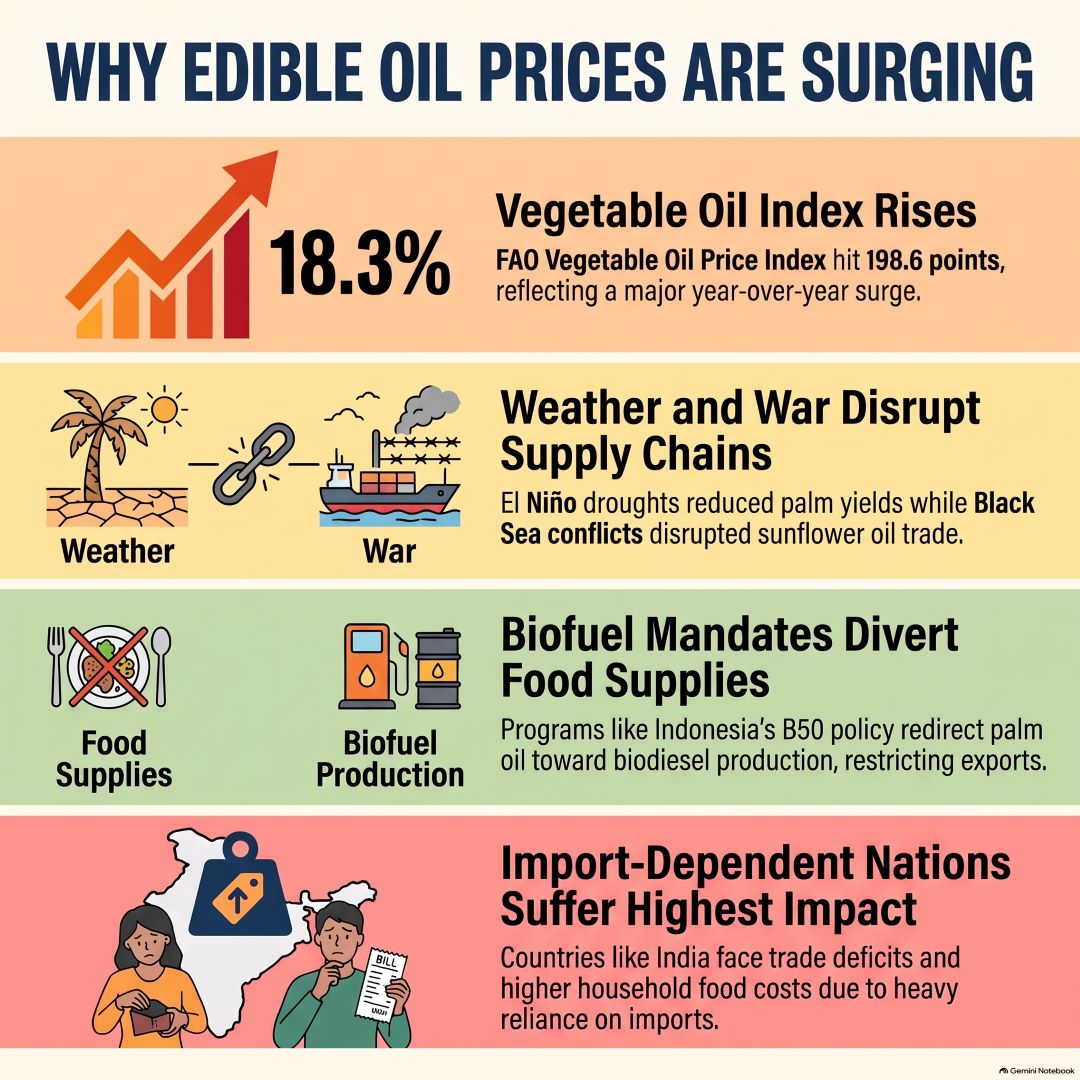
· Global edible oil prices have risen due to weather-related supply concerns, geopolitical disruptions and growing demand for biofuels.
· According to the FAO, the Food Price Index reached 136.0 points in September 2026, while the Vegetable Oil Price Index stood at 198.6 points, 18.3% higher than a year earlier. However, the latest monthly increase in vegetable oil prices was 0.9%, driven mainly by palm oil; sunflower oil prices declined.
|
Major Causes: Edible oils are particularly vulnerable to global supply-demand imbalances because production is concentrated in a few regions and international trade is sensitive to weather and policy changes. El Niño-related dry conditions can reduce oil-palm yields with a time lag. The Russia–Ukraine conflict has affected Black Sea trade routes and sunflower oil logistics, although recent expectations of ample supplies have moderated sunflower oil prices. Biofuel mandates add another source of demand by diverting palm, soybean and rapeseed oils towards biodiesel production. |
· Indonesia's B50 Policy: Indonesia implemented its mandatory B50 biodiesel programme in July 2026, requiring a blend of 50% palm-based biodiesel and 50% conventional diesel.
· While this supports energy security and reduces dependence on imported fossil fuels, it can increase domestic palm oil consumption and potentially constrain export availability. The net impact on global prices depends on production, domestic demand and export policy.
Implications for India:
· India is a major importer of edible oils, particularly palm, soybean and sunflower oils.
· Its high import dependence exposes domestic prices to international commodity prices, exchange-rate movements, shipping costs and export restrictions.
Rising import bills can widen the trade deficit, increase household expenditure and contribute to food inflation, disproportionately affecting low-income households
