

Why Vital Chemotherapy Drugs Are in Short Supply in India?

Why Vital Chemotherapy Drugs Are in Short Supply in India?
Why in News?
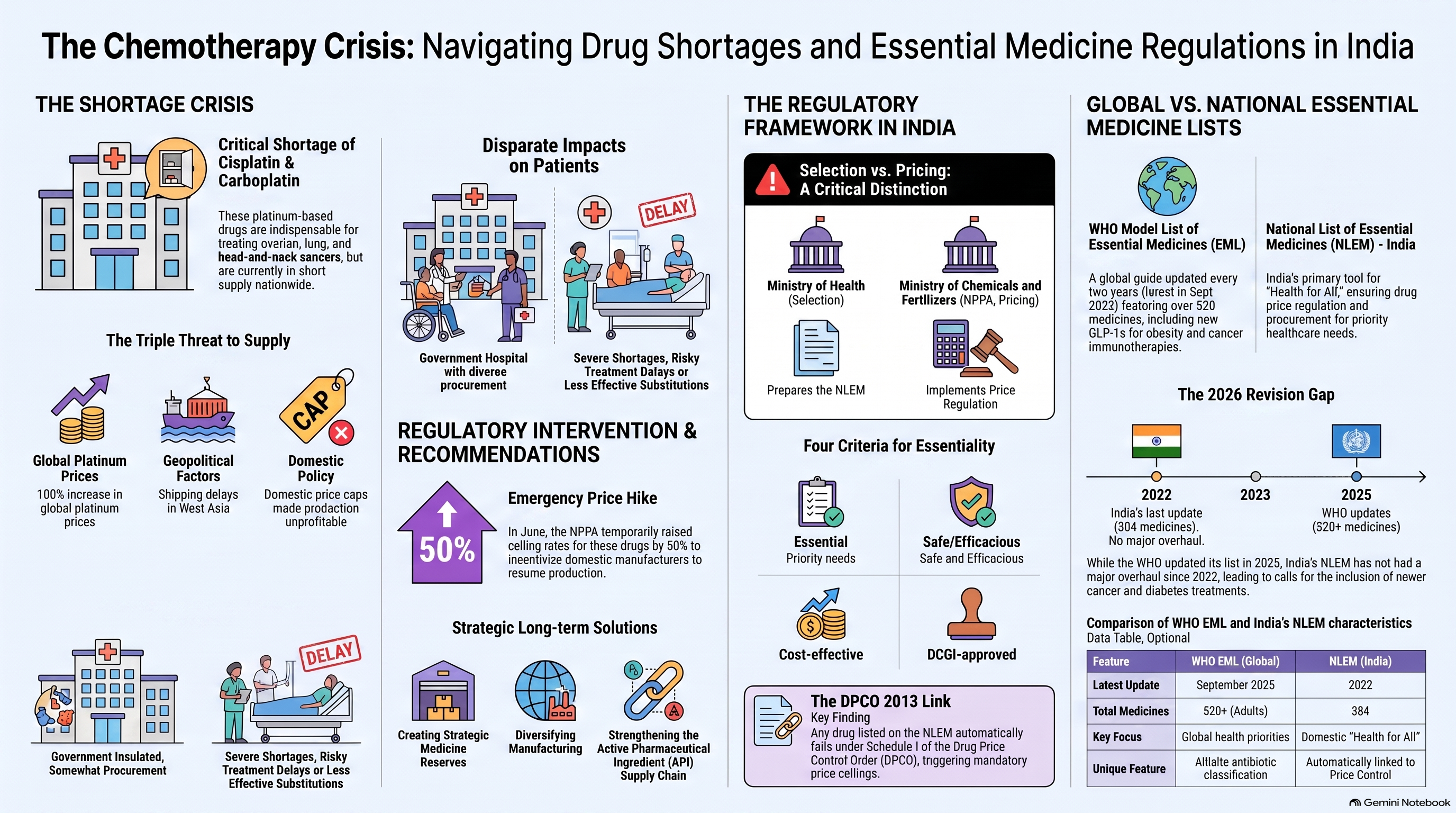
India is facing a critical nationwide shortage of two life-saving chemotherapy drugs — cisplatin and carboplatin — due to soaring platinum raw material costs and supply chain disruptions, disrupting cancer treatment across the country.
Key Highlights
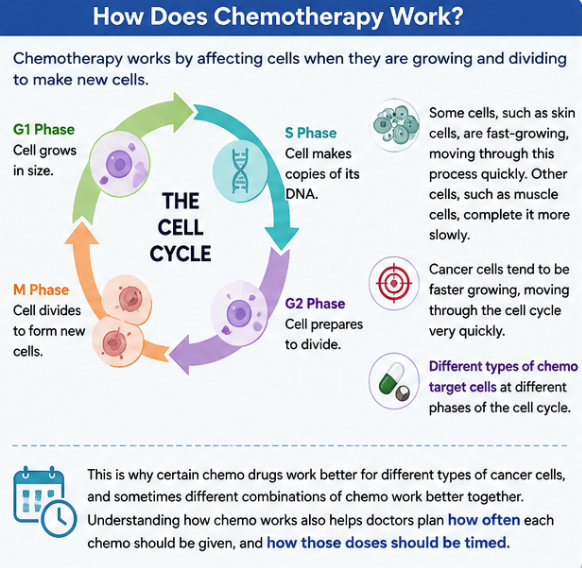 Cisplatin and carboplatin are platinum-based chemotherapy drugs, essential for treating ovarian, lung, and head-and-neck cancers, among others
- Shortage driven by: soaring global platinum prices, shipping disruptions via West Asia, and domestic price caps that made production unviable.
- NPPA temporarily raised ceiling rates for these drugs by 50% in June to incentivise domestic manufacturing
- Treatment interruptions and delays reported nationwide, especially in private hospitals.
Detailed Insights
- Global platinum prices more than doubled, making production of these price-controlled drugs financially unviable for generic manufacturers
- Geopolitical conflicts and shipping constraints in West Asia further restricted raw material imports
- Government hospitals with multiple procurement channels were relatively insulated; private facilities and some state hospitals faced severe shortages
- Delays/substitutions with less effective regimens risk compromising treatment outcomes, especially in curative-intent cancers
- Experts recommend: strategic reserves of essential cancer medicines, diversifying domestic manufacturing, and strengthening API supply chains
WHO Model List of Essential Medicines (EML)
First published in 1977; serves as a global guide for prioritising health needs. Updated every two years.
- Latest update (September 2025): 24th WHO EML and 10th EML for Children (EMLc) released
- 2025 key additions: GLP-1 receptor agonists (Semaglutide, Tirzepatide) for type 2 diabetes/obesity; cancer immunotherapies like Pembrolizumab for metastatic cervical/lung cancers; medicines for rare conditions such as cystic fibrosis and haemophilia
- Total count: Over 520 medicines for adults in the 2025 list
Key Fact: WHO EML uses the AWaRe classification (Access, Watch, Reserve) for antibiotics, to tackle antimicrobial resistance (AMR).
National List of Essential Medicines (NLEM) – India
India's primary tool for "Health for All" through drug price regulation and procurement.
- Governing body: Prepared by the Ministry of Health and Family Welfare via an expert committee
- Regulatory link: NLEM-listed drugs automatically fall under Schedule I of the Drug Price Control Order (DPCO), 2013
- Pricing authority: NPPA fixes the "ceiling price" for these drugs
Common Trap: NLEM is prepared by the Health Ministry, but price regulation is implemented by the NPPA, which functions under the Ministry of Chemicals and Fertilizers — don't confuse the two roles.
Selection Criteria for NLEM
- Essentiality — must address priority healthcare needs of the majority
- Safety & Efficacy — unequivocal evidence of clinical benefit required
- Cost-effectiveness — total treatment cost considered, not just unit price
- Regulatory approval — must be licensed/approved by the DCGI
Current Status (2026)
- Last comprehensive overhaul: NLEM 2022, covering 384 drugs
- WHO updated its list in 2023 and 2025, but India's NLEM hasn't seen a major revision since 2022 — prompting calls to add newer cancer and diabetes treatments
