
Somewhere in the third or fourth month of preparation, most serious Anthropology students do the same thing. They download ten or twelve years of UPSC Anthropology papers, print them, sit down with a highlighter — and start hunting for repeats.
They scan year after year for the same question asked twice, because somewhere they absorbed the idea that past papers are for spotting repeats and predicting the exam. When the clean repetitions don’t appear, they feel cheated, and they quietly demote the papers from “critical resource” to “nice to have” — going back to reading textbooks cover to cover, hoping volume will carry them.
That whole approach is built on a misunderstanding. A proper Anthropology PYQ analysis reads past papers the way experienced teachers and exam-setters do: not as a prediction engine, but as a window into the themes, frameworks, and analytical patterns UPSC keeps returning to.

If you’re reading this, you’ve likely already crossed the beginner stage — you’ve seen the Anthropology Optional syllabus and started your first pass through the standard texts. Good. This is the point where understanding how the exam thinks matters more than covering one more topic.

Why Most Students Use PYQs Incorrectly
“Use PYQs properly” helps nobody, so let me be specific about the four mistakes I see most.
The first is treating the paper like a lottery ticket — checking your numbers against the draw, hoping the same ones come again. Since Anthropology almost never lifts a question verbatim, this reader concludes the papers aren’t useful and walks away.
The second is timing. Most students open their PYQs only after “the syllabus is done,” as a final quiz. Used that way, a paper can only test you; it cannot shape how you study. Read kinship first and discover only later how UPSC frames it, and you’ve lost the chance to read that chapter with the examiner’s concerns in mind. Read the questions first, and the same chapter reads differently — the debates and fault-lines stop blurring into the text.
The third is counting instead of interpreting. Marking how often caste or tribe “appeared” and declaring them important is a start, but shallow. The question that changes your preparation is why the examiner keeps returning to a theme — what tension or framework makes it endlessly examinable. Without that, you know only that something recurs, not how it will be asked next.
The fourth is ignoring the directive word. Many students register only the noun — kinship, caste, evolution — and skip the verb. In Anthropology, the verb is half the question. “Describe the functionalist approach” and “critically examine the continued relevance of functionalism” demand completely different answers, though functionalism sits in both.
When a student tells me, “Sir, I’ve done ten years of PYQs,” I ask one thing back: “Then tell me three things the setter seems obsessed with.” If they can’t, they’ve counted the papers, not studied them. Counting is not studying — a child can count.
Do Questions Repeat in Anthropology Optional?
No — not in the way students hope. You will very rarely see a question lifted word-for-word from an earlier year. That’s by design; repeating questions would turn the exam into a memory test rather than a test of understanding.
But something more useful does repeat. While the wording changes, UPSC keeps walking the same terrain — the same core debates, conceptual tensions, and theoretical frameworks. Each year the examiner approaches the same hill from a different side, with a different contemporary hook or Indian example. To the repeat-hunter these look like all-new questions. To the reader who knows the terrain, they’re the same hill in new light.
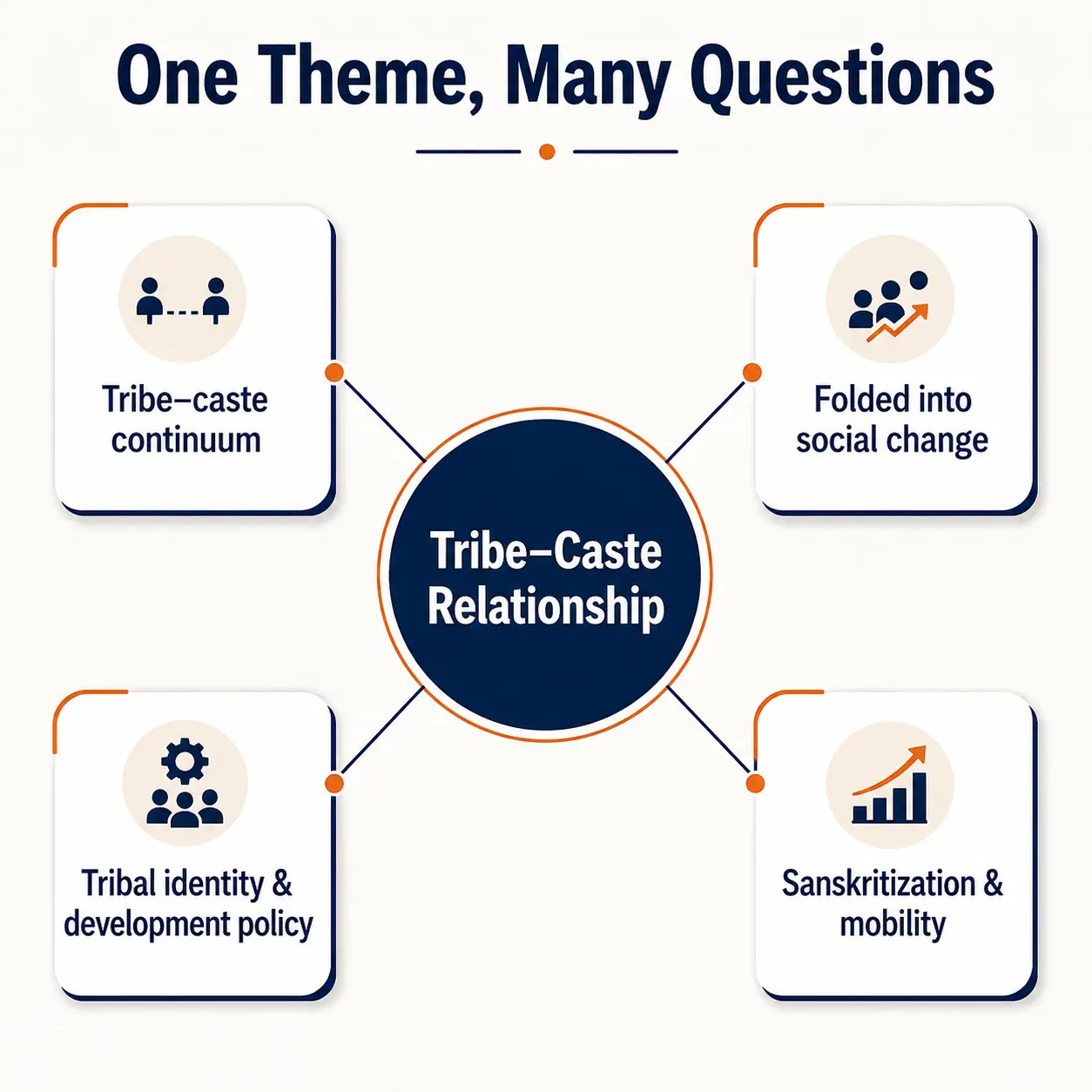
Take the tribe–caste relationship. One year it surfaces as a direct question on the tribe–caste continuum; another year it’s folded into social change; another year it sits inside a question on tribal identity and development policy. Three questions, one underlying concern. So “do questions repeat?” is the wrong question. The right one is: what parts of the syllabus does UPSC keep returning to, and in what forms?
What Actually Repeats: Themes, Not Questions
To use PYQs seriously, separate the question from the theme. A question is specific — one year, one wording, one demand. A theme is the underlying concept, debate, or framework being tested, and themes are revisited precisely because they sit at the heart of the discipline.
What recurs falls into four buckets. Concepts are the foundational bricks — culture, kinship, marriage, family, caste, tribe, ethnicity, social change. Debates are the unsettled arguments anthropology loves: formalist versus substantivist in economic anthropology, descent versus alliance in kinship, whether the family is a human universal, isolation versus assimilation versus integration in tribal policy, whether “race” carries any biological meaning. Frameworks are the theoretical schools — evolutionism through postmodernism — asked not as “write short notes” but as lenses: examine X using Y, compare how two schools would read Z. Dimensions are the recurring angles: “critically examine the relevance today,” “compare and contrast,” “trace the evolution of this concept,” “discuss with Indian examples.”
Here’s the payoff. Prepare a question and you’re ready only when that exact question comes. Prepare a theme — concept plus core debate plus relevant frameworks plus the usual dimensions — and you’re ready for every variant UPSC can generate from it, including the ones not yet written.
I ask students to keep two notebooks. One lists topics the way the syllabus does. The other — the one that wins marks — lists debates and dimensions. Not “kinship,” but “descent vs alliance, and where I stand.” Not “tribes,” but “isolation vs assimilation vs integration, and what the evidence suggests.” When you can argue a theme instead of reciting a topic, you stop fearing new questions.
Table 1: Theme Frequency Matrix (Qualitative)
The recurrence bands discussed in this article are qualitative observations based on long-term analysis of Anthropology PYQs and should not be interpreted as statistical frequency counts.
| Theme / Cluster | Paper | Recurrence | How UPSC usually frames it |
|---|---|---|---|
| Culture concept & scope | 1 | Very High | Define, compare with civilization, trace evolution |
| Major theoretical schools | 1 | Very High | “Compare,” “critically examine,” “assess relevance,” apply to example |
| Kinship (descent, alliance, terminology) | 1 | Very High | Descent vs alliance, changing kinship, analytical use of terms |
| Marriage & family (universality debate) | 1 | High | Universality of family, forms of marriage, change via law and modernity |
| Economic anthropology | 1 | High | Formalist–substantivist; reciprocity–redistribution–market |
| Religion (magic–religion–science, ritual, myth) | 1 | High | Comparative theories, function of ritual, relevance today |
| Human evolution, genetics, race concept | 1 | High | Fossils, primates, population genetics, critique of biological race |
| Research methods & fieldwork | 1 | High | Participant observation, case study, objectivity and ethics |
| Political organisation & law | 1 | Moderate–High | Band–tribe–chiefdom–state, social control in stateless societies |
| Linguistic anthropology | 1 | Low–Moderate | Sapir–Whorf, language and world-view |
| Indian social system (varna, ashrama, karma) | 2 | High | Classical concepts, interpretation and change |
| Caste system & change (incl. Srinivas) | 2 | Very High | Origin theories, jajmani, dominant caste, sanskritization, caste & politics |
| Tribe: definition, tribe–caste relationship | 2 | Very High | Tribe as category, the continuum, distribution and diversity |
| Tribal development, displacement, land policy | 2 | Very High | Land alienation, displacement, FRA, PESA, rehabilitation, policy critique |
| Village studies & little–great tradition | 2 | High | Village as community, universalisation–parochialisation, monographs |
| Constitutional safeguards & Schedules | 2 | High | Fifth/Sixth Schedules, reservations, TSP, implementation critique |
| Contributions of Indian anthropologists | 2 | High | Signature concepts (sacred complex, sanskritization) and relevance |
| Demography & peopling of India | 2 | Moderate | Ethnic/linguistic groups, population structure, migration |
| Impact of religions on tribes/SCs | 2 | Moderate | Hinduism, Buddhism, Islam, Christianity — change and continuity |
| Anthropology of development & contemporary issues | 2 | Moderate (rising) | Displacement, health, gender, climate, anthropology in policy |
How to use this rather than just nod at it: the Very High rows are not where you spend the most time — they’re where you cannot afford to be weak, which is different. Most serious candidates prepare them well; they protect your score rather than distinguish it. Marks are more often won in the High and rising-Moderate rows, where preparation is patchier and a sharp answer stands out more.
Paper 1 Trends
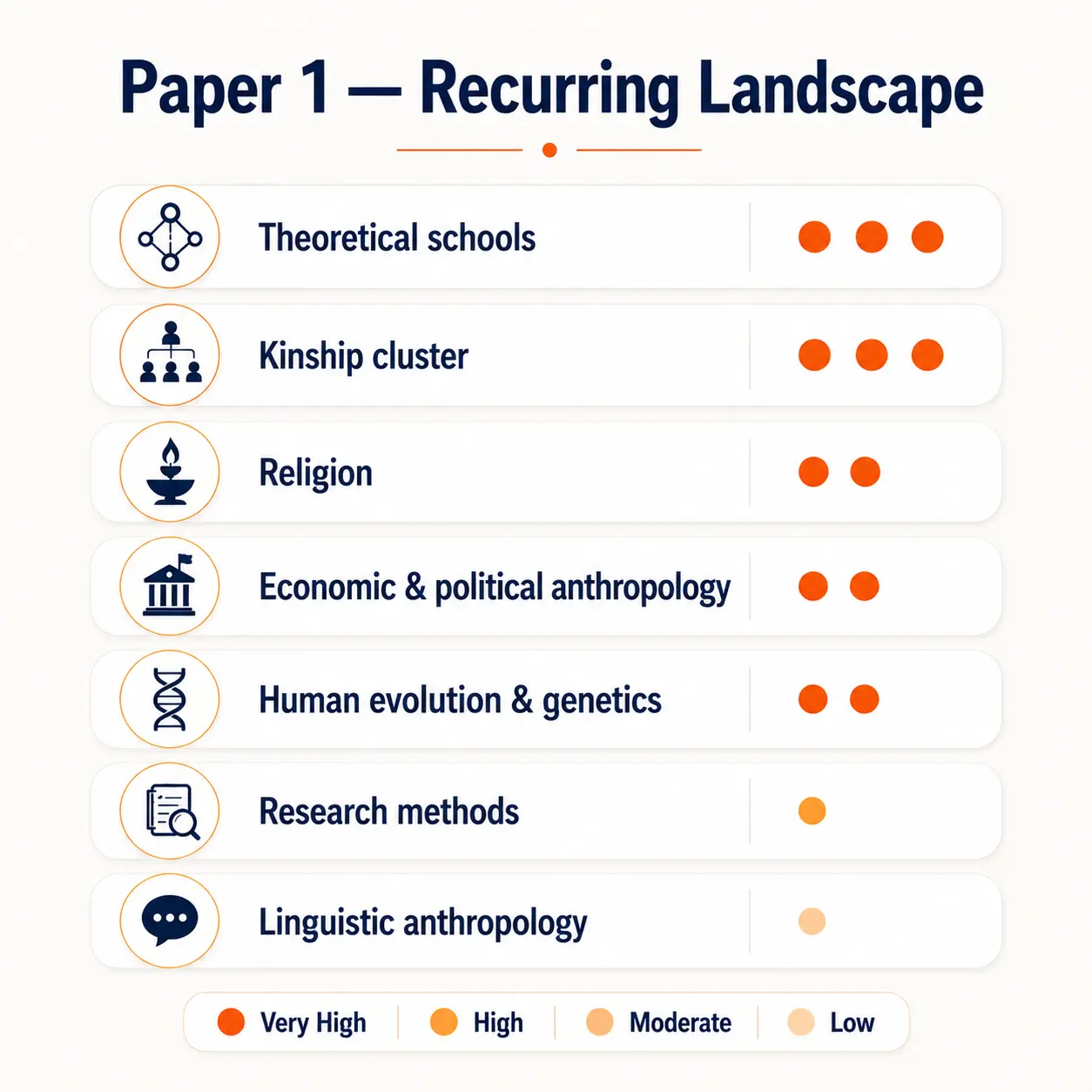
Paper 1 shows the discipline’s skeleton — theory, kinship, economics, politics, religion, evolution, genetics, methods. The consistent message across recent papers: UPSC uses Paper 1 to test whether you can think with anthropology, not just talk about it.
Theory is treated as a toolbox, not a list. Questions on the schools recur in nearly every cycle, but rarely as “write short notes.” The recurring moves are comparison (“compare two schools with reference to a theme”), evaluation (“critically examine the relevance of X today”), and application (“how would a functionalist explain Y”). A candidate who knows only definitions collapses here; one who has used each theory as a lens — on kinship, on religion, on social change — finds these natural.
Kinship recurs as a cluster, not a line: descent, alliance, terminology, residence, marriage systems, family forms. The papers repeatedly probe the descent-versus-alliance debate, the universality of the family, and the impact of urbanisation and law on both — demanding technical control (lineage, clan, moiety) alongside the ability to comment on change. Economic questions are dominated by the formalist–substantivist debate and by reciprocity, redistribution, and market exchange; political ones by the band–tribe–chiefdom–state typology and social control in stateless societies; religion by magic–religion–science, totemism, ritual, and myth. The shared dimension across all three is comparison and evaluation — not “define totemism,” but “discuss the anthropological approaches to religion and their limits.”
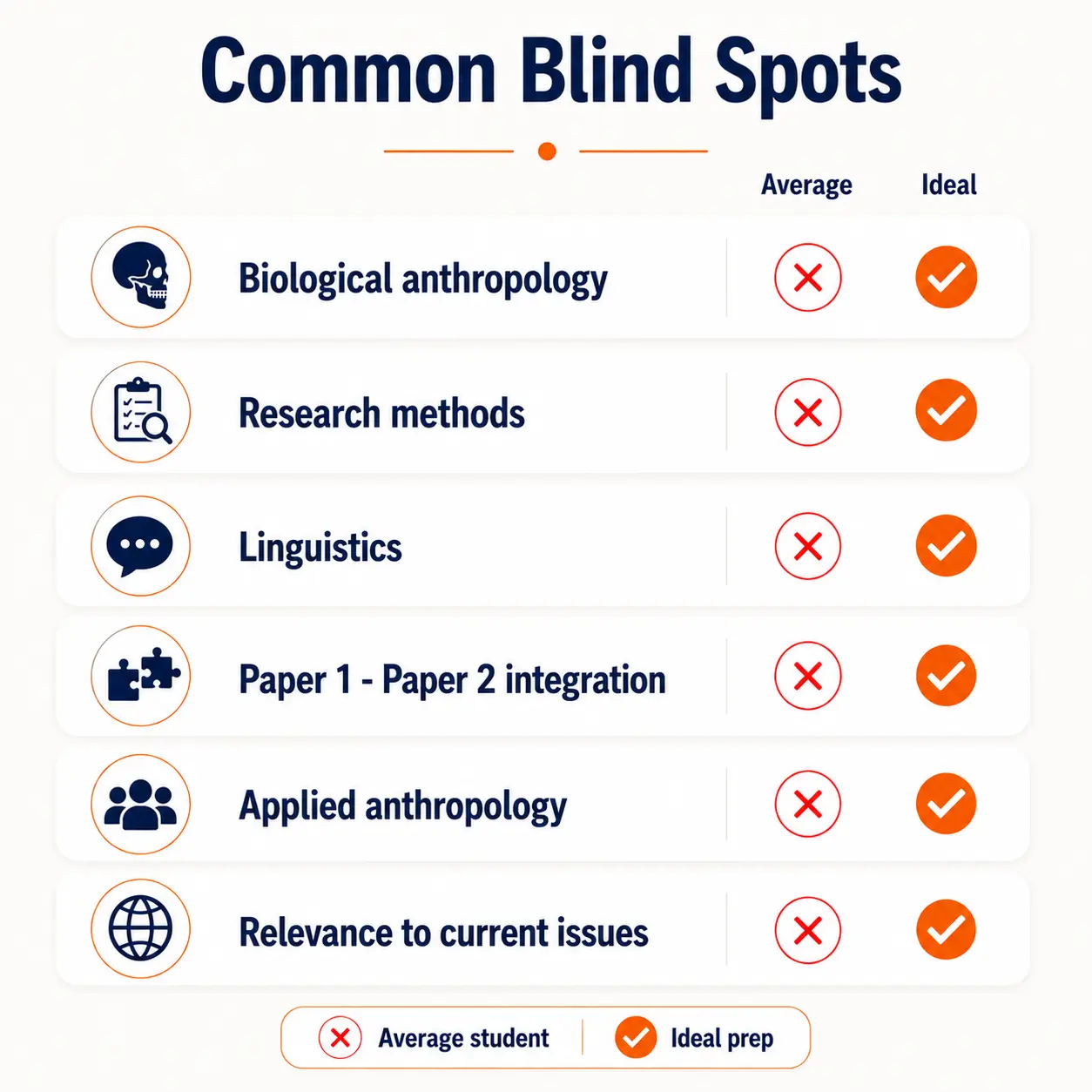
Then there is the block most students quietly neglect: biological anthropology. Human evolution, primates, fossils, Mendelian and population genetics, human variation, and the race concept form a substantial, recurring part of Paper 1 — and many humanities-background candidates decide, without quite admitting it, that this is optional. The examiners disagree. Questions keep coming on hominization and bipedalism, the Hardy–Weinberg principle and the forces changing gene frequencies, chromosomal anomalies, and the critique of “race” as a biological category. These are often concept-heavy rather than calculation-heavy. This is the single biggest blind spot in typical preparation, and it shows in how toppers describe “catching up on physical anthropology” late in revision. Skipping it isn’t a strategy; it’s surrendering stable marks.
Paper 2 Trends
Paper 2 turns all of this onto Indian ground — civilizations, caste, tribes, villages, minorities, constitutional safeguards. Two features define recent years: a persistent focus on caste, tribe, and social change, and a rising emphasis on development, displacement, and policy.
Caste is the most reliable theme in either paper. The examiner approaches it through theories of origin, the jajmani system, dominant caste, and the relationship between caste, class, and politics. M.N. Srinivas’s vocabulary — sanskritization, westernization, dominant caste — recurs so often that it is best treated as core infrastructure, not one scholar’s contribution. A favourite angle is whether caste is weakening, transforming, or reasserting itself under democracy and the market.
Tribe questions combine definition, description, and policy. They ask what a tribe is and whether the category is stable in India; they probe the tribe–caste continuum; and they return to the concrete problems of land alienation, indebtedness, health, education, and displacement by dams, mines, and parks. Alongside these, the papers repeatedly ask candidates to evaluate isolation versus assimilation versus integration as policy approaches, and to read the Forest Rights Act, PESA, and rehabilitation frameworks anthropologically — who gains, who loses, how cultural systems are affected. These reward far more than reciting provisions.
Village studies and the little–great tradition appear cyclically but strongly — the village as a social system, universalisation and parochialisation, the classic monographs — and they bridge Paper 1 method and Paper 2 content. The contributions of Indian anthropologists recur reliably (Srinivas, Dube, Karve, Vidyarthi, Bose), as does the evolution of Indian civilization across the archaeological and ethnographic record.
The clearest drift in recent years is toward questions linking anthropology to live issues — development-induced displacement, tribal health and nutrition, gender in marginalised communities, forest governance and climate stress. The examiner wants candidates who can engage with policy and contemporary India, not only recite classic tribe descriptions.
One skill matters more here than almost anything: integration with Paper 1. Most candidates keep the two papers in separate boxes; UPSC doesn’t. A top-tier answer on caste will quietly draw on functionalist or structuralist ideas of order, on the anthropology of religion when discussing ritual, on method when evaluating a famous village study. Almost no one does this deliberately, which is exactly why it distinguishes those who do.
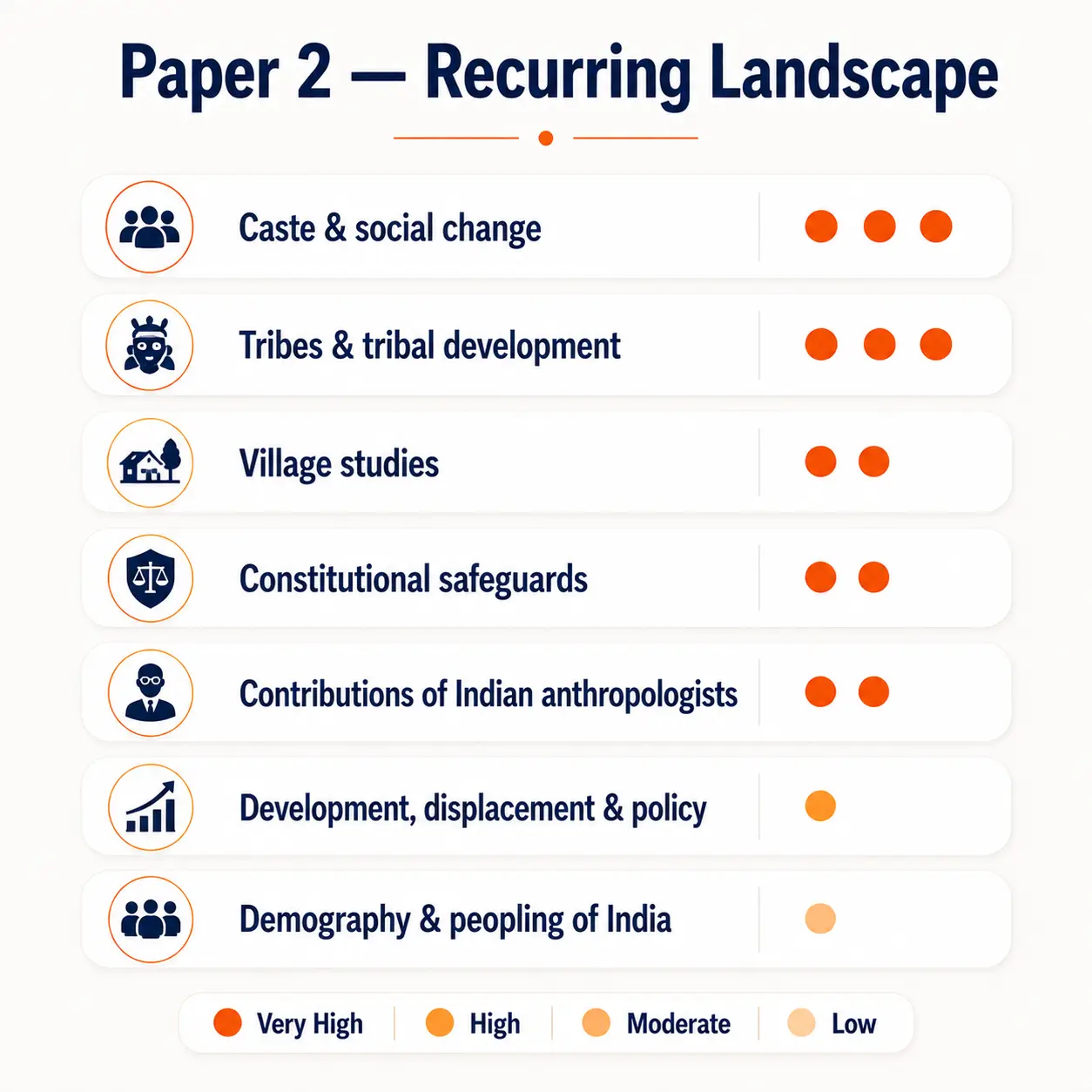
Table 2: Paper 1 vs Paper 2 Trend Comparison
| Dimension | Paper 1 | Paper 2 |
|---|---|---|
| Core focus | General theory, concepts, methods, human evolution | Indian society, tribes, caste, policy, Indian anthropologists |
| Key recurring clusters | Theoretical schools, kinship cluster, evolution/genetics, religion, economy & polity | Caste & change, tribes & development, village studies, safeguards, Indian anthropologists |
| Main skill tested | Applying and critiquing theory; handling debates | Applying concepts to Indian contexts; linking to policy and change |
| Favoured directive words | “Critically examine,” “compare,” “assess relevance” | “Discuss,” “examine,” “evaluate,” “comment” |
| Nature of recurrence | Same frameworks, new examples and debates | Same Indian concepts, new contexts and cases |
| Common blind spot | Biological anthropology; research methods | Integration with Paper 1; development & policy angles |
| Strong-answer marker | Clear position in debates, multiple frameworks | Indian examples + policy reading + Paper 1 concepts |
The last row is the one to internalise. Paper 1 reuses frameworks and debates; Paper 2 reuses Indian concepts and realities. Your preparation has to mirror that difference.
What PYQs Reveal About UPSC’s Thinking
Step back from individual questions and look across many years, and two things come into focus.
First, India is not a case study — it’s the core. Paper 2 doesn’t treat India as an application bolted onto “real” theory; it treats India as a central field in which anthropological ideas are generated and tested. That’s why Indian anthropologists, Indian village studies, and Indian tribal policy carry so much weight, and why policy literacy — FRA, PESA, the Schedules, reservations, displacement — counts as part of anthropological competence rather than a separate civics exercise.
Second, the exam is slowly modernising. The rise of development, rights, health, and climate mirrors a broader UPSC shift away from antiquarianism toward relevance. The candidate who can discuss tribal life in the 1950s but not displacement around a dam notified last year is preparing for an older version of this exam.
Read this way, PYQs aren’t a tool for guessing the next question. They’re a portrait of what the examiner values: conceptual clarity, Indian grounding, policy sensitivity, and integrated thinking.
How to Build a PYQ-Based Preparation Strategy
This is where the analysis becomes practical.
Read PYQs before and after each topic. Before studying kinship, read every kinship question from the last decade; before tribe, the relevant Paper 2 questions. This primes you for the debates, sub-topics, and directive words the examiner favours, and you read your books differently as a result. After finishing, return to the same questions and check whether you can now answer them in ten to fifteen minutes.
Build theme sheets, not topic summaries. For each major area, make one A4 sheet: core definitions, the key debates, the frameworks that bear on the theme, two or three Indian examples, and one “relevance today” paragraph you’ve thought through. This is how you prepare for themes that return in new clothing.
Triage by frequency and distinctiveness. Bring the Very High core to solid, reliable competence; it protects you. Spend your extra thinking time on the High debates that distinguish answers — formalist–substantivist, isolation versus integration, functionalism versus structuralism, the tribe–caste continuum. Cover the Moderate areas (linguistics, method, demography, sacred complex, applied anthropology) smartly; they produce the surprise questions weaker candidates leave blank.
Practise answer-writing around the directive words. Don’t just “solve” PYQs — use them to train how you think under each instruction. Take several “critically examine” questions and write skeletons that lay out thesis, arguments, counter-arguments, and judgment. Take several “discuss” questions and structure balanced answers across historical, theoretical, empirical, and contemporary dimensions. We’ll treat this craft in a dedicated Anthropology Answer Writing Guide; for now, let real prompts shape your practice.
Audit your blind spots honestly. Can you write a clear fifteen-marker on evolution and gene frequencies without leaning on numbers? Can you explain participant observation, the genealogical method, and an ethical dilemma in fieldwork? Can you name at least one Paper 1 concept to deploy in any major Paper 2 topic? Where the answer is no, your plan writes itself.
This is also where mentorship earns its place. Across more than forty years of teaching Anthropology, VAID Sir’s approach to PYQs has had little to do with prediction and everything to do with pattern recognition — seeing the recurring debates, marrying Paper 1 theory with Paper 2 India, and judging which areas are under-prepared across the country. Whether you study alone or with guidance, the purpose of a mentor’s analysis is to shorten your learning curve about these patterns, not to do your thinking for you.
In the 2025 cycle, five students from the VAIDS ICS classroom programme crossed the 290 mark in the Anthropology Optional. What they had in common wasn’t advance sight of the questions — it was how they read the papers: they had mapped the recurring debates, knew which Very High themes merely protected a score and which High-band debates could lift one, and had closed their weak areas long before the exam. That is what disciplined PYQ use looks like in practice.
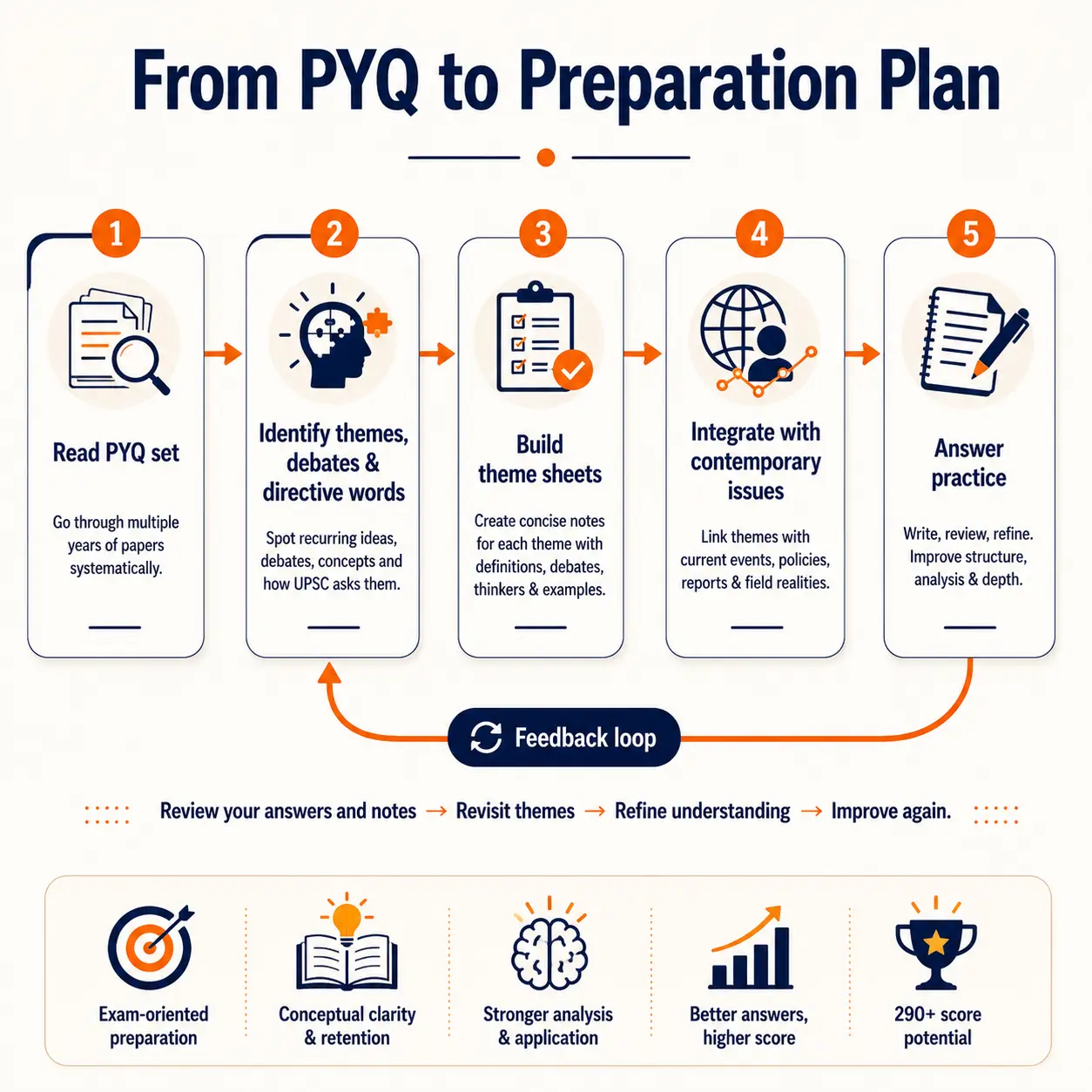
Table 3: Preparation Priority Table
| Area | Recurrence | Priority logic | Action it implies |
|---|---|---|---|
| Theories, kinship cluster, caste, tribe, tribal development | Very High | Non-negotiable core | Reach solid, reliable competence — this protects your score |
| Key debates & frameworks (formalist–substantivist, isolation vs integration, functionalism vs structuralism, tribe–caste continuum) | High | Where strong answers distinguish you | Spend extra thinking time; rehearse both sides |
| Biological anthropology (evolution, genetics, race) | High | Most common blind spot | Close the gap to solid competence; do not skip |
| Linguistics, method, demography, sacred complex, applied anthropology | Moderate | Small but recurrent | Cover smartly; these are the surprise-question areas |
| Paper 1 ↔ Paper 2 integration | (a skill) | The strongest candidates’ edge | Keep a running list of cross-links; practise using them |
If you read only one row, read the last. Integration isn’t a topic with a frequency — it’s the habit that makes everything else you’ve prepared read as understanding rather than memory.
Frequently Asked Questions
Do Anthropology Optional questions ever repeat exactly?
Very rarely. Don’t plan around verbatim repeats. Expect recurring themes and debates asked in new ways each year — that is the pattern worth preparing for.
If questions don’t repeat, what’s the point of an Anthropology PYQ analysis?
It shows you what UPSC finds worth questioning — which themes recur, which debates it prefers, which directive words dominate. That calibrates how you read your books and how you practise answers. Prediction is a weak, secondary benefit at best.
When should I use Anthropology previous year questions — at the start of a topic or the end?
Both, for different reasons. At the start, they tell you what to look for. At the end, they tell you whether you can now answer in time and with depth. Saving them entirely for the end wastes half their value.
Which areas dominate each paper?
Paper 1’s recurring core is theory, the kinship–marriage–family cluster, economic and political anthropology, religion, human evolution and genetics, and research methods. Paper 2’s is caste and social change, tribes and tribal development, village studies, constitutional safeguards, and the contributions of Indian anthropologists.
Can I ignore biological anthropology if I’m from a humanities background?
No. Evolution, genetics, and the race concept appear repeatedly, and these questions are usually concept-heavy rather than calculation-heavy. Ignoring this block hands away marks that better-prepared candidates will take.
How much should I invest in small topics like linguistics or the sacred complex?
They’re Moderate in frequency but high in efficiency — contained, learnable quickly, and capable of yielding marks when they appear. Cover them smartly; don’t obsess, don’t skip.
What Should I Do After PYQ Analysis?
Treat this as the moment analysis turns into output. Once the recurring themes and debates are visible, the next moves are concrete: lock your sources with the Anthropology Booklist, convert the high-frequency concepts into recall-ready visuals with the Anthropology Diagrams Guide, compress each theme into one-page revision sheets, and begin timed answer-writing on real PYQs using the Anthropology Answer Writing Guide. The analysis tells you what UPSC keeps asking; these steps build the output that actually earns the marks.
How does this connect to the rest of the VAIDS ICS hub?
Use the Anthropology Optional syllabus guide to confirm you’ve missed no examinable theme, How to Start Anthropology Optional from Zero to sanity-check your foundation, and Is Anthropology a Good Optional? if you’re still at the choice stage. This article sits after those and should reshape how you work with UPSC Anthropology previous year questions over the next twelve to eighteen months. For the next steps — turning these patterns into scripts — a forthcoming Answer Writing Guide, Booklist, and Diagrams Guide will follow.
1 thought on “Anthropology PYQ Analysis: What UPSC Keeps Asking in Anthropology Optional”