Smoke-Dried Bodies Could Be World’s Oldest Mummies
Proceedings of the National Academy of Sciences | 15 September 2025
Smoke-Dried Bodies Could Be World’s Oldest Mummies
Evidence of Early Mummification in Asia
A recent study by Hsiao-chun Hung et al., published in Proceedings of the National Academy of Sciences, suggests that ancient societies in China and Southeast Asia practiced forms of mummification thousands of years earlier than previously known.

Smoke-Drying Instead of Natural Preservation
Unlike Egyptian mummies (around 4,500 years old) or Chilean mummies preserved naturally in the Atacama Desert, these findings come from humid regions, where natural preservation is unlikely.
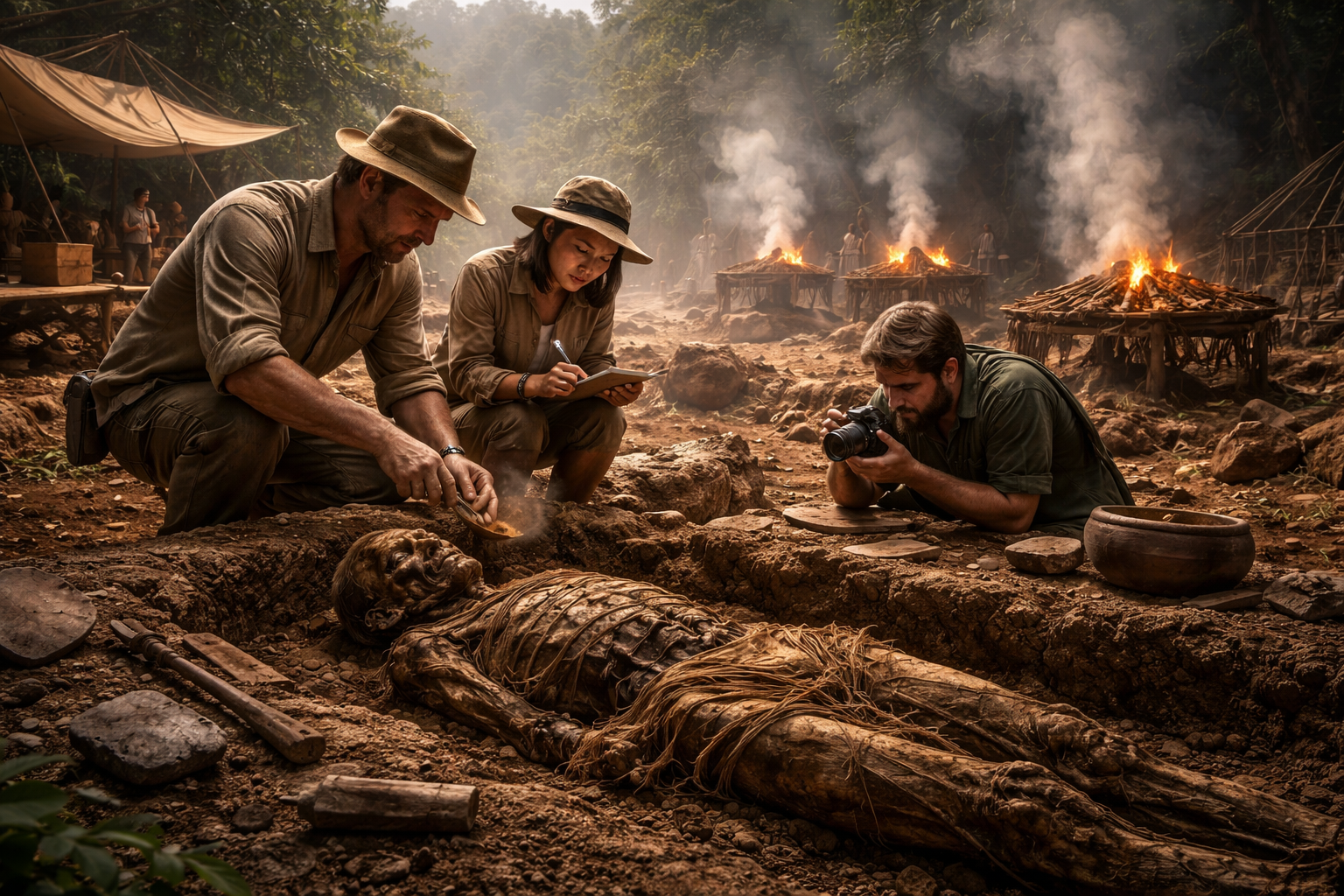
Researchers propose that bodies were preserved through intentional smoke-drying, a process that removed soft tissues and prevented decomposition.
Archaeological Evidence from Burial Sites
Skeletal remains from China and Southeast Asia were found in contorted burial positions.
This unusual positioning led researchers to hypothesize that:
• The absence of soft tissue allowed flexibility
• Bodies were preserved before burial
• Mummification enabled complex burial practices
Scientific Analysis of Bone Samples
Researchers conducted chemical analysis of bone samples and compared them with control samples from Japan.
Findings revealed:
• Evidence of low-temperature heat exposure
• No signs of high-temperature burning
• Clear indication of intentional drying process
No Evidence of Cremation
The intact skeletal structure suggests that bodies were not cremated. Instead, the objective was preservation, not destruction.
This highlights a deliberate and sophisticated mortuary practice.
Origins of the Practice
Some samples date back more than 10,000 years, making them potentially the oldest known mummies in the world.
Ethnographic parallels from Indonesia and Australia show similar practices where bodies were:
• Tightly bound
• Placed above a slow-burning fire
• Dried over several months
Ritual and Cultural Significance
Smoke-drying was not merely a preservation technique but also had spiritual meaning.
Beliefs associated with this practice include:
• The spirit could leave and return to the body
• Continued interaction with ancestors
• Strong link with afterlife beliefs
This reflects early forms of ancestor worship and ritual symbolism.
Wider Anthropological Implications
The study suggests that smoke-drying may have been a widespread practice among hunter-gatherer societies across Asia.
It challenges earlier assumptions by showing:
• Multiple origins of mummification
• Independent development of mortuary traditions
• Advanced cultural complexity in prehistoric societies
Relevant Questions :
1. Give outline of Palaeolithic culture emphasizing upon its tool technology. (20M/2013)
2. Discuss the development of the concept of culture in Anthropology. (2019)