Iran–US Conflict and India’s Energy Security: Rising LPG Vulnerability Amid West Asian Crisis
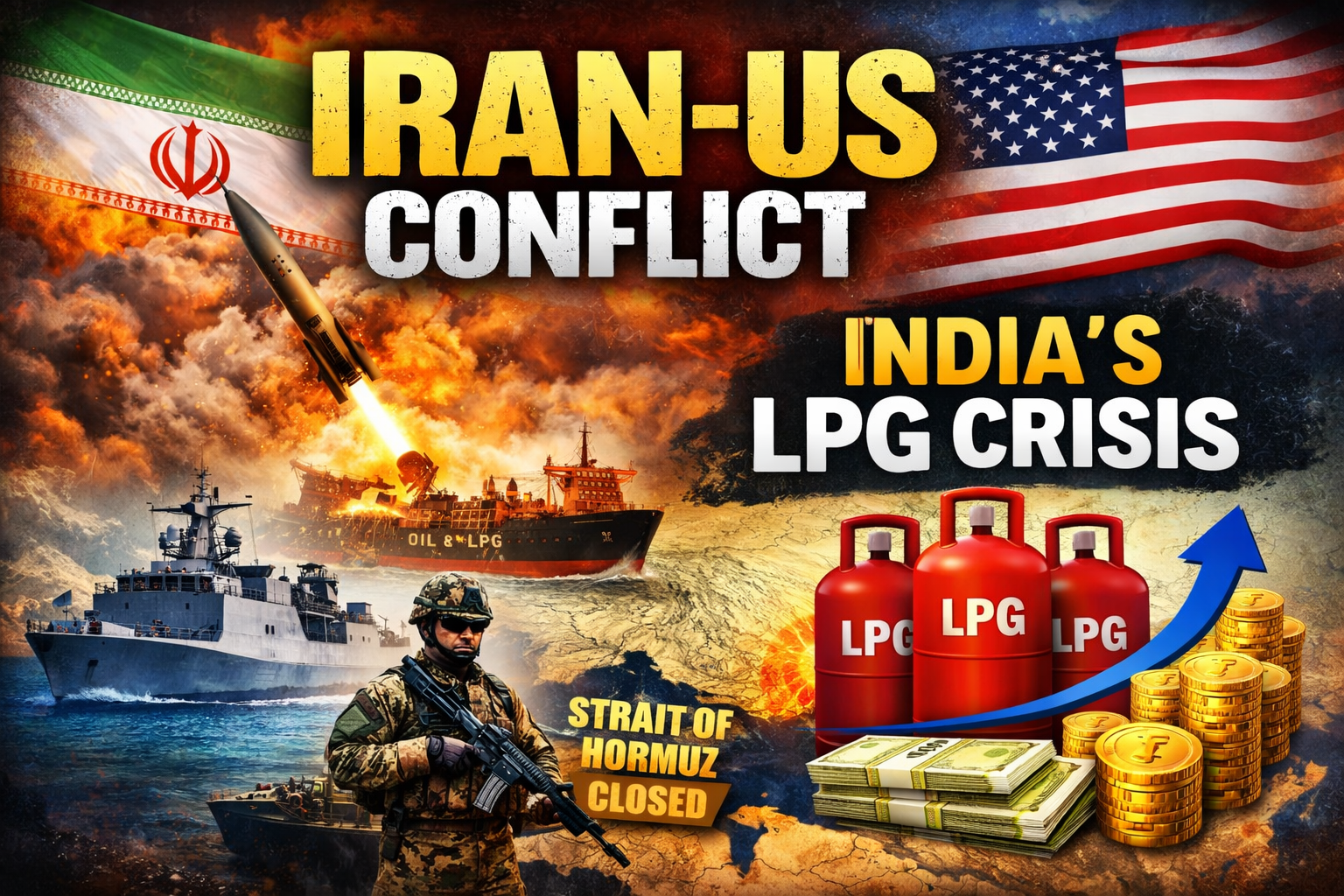
The ongoing Iran–US conflict has severely disrupted energy supply chains across West Asia, exposing India’s structural dependence on imported hydrocarbons and underlining major vulnerabilities in its energy security framework. The disruption of shipping routes through the Strait of Hormuz, one of the world’s most strategically significant maritime chokepoints, has directly affected India’s LPG and LNG supplies, given that a substantial portion of India’s cooking gas imports transit through this route. The immediate impact of the crisis has been visible in the form of rising domestic LPG prices, increased global crude oil prices, and widespread delays in commercial gas deliveries, thereby reviving concerns over India’s excessive dependence on imported fuel.

India’s Growing Dependence on Imported LPG: India is the world’s second-largest consumer and importer of LPG, with domestic production meeting only around 40% of total national demand, while the remaining 60% is met through imports, primarily from Gulf countries. This dependence has increased significantly over the past decade due to the expansion of clean cooking fuel access under welfare schemes such as the Pradhan Mantri Ujjwala Yojana (PMUY). LPG coverage in Indian households has risen from nearly 62% in 2016 to almost universal coverage today. Consequently, the number of active LPG consumers has increased sharply, resulting in a parallel rise in import requirements. While this transition has improved social welfare and reduced dependence on traditional fuels, it has simultaneously deepened India’s import dependence without a matching increase in domestic production capacity.
.png)
Heavy Dependence on Gulf Suppliers: India’s LPG imports remain highly concentrated among a few West Asian nations, with Qatar accounting for nearly 34%, UAE 26%, and Kuwait around 8–9% of total imports. Most of these supplies transit through the Strait of Hormuz, which handles nearly one-fifth of global oil and LNG trade. This geographical concentration creates a significant strategic vulnerability, as instability in one region can severely disrupt India’s energy supplies.
Sectoral Impact of Supply Disruptions: The energy disruption has had cascading consequences across multiple sectors of the Indian economy. Nearly 75% of India’s hospitality and food-service sector depends on LPG, making the industry particularly vulnerable to shortages. Hospitals, educational institutions, hostels, and crematoriums have also reported disruptions in LPG-based services. Further, LNG shortages threaten fertiliser production by affecting urea manufacturing, thereby increasing agricultural input costs. Urban transport and city gas distribution networks may similarly face pressure due to reduced LNG availability.
Government’s Emergency Response: To manage the crisis, the government has initiated several immediate interventions. The Ministry of Petroleum directed oil refining companies to maximise LPG recovery and divert all available output toward public sector oil marketing companies. Propane and butane streams previously used in petrochemical production were redirected to boost LPG supply. Simultaneously, the government invoked the Essential Commodities Act, 1955, introducing a priority-based gas allocation framework that prioritises domestic households, transport fuel, fertiliser plants, and manufacturing industries in descending order. Additionally, refill waiting periods for domestic LPG cylinders were increased to discourage panic buying and hoarding.
Diversification of Energy Sources: Recognising the risks of overdependence on Gulf imports, India has begun diversifying its energy sourcing strategy. It has increased crude procurement from Russia, scaled up LPG imports from the United States, initiated long-term LPG supply negotiations with Canada, and explored additional gas supplies from Australia. These measures indicate India’s strategic attempt to reduce excessive regional concentration in energy imports.
.png)
Maritime Security and Naval Preparedness: The crisis has highlighted the strategic significance of maritime security in protecting energy shipments. With increasing threats to commercial tankers and multiple Indian vessels stranded in the Persian Gulf region, the Indian Navy has been placed on standby under Operation Sankalp to escort merchant ships and safeguard critical energy cargo. This underscores that energy security is no longer merely an economic issue but has become deeply integrated with defence and maritime strategy.
Structural Challenges Exposed by the Crisis: The Iran–US conflict has exposed three major structural weaknesses in India’s energy preparedness: the lack of dedicated strategic LPG reserves, overdependence on a single geographical import region, and excessive reliance on vulnerable maritime chokepoints such as the Strait of Hormuz.
Way Forward:
India must establish strategic LPG storage reserves to provide emergency buffering during crises, diversify import partnerships beyond West Asia, expand domestic gas and LPG production capacity, promote alternative fuels such as bio-LPG and electric cooking, strengthen naval escort mechanisms for energy shipments, and institutionalise comprehensive maritime-energy security protocols.
Conclusion:
The Iran–US conflict has transformed India’s LPG import dependence into a strategic national security issue. Although emergency interventions may provide short-term relief, the crisis has exposed deeper structural weaknesses in India’s energy framework. Going forward, India must move beyond reactive crisis management and adopt a long-term strategy centred on diversification, strategic reserves, domestic production enhancement, and maritime security to build a resilient and future-ready energy ecosystem.


-10052026-113117pm.png)