Orangutans Can Teach Us About Food and Fitness
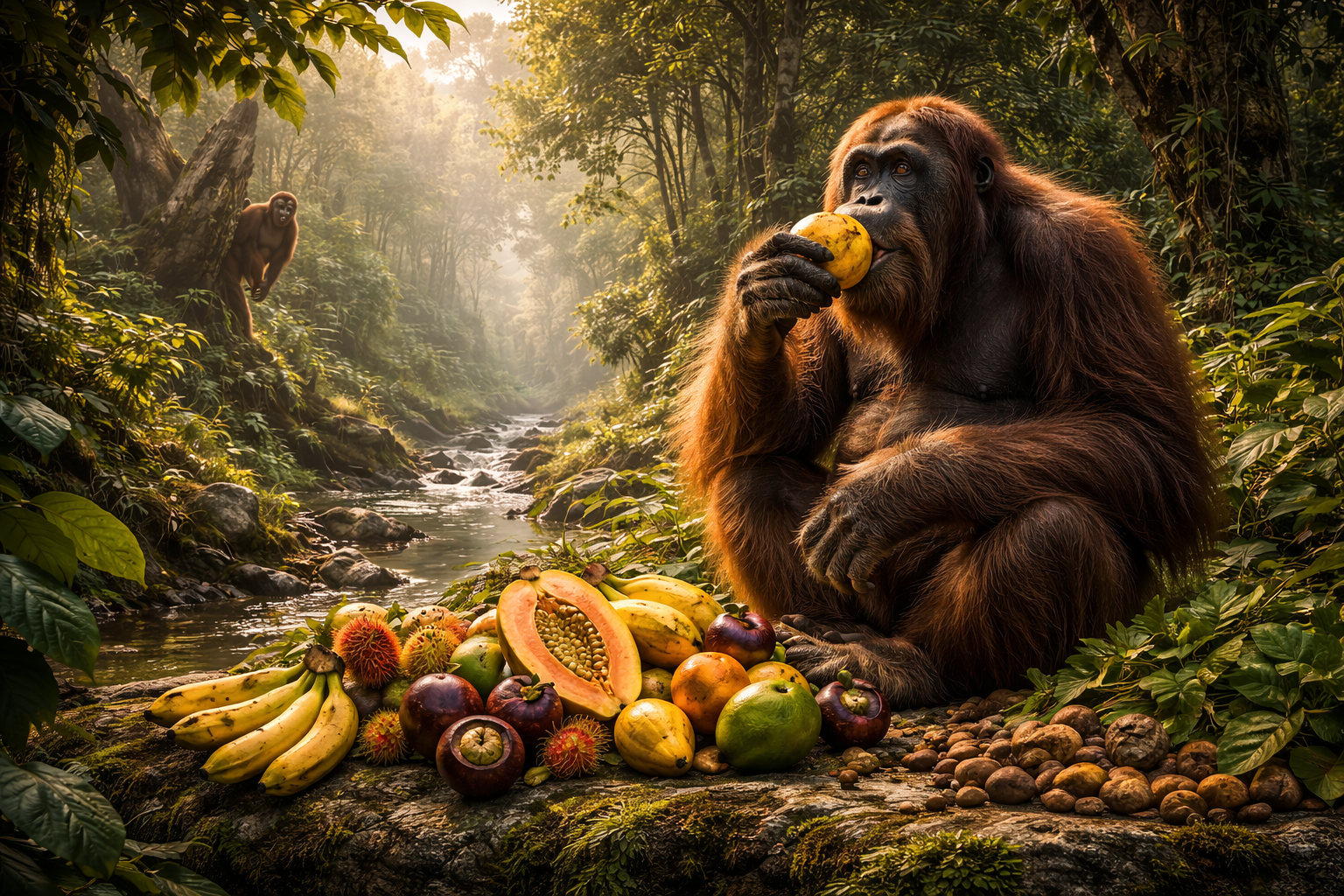
Science Advances | 27 August 2025
Dietary Flexibility in Orangutans
A study by Erin R. Vogel, published in Science Advances, highlights how orangutans maintain health through adaptive dietary strategies.
Orangutans mainly consume fruits rich in carbohydrates. However, when fruit is scarce, they shift to:
• Leaves
• Bark
• Seeds
This shows adaptive flexibility, a key feature in primate evolution. Such flexibility ensures survival in fluctuating environments and reflects the concept of ecological adaptation in Biological Anthropology.

Balanced Nutrition and Protein Regulation
Even during periods of food abundance, orangutans maintain protein intake.
• Maintain lean body structure
• Preserve muscle mass
• Avoid excessive fat accumulation
This reflects nutritional regulation, unlike modern humans who often consume high sugar and fat diets with low protein, leading to lifestyle diseases.
Metabolic Flexibility and Energy Use
Orangutans show metabolic adaptability, which is crucial for survival:
• Burn stored fat during scarcity
• Use muscle protein when needed
This demonstrates physiological adaptation, a key theme in Ecological Anthropology, where organisms adjust biologically to environmental stress.
Parallels with Human Health
Their behaviour resembles intermittent fasting in humans, which may:
• Reduce oxidative stress
• Improve metabolic efficiency
• Lower risk of chronic diseases
This suggests that human body systems evolved for cycles of feast and famine, not constant food availability.
Evolutionary Linkages
Humans and orangutans share a common evolutionary ancestry, leading to similarities in:
• Metabolic processes
• Nutritional needs
• Adaptive mechanisms
However, modern diets—especially ultra-processed foods—disturb this balance, causing diabetes, obesity, and metabolic disorders.
Anthropological Significance
This study highlights:
• Bio-cultural adaptation → Interaction of biology and environment
• Primate behaviour studies → Understanding human evolution
• Ecological Anthropology → Adaptation to food scarcity
• Evolutionary medicine → Linking past adaptations with present diseases
Lessons for Modern Humans
• Maintain balanced diet with adequate protein
• Avoid excessive processed food
• Allow metabolic rest (fasting cycles)
• Stay physically active
These reflect evolutionarily informed lifestyle choices.
Conclusion
Orangutans demonstrate that survival depends on flexibility, balance, and adaptation. Anthropologically, their behaviour reinforces that human health problems today arise from a mismatch between evolutionary adaptations and modern lifestyles. Thus, studying primates helps us reconnect with our biological roots.
RELEVANT PYQs
1. “Elucidate the biological and cultural factors in human evolution.” (2016, 2015)
2.“Human adaptations are always bio-cultural in nature. Discuss.” (20M/2019)



-10052026-113117pm.png)