
Customary Laws and Environmental Conservation — 2023 Paper I
Customary laws and Environmental conservation
Model Answer
VAID ICSIntroduction Customary laws are community-sanctioned norms governing resource use, often rooted in Indigenous Traditional Knowledge (ITK). In tribal societies, these laws are not merely legal, but integrate ecology, kinship, and religion, perfectly illustrated by L.P. Vidyarthi’s "Nature-Man-Spirit Complex" (e.g., among the Maler tribe).
Body
- Mechanisms of Customary Conservation
- Sacred Sanctions (Taboos): Religious taboos act as ecological regulators. For instance, the Khasi sacred groves (Mawphlang) in Meghalaya are protected through strict ritual sanctions against extraction.
- Ritual Regulation of Ecology: Globally, as Roy Rappaport demonstrated in Pigs for the Ancestors (Tsembaga Maring of Papua New Guinea), ritual cycles prevent environmental degradation and overpopulation.
- Sustainable Agro-Ecology: Customary management of landscapes, such as the Apatani of Arunachal Pradesh, who combine wet-rice cultivation and fish farming with zero-waste organic nutrient recycling.
- Regulated Resource Extraction: Angami customary rules enforce strict seasonality and limits on hunting/fishing to ensure species replenishment.
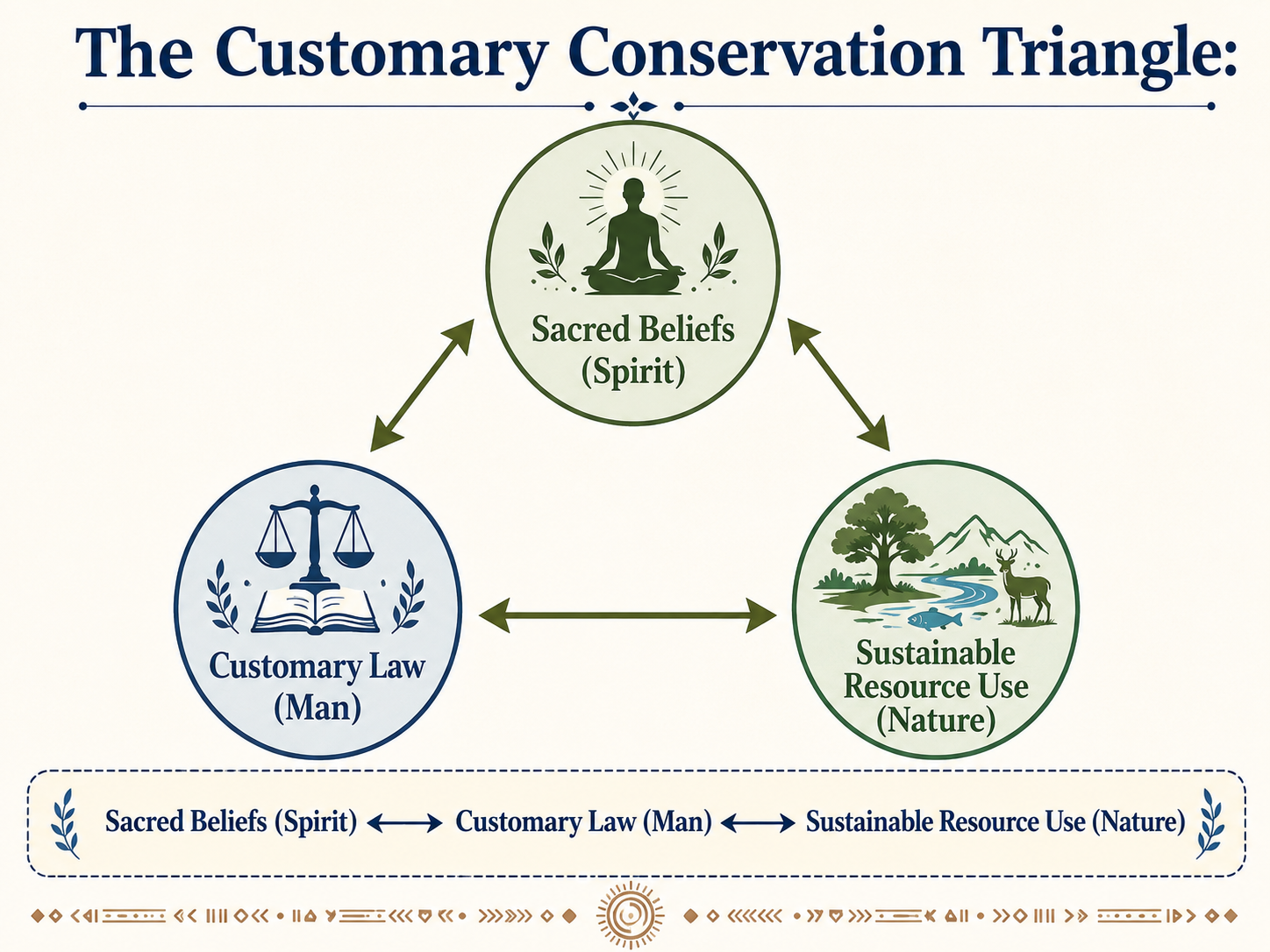
- Contemporary Relevance & Legal Recognition
- Customary institutions prevent "Tragedy of the Commons" by enforcing collective tenure over forests and pastures (e.g., Toda sacred dairies).
- Modern environmental governance legally recognizes these systems through the Forest Rights Act (FRA), 2006 and PESA, 1996, empowering Gram Sabhas to manage community forest resources.
Conclusion While customary law acts as vital indigenous environmental governance (Cultural Ecology), it must not be romanticized. Anthropologists note that demographic pressures, market economy penetration, and the weakening of traditional authority require integrating customary laws with modern conservation policies for sustainable climate mitigation.
Want feedback on your answer?
Join the Anthropology workshop or get structured answer-writing guidance from VAID ICS.