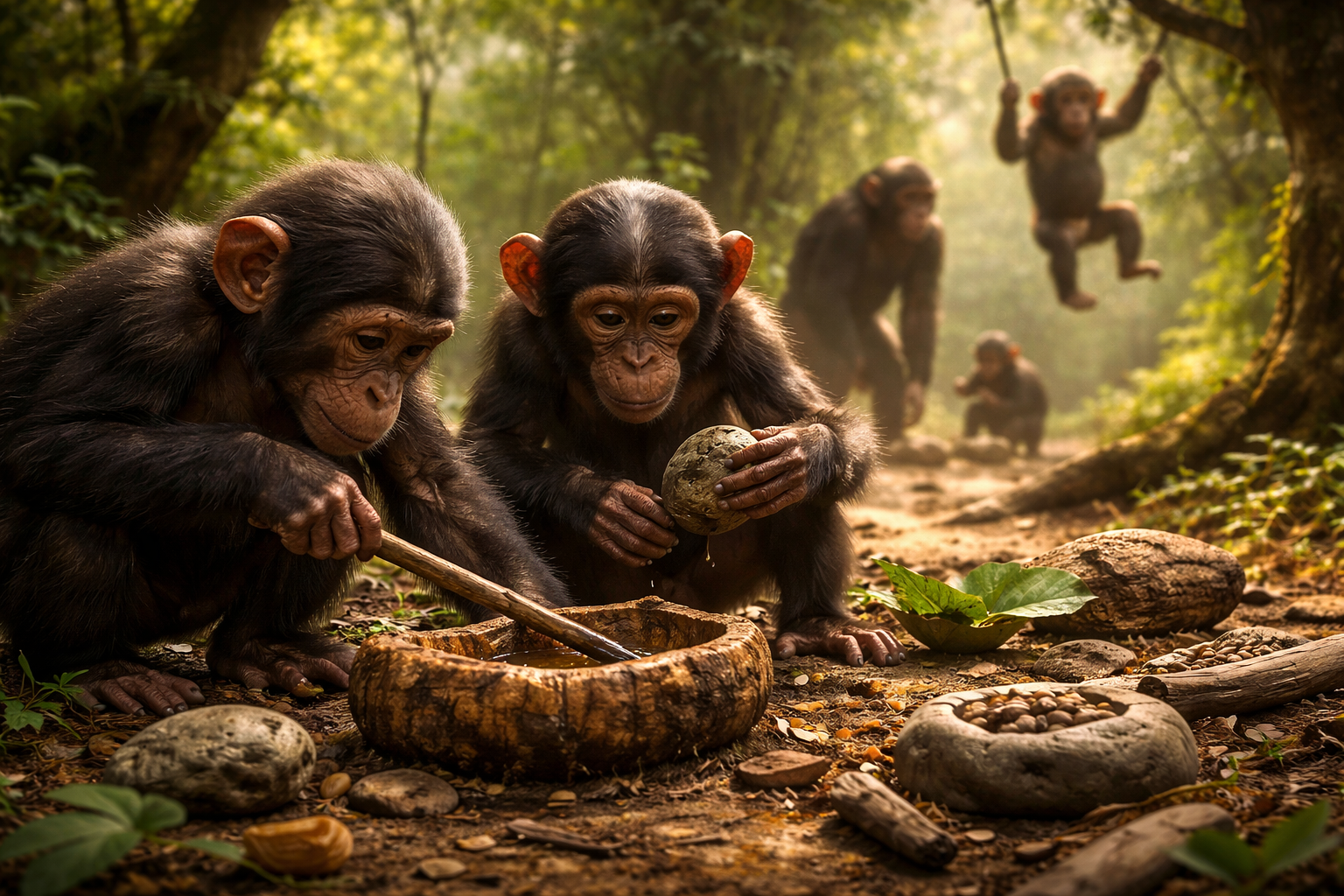
Behavioural Changes in Apes Due to Human Disturbance
Source: Primates | February 04, 2025
As human activities increasingly alter natural ecosystems, understanding how non-human primates adapt to anthropogenic disturbances has become a key concern in primatology and conservation anthropology.
A recent large-scale review by Miranda A. Gilbert et al., published in the journal Primates, systematically examines how great apes modify their behaviour in response to human-induced environmental change.

Scope of the Study
The researchers reviewed nearly 2,500 published studies and selected a final dataset of 96 high-quality studies that specifically assessed behavioural responses across all seven extant species of non-human great apes:
• Chimpanzees
• Bonobos
• Eastern gorillas
• Western gorillas
• Bornean orangutans
• Sumatran orangutans
• Tapanuli orangutans
This makes it one of the most comprehensive global assessments of ape behavioural responses to human disturbance.
Major Forms of Human Disturbance
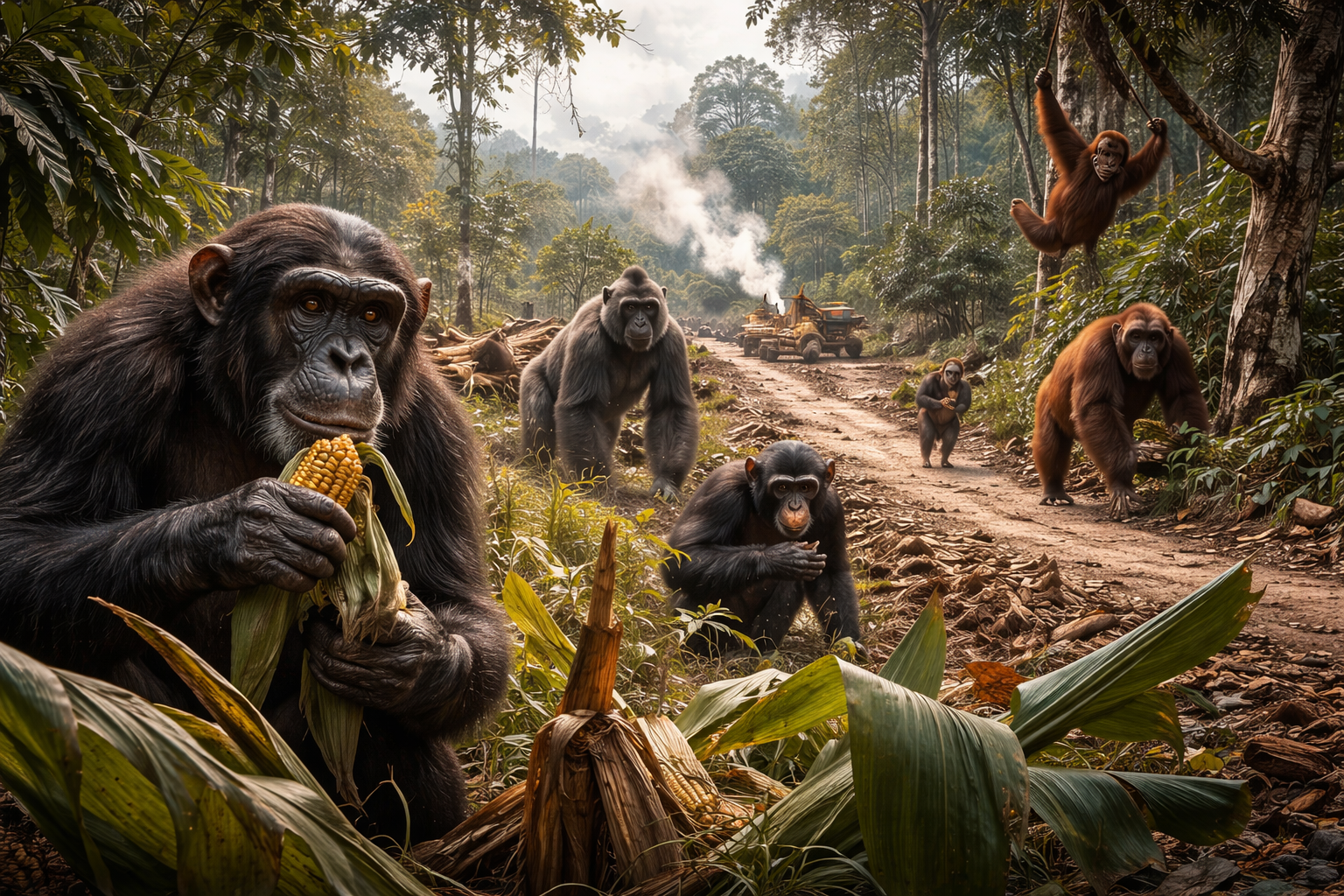
The study identifies large-scale land-use change as the most frequent source of disruption, particularly:
• Conversion of forests into croplands
• Logging and timber extraction
• Expansion of roads and human settlements
These changes directly fragment ape habitats and alter traditional ranging patterns.
Observed Behavioural Responses in Apes
Across regions and species, apes showed several adaptive behavioural changes, including:
• Crop foraging, where apes feed on human-grown crops
• Altered nesting behaviour, such as choosing new nesting sites or changing nest-reuse frequency
• Road crossing, where apes use human-made paths for easier movement
These behaviours reflect behavioural flexibility, a key adaptive trait in primates.
Adaptive vs Maladaptive Responses
The study draws an important distinction between low-risk and high-risk adaptations.
Relatively Safe Adaptations
Changes in nesting patterns often helped apes avoid direct human contact and were not associated with negative outcomes.
High-Risk Adaptations
Other behaviours were linked to serious consequences, including:
• Physiological stress
• Injury or mortality
• Increased human–ape conflict
These negative outcomes were especially associated with crop foraging and use of human roads, which expose apes to retaliation, accidents, or disease transmission.
Species-Specific Variation
The study also highlights context-dependent responses.
For example, some gorilla populations avoided logged forests entirely, while others selectively entered such areas to exploit new food resources.
This variation underscores that ape responses are shaped by local ecology, species traits, and intensity of disturbance.
Anthropological and Conservation Significance
From an anthropological perspective, the study is significant because it:
• Demonstrates behavioural plasticity in non-human primates
• Illustrates early stages of human–primate coexistence and conflict
• Provides insight into the evolutionary roots of adaptability
• Reinforces the link between culture, ecology, and behaviour
It also carries strong implications for conservation policy, as not all adaptations enhance survival.
Why This Matters for UPSC Aspirants
This research is highly relevant for:
• Anthropology Paper-I – Primate behaviour, adaptation, human–animal interaction
• GS-III – Biodiversity loss, habitat fragmentation, conservation challenges
• Answer enrichment on anthropogenic impact on wildlife
Relevant UPSC Anthropology PYQs
1. Jane Goodall’s contributions in studying primate behaviour. 10 Marks | 2020
2. Role of Primatology in anthropological studies. 10 Marks | 2013