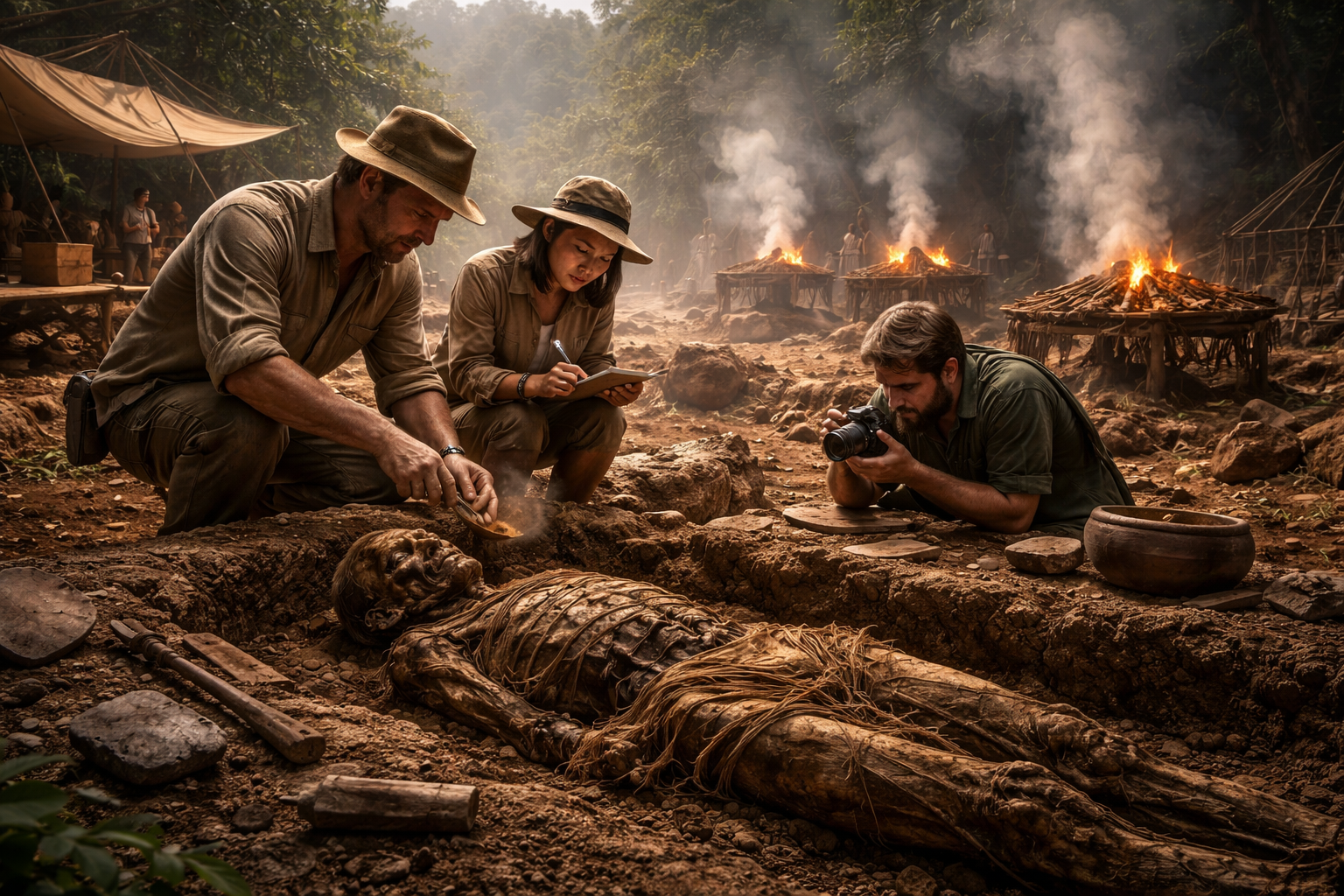
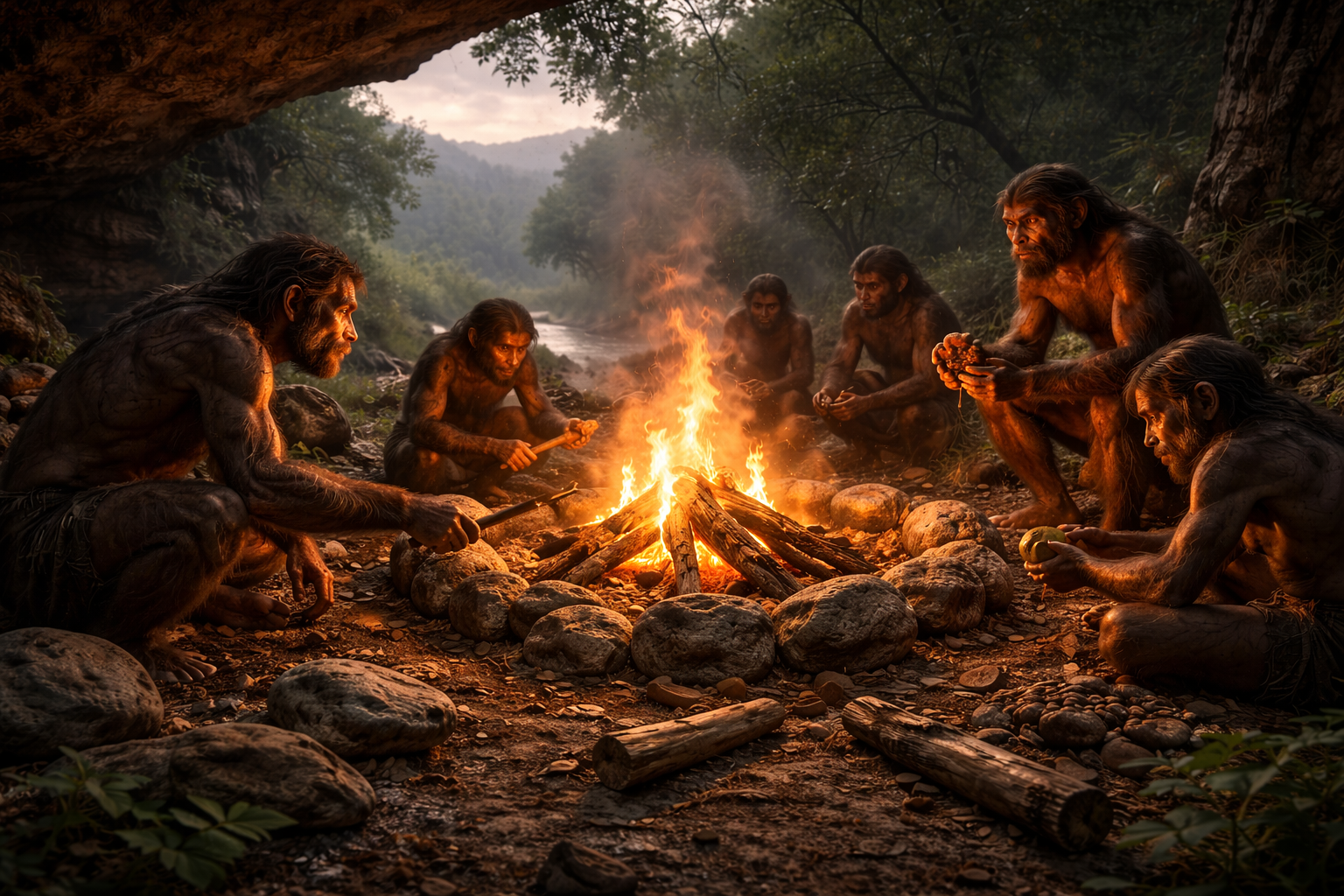
CHILD FROM THE WORLD’S OLDEST BURIAL WAS A HUMAN–NEANDERTHAL HYBRID
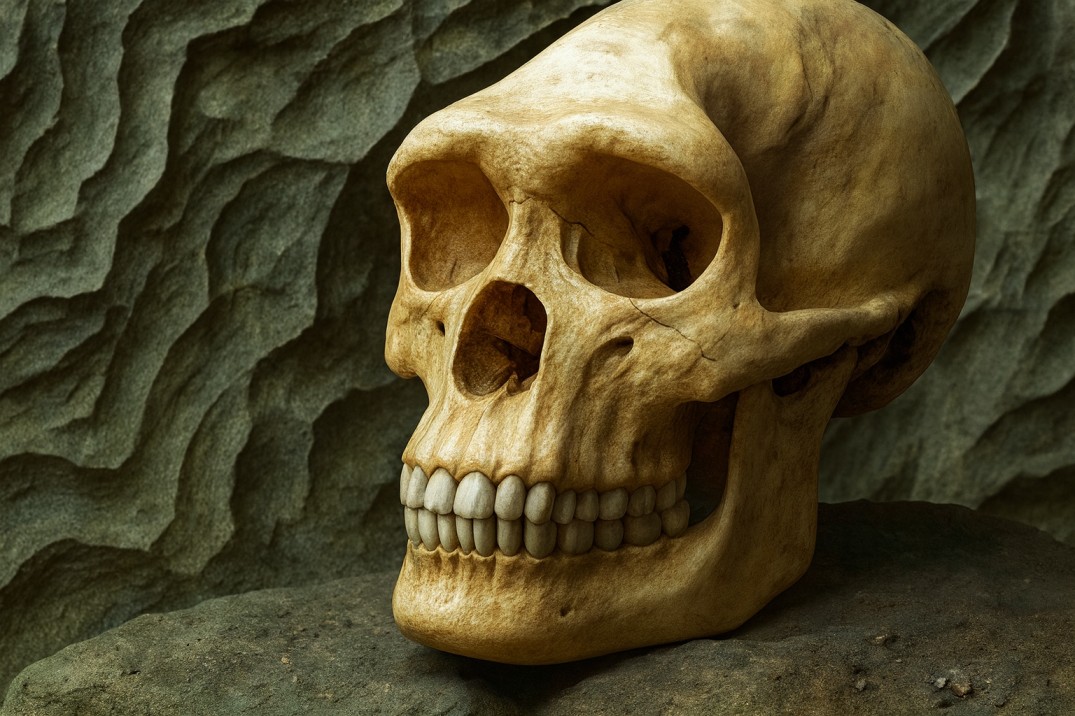
New Fossil Study | Skhul Cave | l’Anthropologie, 2025
Introduction
A groundbreaking reassessment of one of the oldest known human burials — a 3–5-year-old child from Skhul Cave (~140,000 years ago) — has reshaped our understanding of early human evolution.
For decades, fossils from the Levant (Skhul, Qafzeh, Tabun, Tinshemet, Nesher Ramla) raised debates:
Were these early Homo sapiens, archaic humans, Neanderthals, or transitional forms?
The new study concludes that the Skhul child displays a hybrid anatomy, indicating early interbreeding between modern humans and Neanderthals.

Background: Why Skhul is Important
The Levant served as a major contact zone between:
-
Early Homo sapiens moving out of Africa
-
Neanderthals spreading across West Asia and Europe
Previous classifications fluctuated between "transitional" and "early modern human."
This latest high-resolution morphological re-analysis has changed that.
Research & Methodology
The study revisited the child’s skeletal remains using updated comparative datasets.
Key anatomical regions examined:
-
Cranial vault (braincase)
-
Mandible (jaw)
-
Overall craniofacial morphology
This refined approach revealed a combination of features not belonging entirely to any single species.
Key Findings
1. Homo sapiens–like Skull
The posterior cranial vault shows modern human traits:
-
Rounded curvature
-
Expanded occipital region
-
Proportions comparable to Qafzeh-type AMH fossils
These features align with early Homo sapiens populations of the Levant.
2. Neanderthal-like Mandible
The jaw morphology significantly overlaps with Neanderthals:
-
Strong mandibular build
-
Neanderthal dental arcade pattern
-
Reduced chin prominence
-
Overall geometry unlike AMH children
This contrasting anatomy is central to the hybrid hypothesis.
3. Hybrid Identity
Because the child’s:
-
Skull resembles Homo sapiens, but
-
Jaw resembles Neanderthals,
the authors conclude:
“The Skhul child may represent a hybrid individual.”
Implications
-
Human–Neanderthal interbreeding is older than previously estimated
-
The Levant acted as a hybridisation corridor
-
Gene flow occurred before the later, large-scale Out-of-Africa migration
-
Hybridisation influenced early Eurasian morphology
This fossil provides one of the earliest anatomical proofs of human–Neanderthal hybrid ancestry.
Anthropological Significance
The study strengthens these broader anthropological views:
-
Overlap and social interaction between early AMH and Neanderthals
-
Early gene flow shaping human diversity
-
Mosaic evolution — gradual blending of species traits
-
Re-evaluation of fossil classifications based on mixed morphology
The Skhul child becomes a central example for understanding biocultural interaction, admixture, and evolutionary forces.
Conclusion
The Skhul child marks a pivotal discovery in paleoanthropology.
It confirms that human evolution in the Levant was shaped not by isolated populations, but by interacting, interbreeding, and overlapping hominin groups.
This study pushes back the timeline of hybridisation and enriches our understanding of human diversity.

Relevance to UPSC Anthropology (Paper – I)
Highly relevant for:
1.4 Human Evolution & Emergence of Man
-
Evolutionary forces creating human variation (20M/2022)
-
Out-of-Africa dispersal & admixture models (20M/2020)