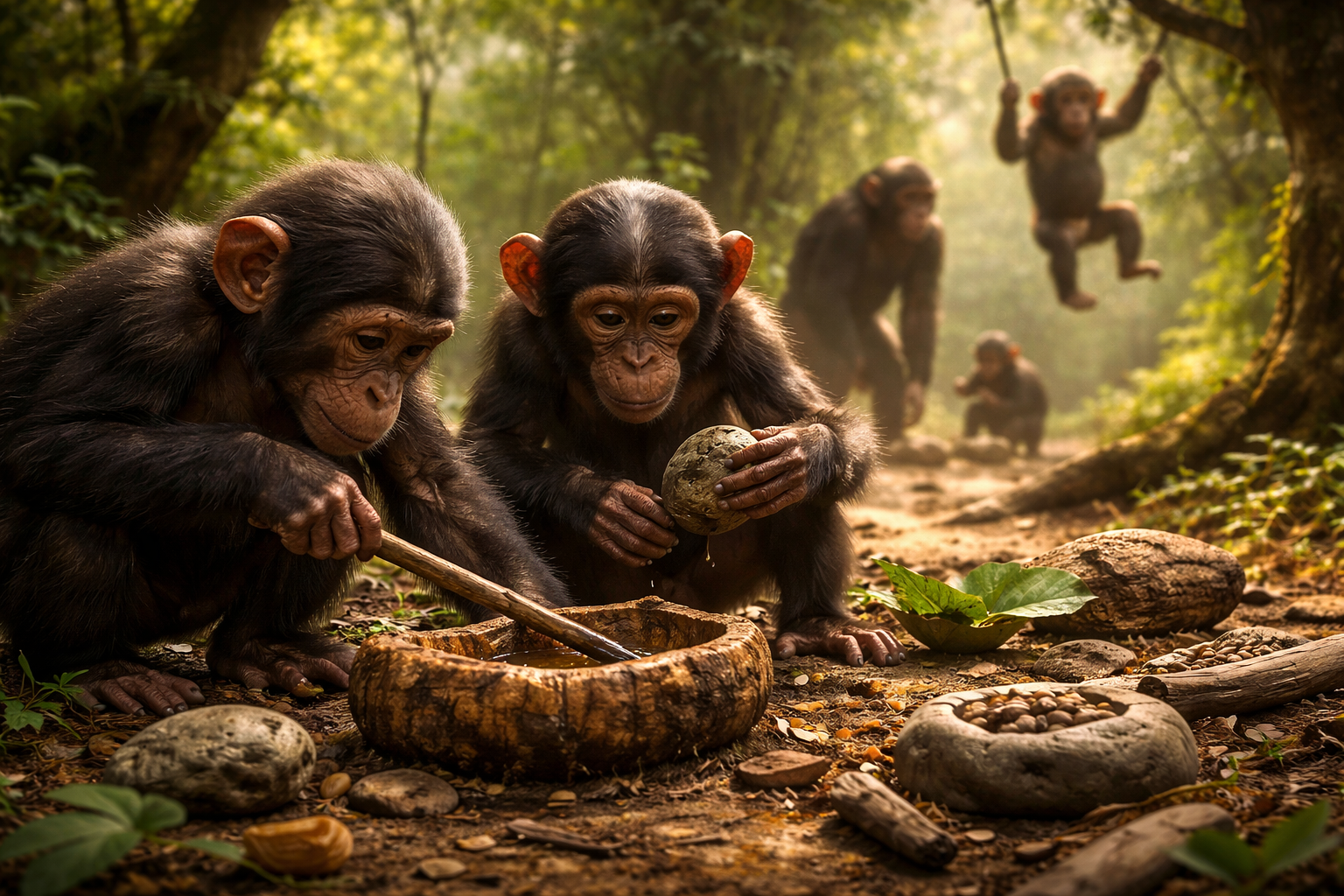
Early Humans Began Wiping Out Elephant Relatives 1.8 Million Years Ago
Source: New Scientist | July 24, 2024
The Research Finding
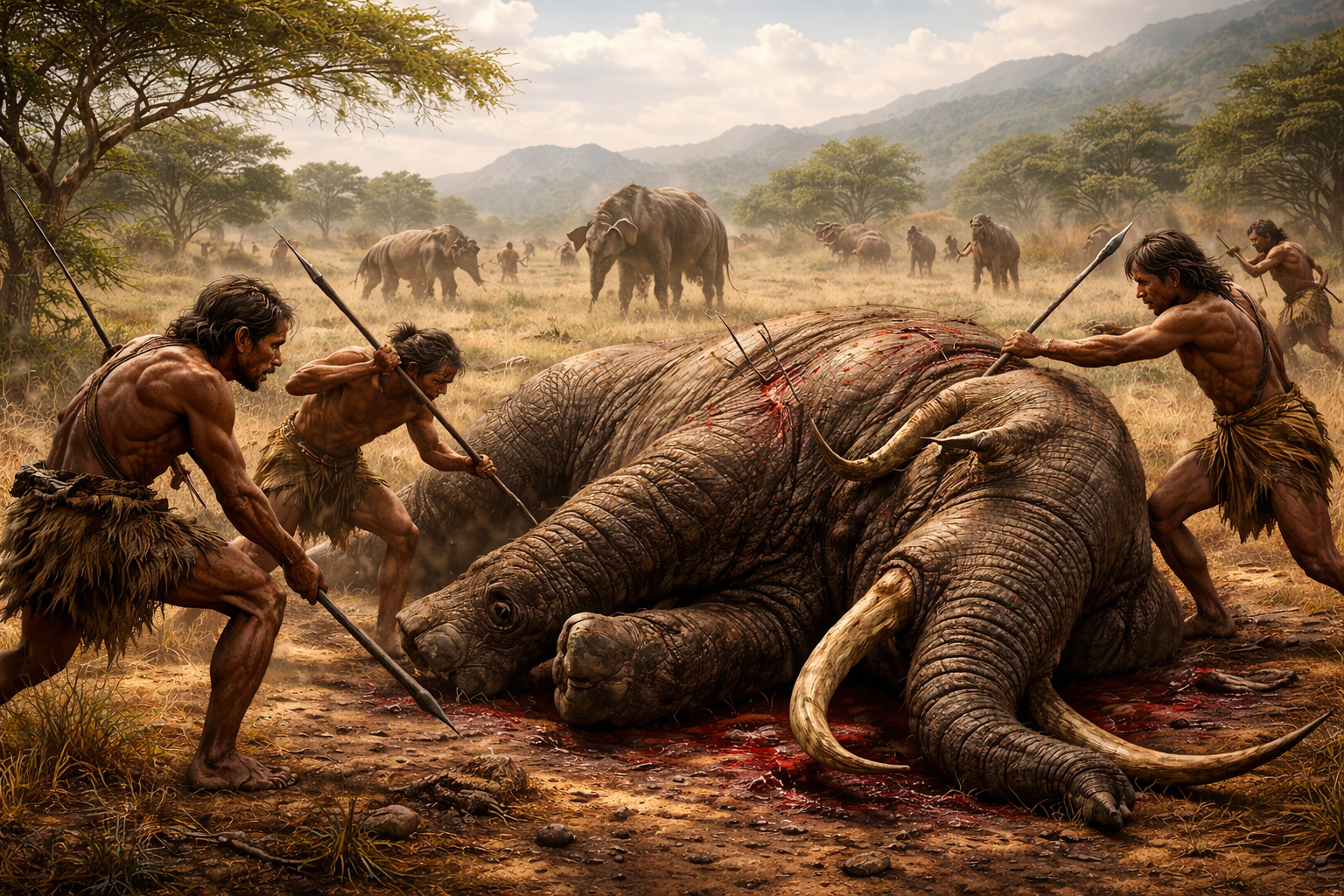
A recent study reported in New Scientist suggests that early human species, particularly Homo erectus, began contributing significantly to the extinction of elephant-like animals (proboscideans) around 1.8 million years ago.
This period coincides with the geographical expansion of early humans, leading to increasing overlap between human populations and large megafauna.
Proboscideans and Early Biodiversity
Around 1.8 million years ago, there were nearly 30 species of proboscideans spread across Africa, Eurasia, and parts of Asia.
These elephant relatives had been diversifying successfully for millions of years before the arrival of early humans.
According to researcher Hauffe, the number of proboscidean species was on a steady rise prior to human expansion.
Human Expansion and Ecological Overlap
The study highlights that as early humans expanded their territories, their ranges increasingly overlapped with those of large herbivores.
This overlap marked a turning point in megafaunal survival.
Archaeological and ecological evidence indicates that human hunting pressure became a critical factor affecting large-bodied animals.
Sharp Rise in Extinction Rates
One of the most striking findings is that the extinction rate of proboscideans increased fivefold around 1.8 million years ago.
This timing aligns closely with the spread of Homo erectus, a species known for:
• Improved stone tool technology
• Cooperative hunting behaviour
• Greater mobility and ecological adaptability
These traits likely made early humans effective megafaunal predators.
Anthropological Significance
From an anthropological perspective, this research highlights:
• Early evidence of human-driven environmental impact
• The role of Homo erectus in reshaping prehistoric ecosystems
• The beginning of a long-term pattern of human–megafauna interaction
It challenges the idea that large-scale human influence on ecosystems began only in the Holocene.
Why This Matters for UPSC Aspirants
This study is important for understanding:
• Geographical spread of Homo erectus
• Early human subsistence strategies
• Human role in prehistoric extinctions
• Evolution of human–environment relationships
Relevant UPSC Anthropology PYQs
1. Describe the salient characteristics and geographical distribution of Homo erectus. (15 Marks, 2015)
2. What are the physical and cultural characteristics of Homo erectus? Discuss its phylogenetic status. (20 Marks, 2021)