Improved prime editing system makes gene-sized edits in human cells at therapeutic levels
Phys.org , June 10, 2024
What is the development about?
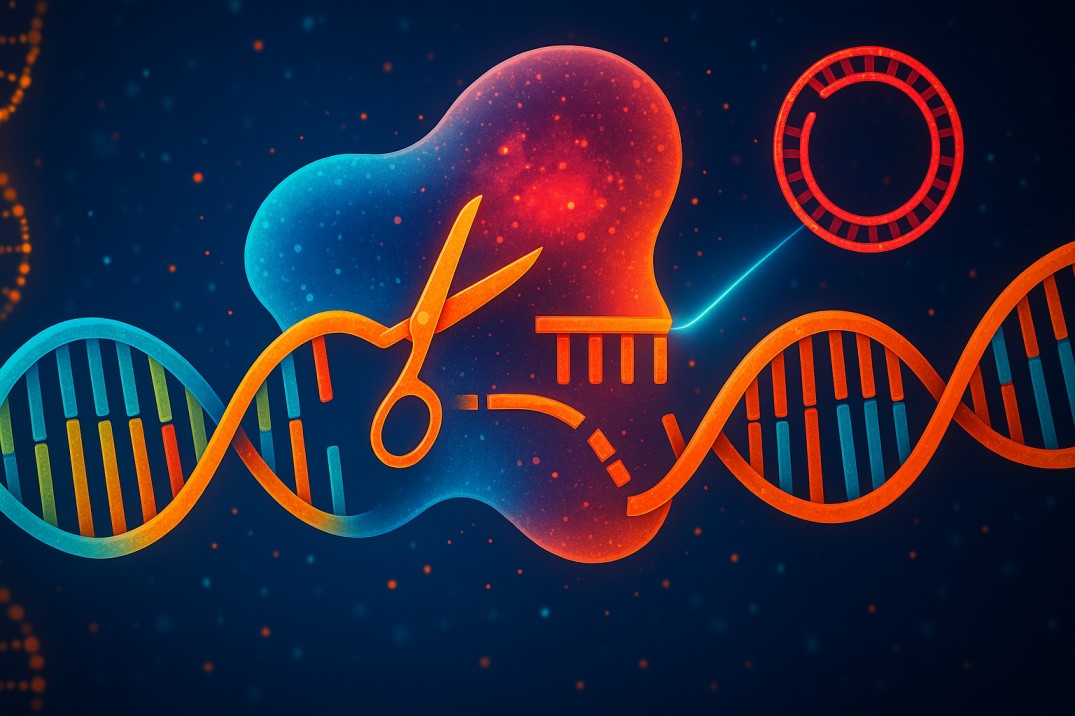
Scientists at MIT and Harvard have taken gene editing a step further. They have upgraded prime editing so that it can now insert or replace entire genes inside human cells with much higher efficiency. This makes gene editing more realistic for future medical treatments, not just lab experiments.
How is this different from earlier methods?
Earlier prime editing worked well only for very small DNA changes. The new system combines prime editing with an engineered recombinase enzyme, allowing large gene-sized DNA segments (thousands of base pairs) to be inserted precisely into the genome. This combined system is known as eePASSIGE.
Why is eePASSIGE important?
The newly evolved enzyme eeBxb1 increased gene insertion success to about 30% in human and mouse cells. This is a major jump—about four times better than earlier versions and far superior to other recent techniques. For the first time, targeted gene insertion in human cells has reached levels that could be useful in real therapies.

Why does this matter for medicine?
Many genetic disorders are caused not by minor mutations but by missing or faulty genes. A system that can safely insert complete genes opens new possibilities for treating inherited diseases, developing cell therapies, and advancing regenerative medicine.
Ethical and future concerns
Before clinical use, long-term safety, ethical concerns, and regulatory approval must be carefully addressed. Misuse of such powerful genetic tools also remains a key concern.
Relevance for Anthropology
1. Describe the practical applications of DNA technology in the current scenario – 2023 – 15 Marks
2. Ethics and Genetic Engineering – 2020 – 10 Marks
3. What are the applications of human genomic research in human welfare? – 2020 – 15 Marks



-10052026-113117pm.png)