Orangutans Can Teach Us About Food, Fitness, and Metabolic Adaptation
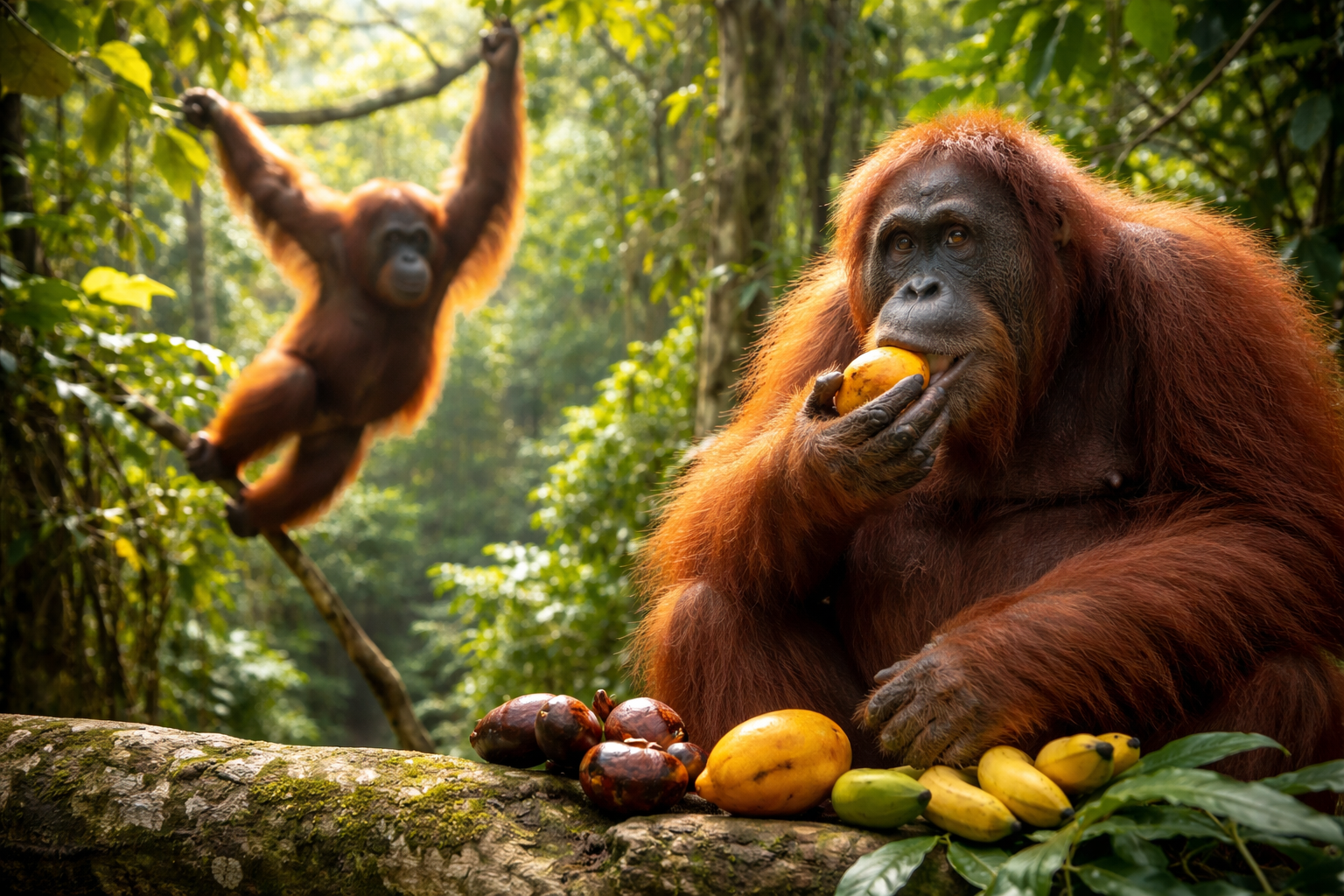
Source: Science Advances | Erin R. Vogel | 27 August 2025
The Study in Brief
A recent study published in Science Advances examines how orangutans regulate their diet and metabolism in response to fluctuating forest food availability.
The findings reveal that orangutans maintain nutritional balance and metabolic flexibility, offering important lessons for understanding both primate adaptation and human health.

Seasonal Dietary Shifts in Orangutans
1. Fruit-Rich Phase
During periods of fruit abundance:
• Orangutans consume high-carbohydrate, energy-rich fruits
• Carbohydrates provide immediate fuel
• Yet protein intake remains stable
Even in times of plenty, they do not overconsume sugar. They continue ensuring adequate protein intake, which helps maintain lean muscle mass and healthy body composition.
2. Low-Fruit Phase (Scarcity Adaptation)
When fruit availability declines:
• They shift to leaves, bark and seeds
• These foods are lower in sugar
• Higher protein content supports body maintenance
In addition:
• They mobilize stored body fat
• They utilize muscle protein as fuel
This reflects a remarkable capacity for metabolic adaptation under ecological stress.
Metabolic Flexibility: Evolutionary Significance
Orangutans demonstrate the ability to:
• Switch fuel sources efficiently
• Avoid chronic metabolic overload
• Maintain muscle integrity
• Regulate energy expenditure
This flexibility resembles intermittent fasting patterns in humans, where temporary food scarcity may reduce oxidative stress — a process associated with aging and chronic disease.
From an evolutionary perspective, this indicates:
• Adaptation to fluctuating tropical forest ecology
• Energy optimization in arboreal primates
• Survival strategies shaped by natural selection
Shared Evolutionary Biology: Humans and Orangutans
Humans and orangutans share a common ancestor. Therefore:
• Fundamental metabolic pathways are conserved
• Both species possess adaptive metabolic systems
• Both can regulate energy based on food quality
However, modern human diets differ significantly:
• High intake of ultra-processed foods
• Excess sugar and saturated fats
• Low nutrient density
Such diets interfere with metabolic adaptability, contributing to:
• Obesity
• Diabetes
• Metabolic syndrome
The study highlights how deviation from evolutionary dietary patterns may undermine health.
Relevant UPSC Anthropology PYQs
1. Discuss different forms of primate social organisation. (15M/2022)
2. Role of Primatology in Anthropological studies. (10M/2013)


-10052026-113117pm.png)