Preventing Malaria Using Genetically Modified Malaria Parasites
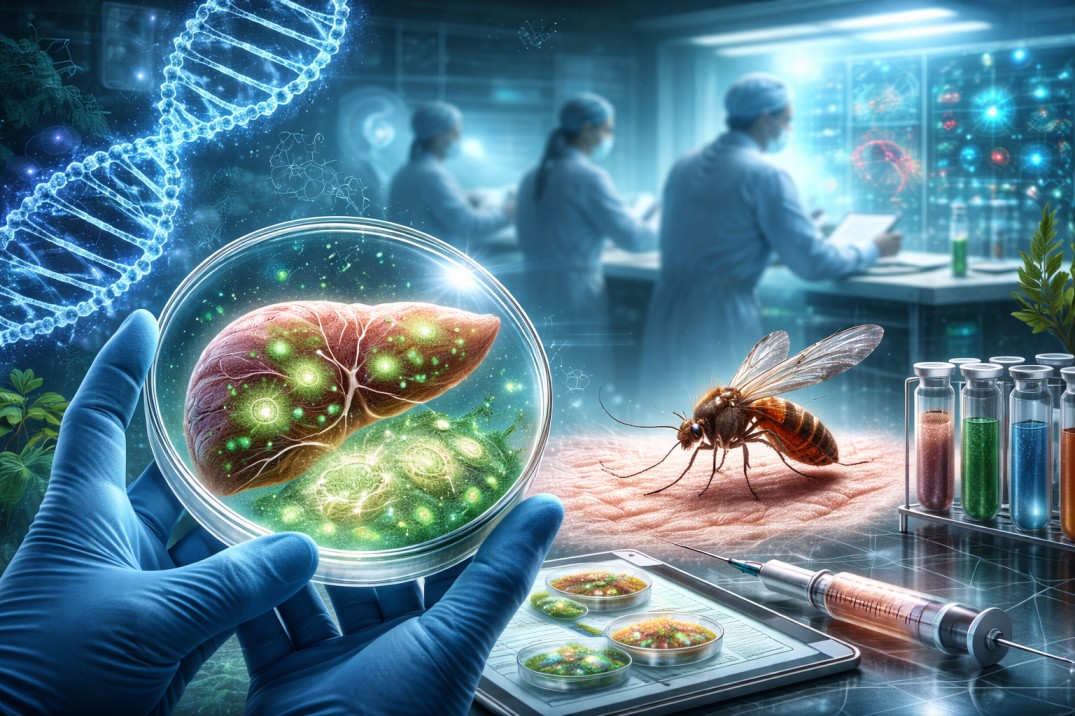
Source: The Hindu | December 09, 2024
The Public Health Context
Malaria remains a major global public health challenge, particularly in tropical and subtropical regions. Conventional prevention strategies—such as vector control, drugs, and vaccines—have had limited long-term success due to parasite resistance and complex immune responses.
Recent research now highlights a novel preventive approach: using genetically modified malaria parasites to prime the human immune system.

The Scientific Breakthrough
The study focuses on genetically altered malaria parasites introduced during the liver stage of infection.
These modified parasites are engineered so that their growth is completely arrested, preventing progression to the blood stage while still stimulating immunity.
Two types of modified parasites were tested:
• Early-arresting parasites – growth stops on day one in the liver
• Late-arresting parasites – growth stops on day six in the liver
This distinction allowed researchers to examine how the timing of parasite arrest affects immune response.
Study Design and Methodology
• Nine participants were exposed to mosquitoes carrying late-arresting parasites
• Eight participants were exposed to early-arresting parasites
• Three participants formed the placebo group
All participants later underwent controlled human malaria infection three weeks after the third immunisation session, enabling direct comparison of immune protection.
Key Findings
The results revealed a striking difference in immunity:
• Late-arresting parasite group showed 89% immune protection
• Early-arresting group showed only 13% protection
Interestingly, the quantity of antibodies produced was similar in both groups, indicating that antibody levels alone did not explain the difference in protection.
Role of Cellular Immunity
A crucial finding was that parasites killed on day six generated specific T-cell responses that were absent in the early-arresting group.
This highlights the importance of cell-mediated immunity, particularly T cells, in long-term protection against malaria.
Anthropological Significance
From an epidemiological anthropology perspective, this research demonstrates how:
• Human immune systems interact with pathogens at different life stages
• Biological interventions can reshape disease ecology
• Preventive strategies must consider both immunological and population-level dynamics
It reinforces the interdisciplinary nature of anthropology, linking biology, medicine, and public health.
Why This Matters for UPSC Aspirants
This development is important for understanding:
• Emerging biotechnological approaches to disease prevention
• The role of host–pathogen interaction in epidemiology
• Limitations of antibody-centric vaccine models
• Application of biological sciences to public health policy
Relevant Anthropology PYQ's
1. Describe the scope of Epidemiological Anthropology in the study of infectious diseases. (20M | 2016)
2. Discuss the impact of infectious diseases on indigenous populations. (15M | 2020)



-10052026-113117pm.png)