
Thermoluminescence Dating Method — 2026 Paper I
Thermoluminescence dating method.
Model Answer
VAID ICSApproach
|
Model Answer
Introduction: Thermoluminescence (TL) dating is a chronometric method used mainly to estimate the time since certain crystalline materials were last strongly heated. It is especially useful for fired pottery, burnt flint and hearth materials.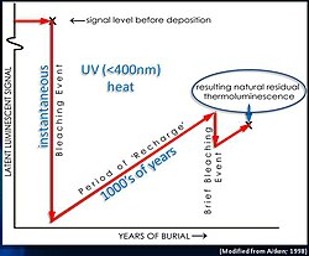
Principle:
Minerals such as quartz and feldspar contain lattice defects in which electrons produced by natural ionising radiation become trapped. When the material is strongly heated in antiquity, many trapped electrons are released and the luminescence “clock” is effectively reset. After burial, environmental radiation from uranium, thorium, potassium and cosmic sources gradually traps electrons again.
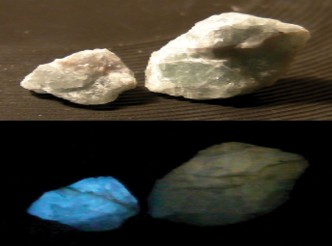
In the laboratory the sample is reheated. Trapped electrons are released and emit light; the luminescence intensity is used to estimate the accumulated palaeodose.
Age ≈ accumulated/equivalent dose ÷ annual dose rate
Applications:
- pottery and ceramics;
- burnt flint/stone;
- hearth stones and other heat-altered mineral materials;
- archaeological contexts where suitable organic material for radiocarbon dating is absent.
Limitations include uncertainty in past dose rate, moisture change, incomplete resetting during original heating, contamination, post-depositional disturbance and signal saturation at very great age.
Conclusion: TL is valuable because it dates approximately the last heating event that reset the trapped-electron signal. Reliable results therefore require careful sampling and reconstruction of the surrounding radiation environment.
Want feedback on your answer?
Join the Anthropology workshop or get structured answer-writing guidance from VAID ICS.