
Cultural Impact of the Iron Age — 2023 Paper I
Cultural impact of Iron Age
Model Answer
VAID ICSIntroduction The Iron Age was a transformative epoch where the mastery of iron metallurgy acted as a catalyst for socio-economic metamorphosis. It propelled the shift from semi-nomadic pastoralism to complex agrarian societies globally—such as the Hallstatt and La Tène cultures in Europe, the Nok culture in Africa—and culminated in India's "Second Urbanization."
Body
- Agrarian Expansion & Surplus:Iron axes and ploughshares (e.g., found at Atranjikhera) enabled the clearing of dense forests and deep tilling, generating immense agricultural surplus (R.S. Sharma).
- Social Organization & Kinship:The generation of surplus necessitated land ownership, causing a definitive shift from egalitarian clan-based societies to rigid, property-based patriarchal family structuresand complex social stratification.
- Material Culture & Specialization:Surplus sustained specialized craftsmen. This era is culturally synonymous with advanced urban ceramic traditions like Painted Grey Ware (PGW)and Northern Black Polished Ware (NBPW).
- Political Consolidation (State Formation):Superior iron weaponry enhanced military prowess, facilitating the transition from lineage-based chiefdoms to permanent territorial states (e.g., Mahajanapadas).
- Socio-Religious Metamorphosis:
- Megalithic Culture: In South India (e.g., Hallur), iron implements in elaborate burials indicate complex rituals and social hierarchy.
- Heterodox Sects: The new agrarian material milieu provided the economic base for the rise of Buddhism and Jainism (D.D. Kosambi).
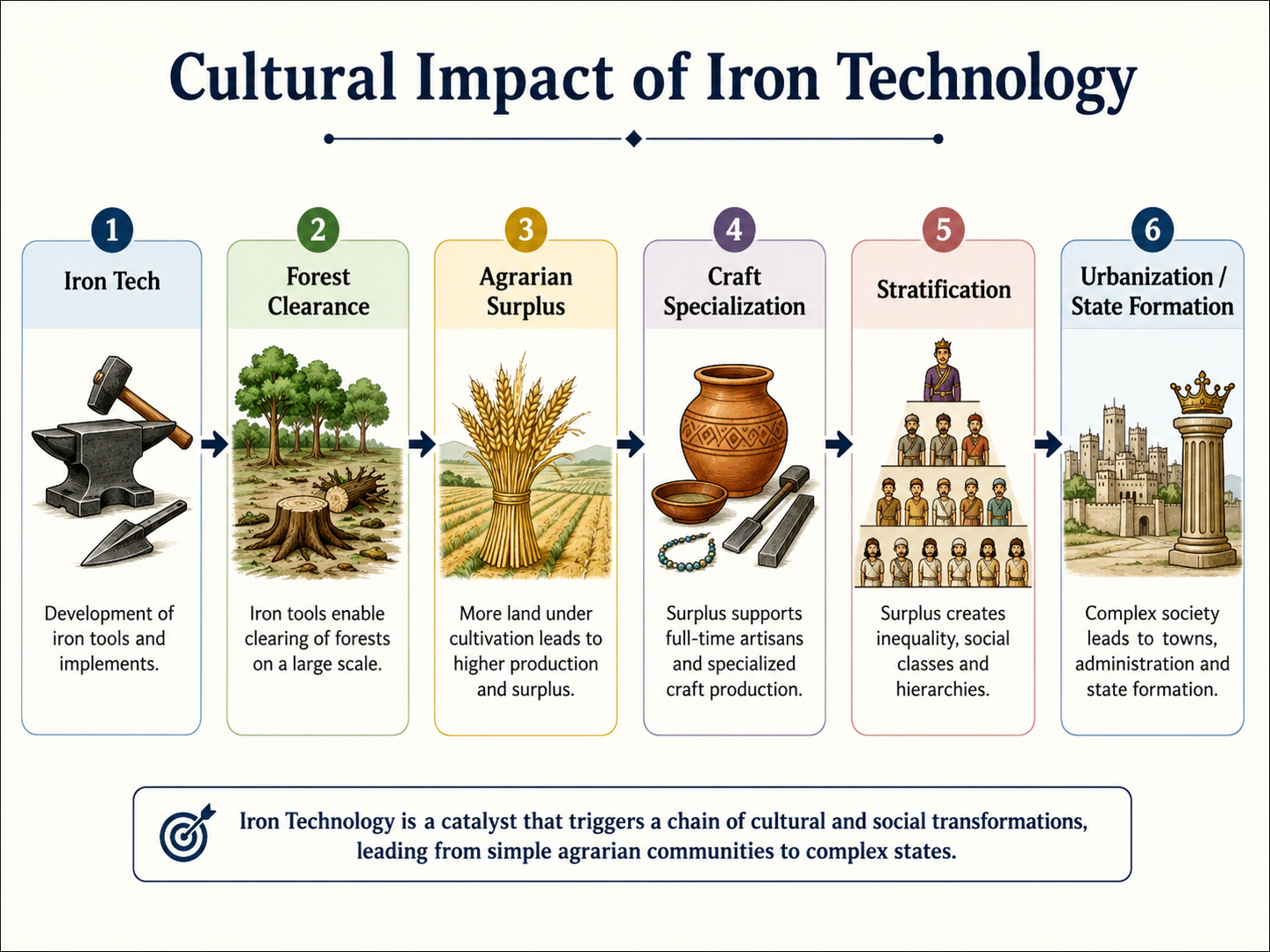
Conclusion As V. Gordon Childe termed it, iron was a "democratic metal" because it was more abundant than bronze. By democratizing agriculture and warfare, the Iron Age irreversibly altered human cultural evolution and laid the foundation for modern complex civilizations.
Want feedback on your answer?
Join the Anthropology workshop or get structured answer-writing guidance from VAID ICS.