Odisha ST List Gets Two New Entrants and Offers Relief to at Least 50 Sub-Tribes
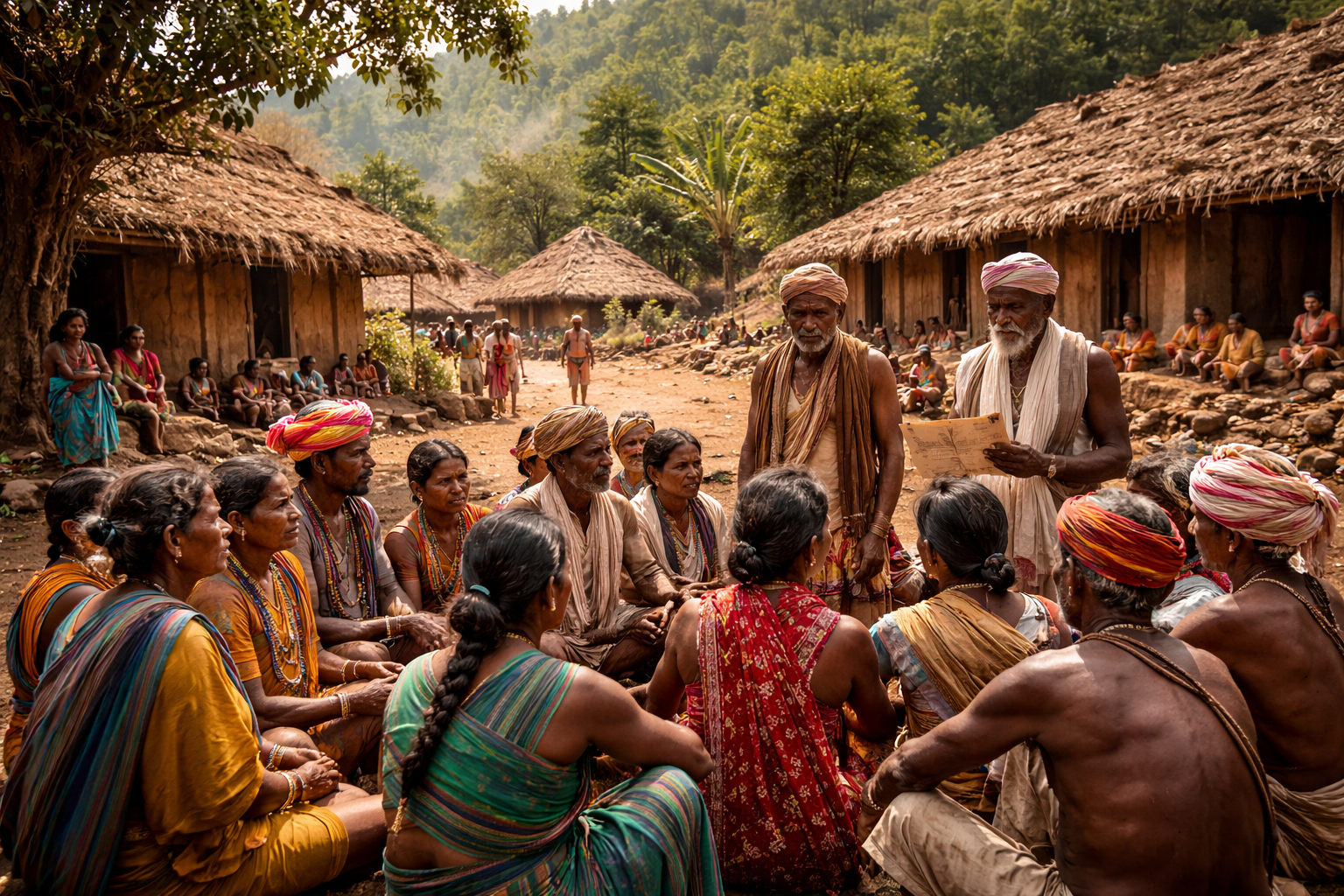
Source: Hindustan Times | February 09, 2024
Recent Development in Tribal Classification
In a significant move, two communities previously listed as Scheduled Castes (SCs)—Tamadia and Tamudia—have now been transferred to the Scheduled Tribes (ST) list in Odisha.
Both communities will now be included under the Bhumij tribe, aligning their classification with other indigenous tribal groups in the region.
Why This Change Matters
This reclassification is a step towards equalising the benefits and facilities provided to tribal groups. By including these communities in the ST list, they will now have access to welfare schemes, educational benefits, and employment reservations that were previously denied to them under the SC category.
AB Ota’s Observations on Tribal Recognition
A.B. Ota, a noted tribal researcher and anthropologist, has highlighted several instances where communities have been treated differently across state borders.
For example, he pointed out that the Konda Reddy community, which is recognised as an ST in Andhra Pradesh, was categorized as a socially and educationally backward class (SEBC) in Malkangiri district of Odisha.
Similarly, the Muka Doras, who are treated as tribals in Andhra Pradesh, were not recognised as such in Odisha.
According to Ota, the inclusion of Tamadia and Tamudia in the ST list was long overdue, and this decision will bring much-needed relief to these communities.
Addressing Exploitation and Deprivation
The reclassification has broad implications for the exploitation and deprivation of STs in Odisha.
Historically, many tribal communities have faced discrimination and marginalisation, leading to inadequate access to resources, education, and healthcare. The decision to include Tamadia and Tamudia in the ST list aims to rectify these inequalities and offer greater protection and opportunities to these communities.
Significance for UPSC Aspirants
This development is crucial for understanding:
• Tribal issues in India, particularly concerning exploitation and deprivation
• The role of state governments in providing constitutional safeguards to tribal communities
• The ongoing struggle for recognition among tribal populations
It is a contemporary example that enriches answers on tribal welfare, policy implementation, and cultural diversity in Anthropology Paper-II and GS-I (Indian Society).
Why This Matters for UPSC Aspirants
This reclassification highlights the importance of recognition and categorisation in alleviating the historical deprivation faced by tribal communities, which is a critical issue in both Anthropology and GS.
Relevant UPSC Anthropology PYQs
1. "Critically examine the concept of the tribe-caste continuum and its relevance in contemporary India." (15M/2015)
2. How is the process of tribe-caste continuum different from Sanskritization?" (15M/2016)

-10052026-113117pm.png)