
Gene Expression — 2023 Paper I
Question · 2023 · Paper I · 10 Marks
Gene expression
Model Answer
VAID ICSIntroduction Gene expression is the molecular process by which information encoded in DNA is translated into functional proteins, governing human traits. Described by Francis Crick’s Central Dogma (1958), modern biological anthropology studies gene expression to understand human adaptation, phenotypic variation, and gene-environment interactions.
Body
- The Biological Mechanism
- Transcription: RNA polymerase synthesizes a messenger RNA (mRNA) copy from a DNA sequence.
- Processing & Translation: Eukaryotic mRNA undergoes splicing and is exported to ribosomes, where it is translated into a polypeptide chain (protein).
- Regulation and EpigeneticsGene expression is not static; it is heavily regulated by promoters, enhancers, and epigenetic mechanisms(like DNA methylation). Nutrition, stress, and climate can alter gene expression without mutating the underlying DNA sequence, leading to developmental plasticity.
- Anthropological Significance (Human Variation & Adaptation)
- Gene-Culture Coevolution: The continued expression of the LCT gene (producing lactase) into adulthood among European and African pastoralists is a regulatory mutation driven by the cultural practice of dairying.
- Environmental Adaptation: Exposure to high UV radiation upregulates the expression of the MC1R gene, increasing melanin production to protect against folate degradation.
- Acclimatization: Hypoxia at high altitudes alters the expression of HIF (Hypoxia-Inducible Factor) genes to increase red blood cell production.
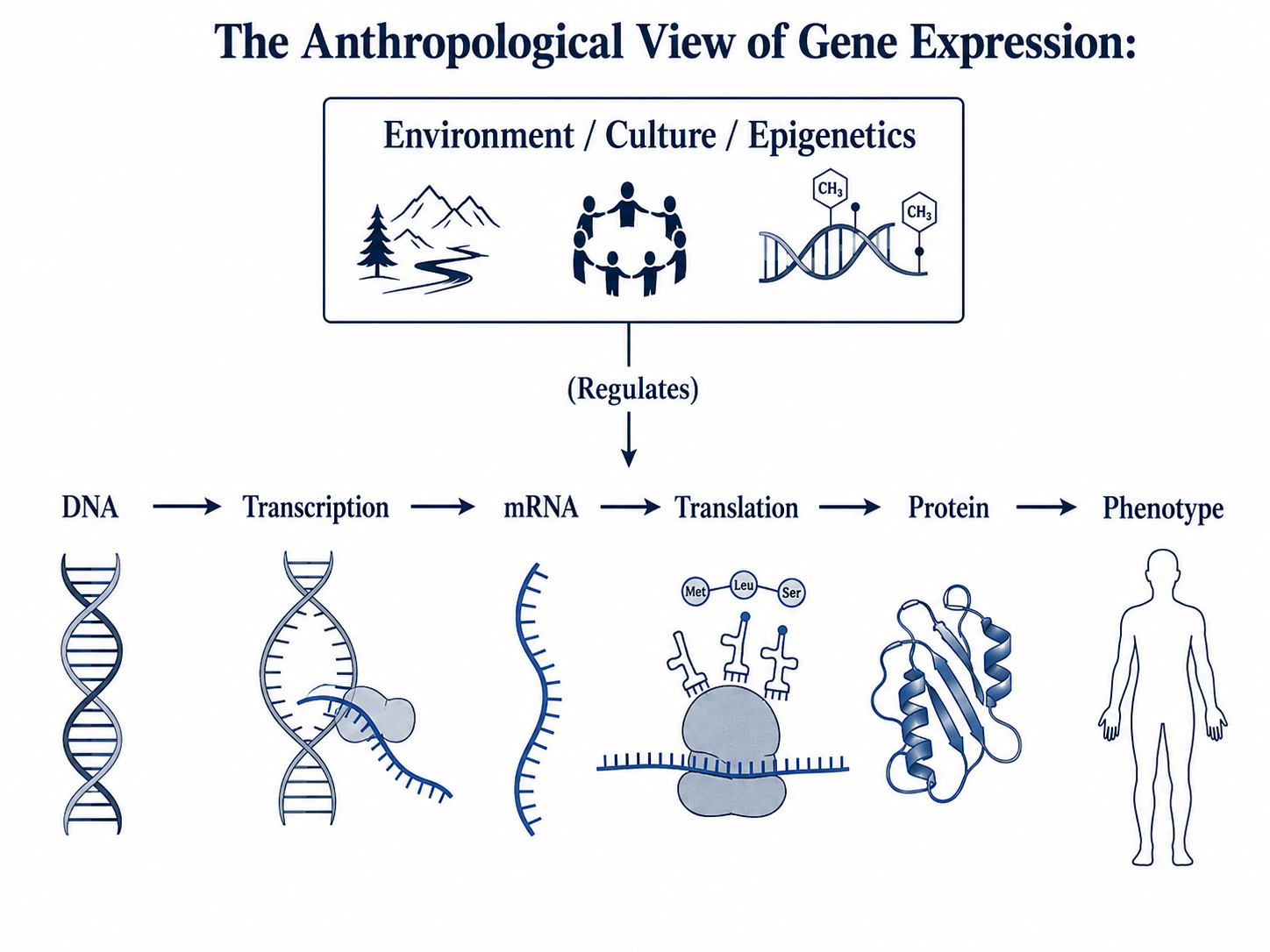
Conclusion In physical anthropology, understanding gene expression proves that genotype does not mechanically dictate destiny. Rather, human phenotypes emerge from a highly regulated, dynamic interaction between hereditary blueprints and biocultural environments.
Want feedback on your answer?
Join the Anthropology workshop or get structured answer-writing guidance from VAID ICS.