
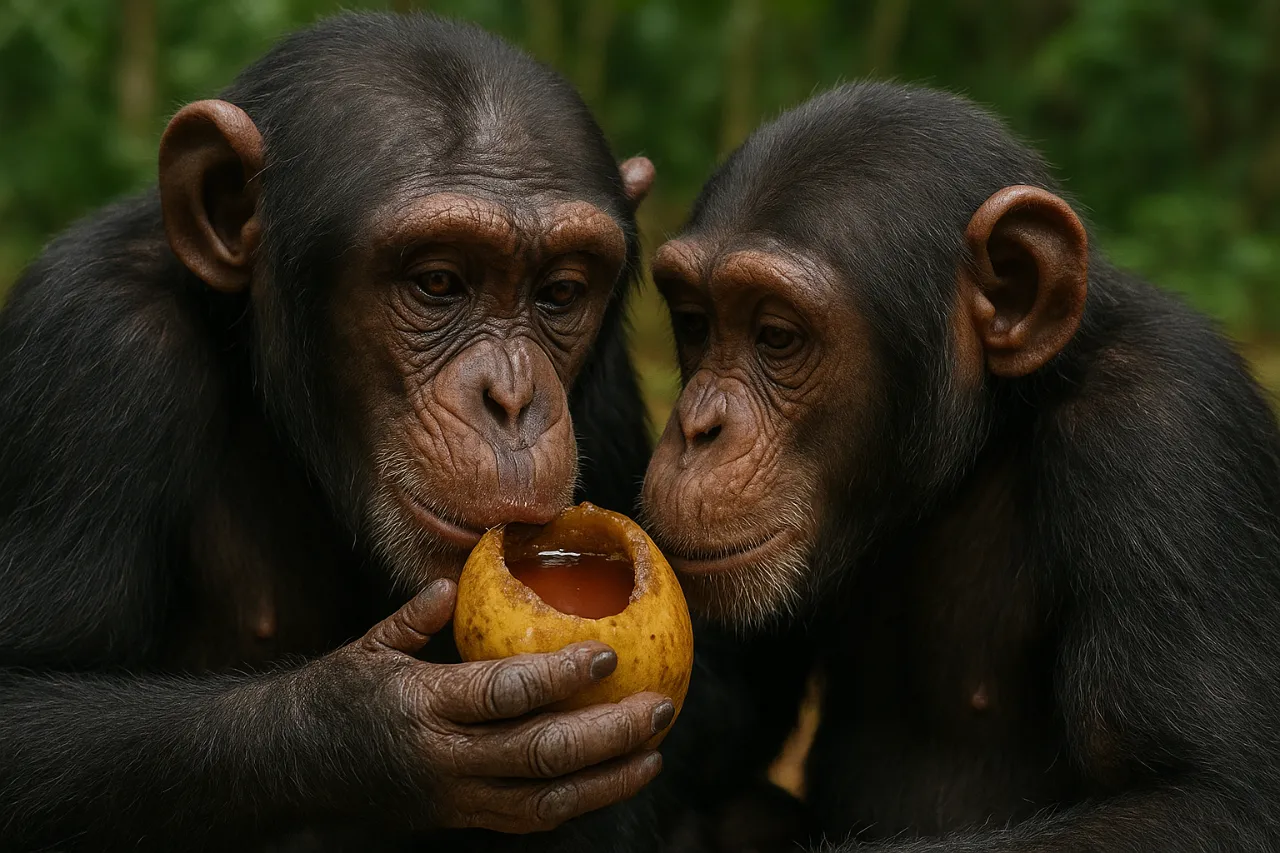
Source: Anna Bowland et al., Current Biology (21 April 2025); fieldwork in Cantanhez National Park, Guinea-Bissau.
Chimpanzee social bonding may have a surprising ingredient: naturally fermented fruit. A 2025 field study reports that wild chimpanzees eat fruit containing small amounts of ethanol and, more importantly, share it in social settings. For UPSC Anthropology Paper 1, it is a memorable case study in primate behaviour, diet and the evolutionary roots of human sociality.
Why this matters: it hints that the social use of food — even mildly alcoholic food — has deep evolutionary roots shared with our closest relatives.
Syllabus relevance: Anthropology Paper 1 — Primate behaviour and social organisation; diet; primatology.
Best use in answers: use it as a comparative example of commensality and bonding through shared resources, not as a claim about “drinking” animals.
What the researchers observed
In Cantanhez National Park, Anna Bowland and colleagues recorded chimpanzees feeding on fermented fruits that naturally contain ethanol. The feeding was frequently communal. Much as people share food and drink at feasts, the chimpanzees appeared to share these fruits in ways that reinforced group ties.
Bonding, not intoxication
The framing matters. The ethanol levels involved were low, and the chimpanzees never reached anything like heavy drunkenness. A few individuals showed mild effects — delaying nest building or engaging in playful behaviour — but activity stayed within normal social limits. In short, this is about sharing and cohesion, not inebriation.

The drunken monkey hypothesis
The finding connects to Robert Dudley’s “drunken monkey” hypothesis. This proposes that primate attraction to the smell and taste of ethanol is ancient, because low levels of alcohol signal ripe, calorie-rich fruit. On this view, a mild pull towards fermented fruit is an evolved foraging cue — and human alcohol use may be a late cultural elaboration of it.
Concept link
Ties primate diet to social behaviour and to the deep roots of human commensality (eating and sharing together). Frame it alongside food-sharing and reciprocity in comparative answers.
Anthropological significance
For anthropology, the value lies in the parallel. Just as communal eating and drinking strengthen human bonds, the chimpanzees show a comparable tendency. Consequently, the study weakens any sharp line between human and primate social behaviour and points to the shared evolutionary basis of bonding through food.
Use in answer writing: deploy it as a recent, vivid example of social bonding and diet in primates — carefully framed around commensality rather than alcohol.
Paper 1 link: Primate behaviour and social organisation; diet and feeding ecology; primatology.
Also read
• The Diet That Shaped Human Evolution
• Orangutans & Metabolic Flexibility
• Complete Anthropology Optional Guide
FAQ
Do chimpanzees get drunk? No. They consume only small amounts of naturally occurring ethanol and show, at most, mild effects.
What is the drunken monkey hypothesis? The idea that primates evolved an attraction to low levels of ethanol because it signals ripe, energy-rich fruit.
Collecting Paper 1 case studies?
Well-chosen primate examples lift Mains answers. Our complete Anthropology Optional guide shows how to use them well. Mentored by Vaid Sir; Anthropology specialists since 1985.
References
Bowland, A. et al. (2025). Current Biology. Dudley, R. — the “drunken monkey” hypothesis.