Early Humans Might Have Walked from Turkey to Mainland Europe

Evidence that early humans may have moved from Anatolia (Turkey) into the European mainland, adding to the picture of early human dispersal for UPSC Anthropology.
VAID'S ICS – Best UPSC Anthropology Coaching in Delhi Since 1985

Evidence that early humans may have moved from Anatolia (Turkey) into the European mainland, adding to the picture of early human dispersal for UPSC Anthropology.

Iberian cave art points to Neanderthal symbolism, while Sulawesi’s older art reflects early Homo sapiens narrative art — a UPSC Anthropology guide to the origins of symbolic behaviour.
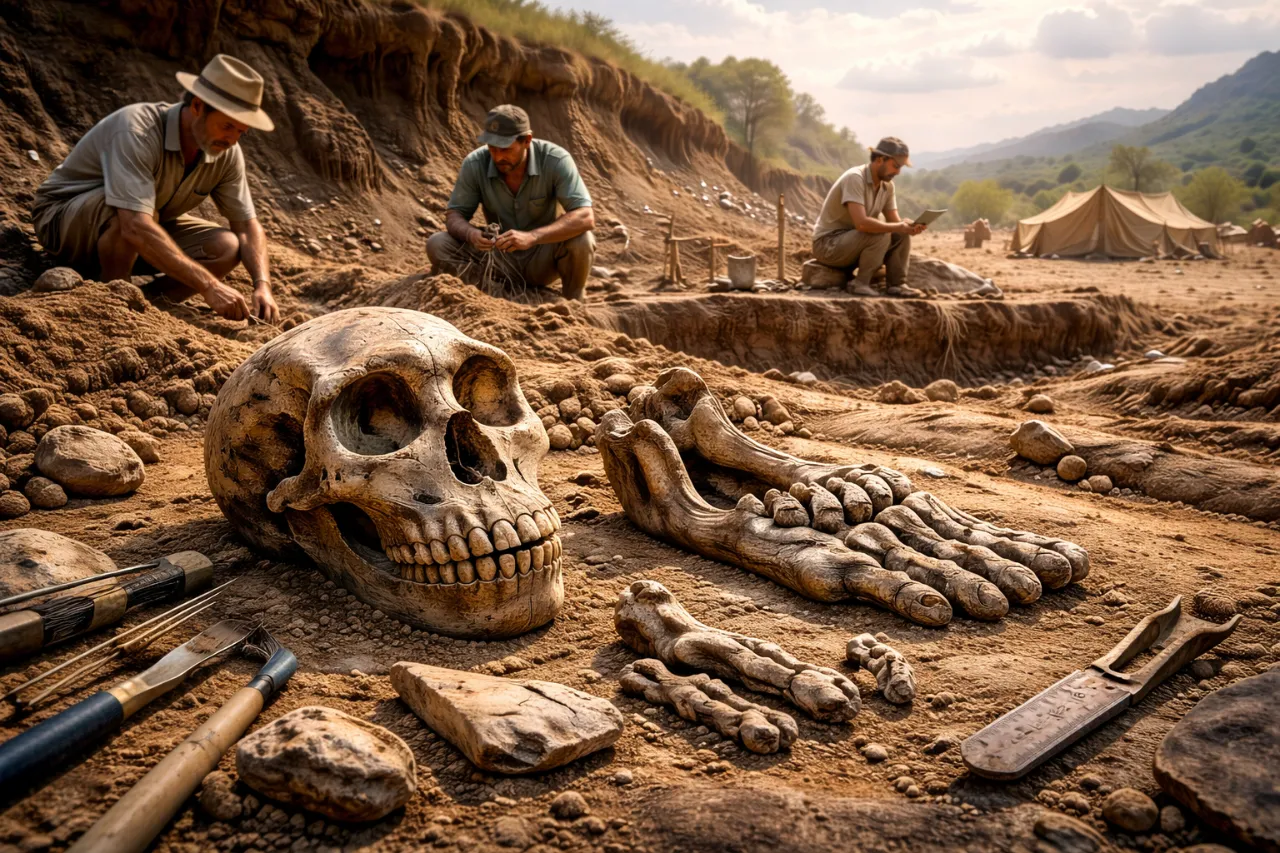
A newly described Australopithecus species from Ethiopia adds to early hominin diversity and the shape of the human family tree – for UPSC Anthropology.

A 2025 palaeoproteomics study used tooth-enamel proteins to identify the sex of an Australopithecus africanus fossil — key Paper 1 methods content for UPSC Anthropology.

A Scientific Reports study points to the Zagros Mountains as a contact zone where modern humans and Neanderthals met and interbred – key evidence for UPSC Anthropology.
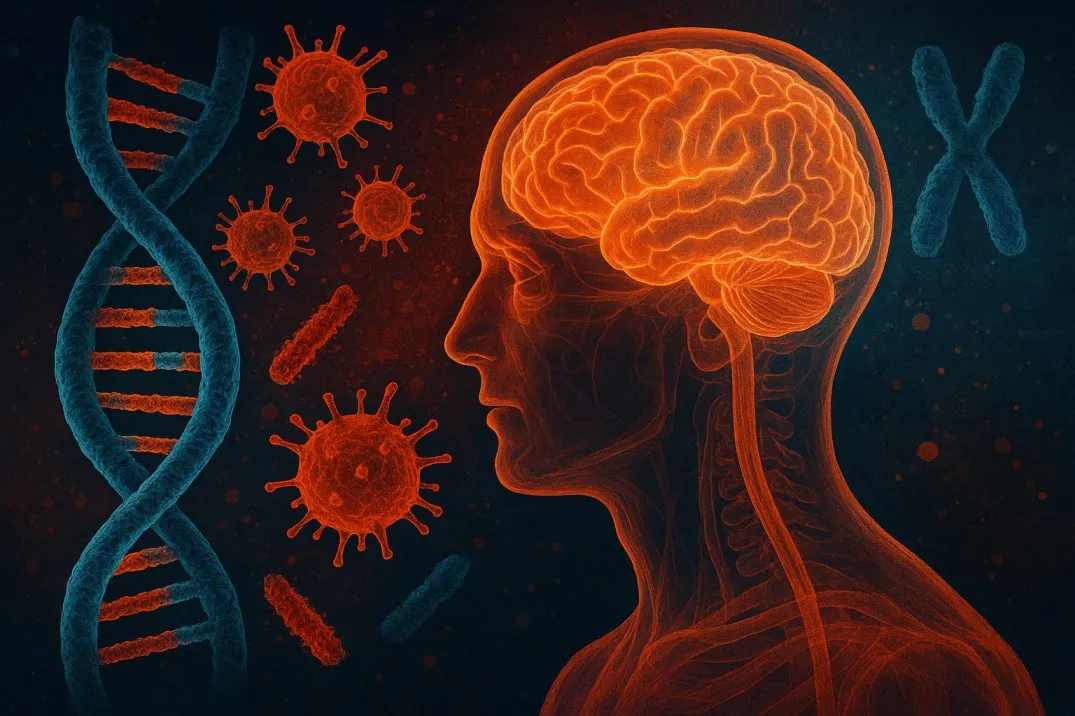
Ancient DNA studies link archaic genetic variants to modern psychiatric-disorder risk, a genetics and human-evolution theme for UPSC Anthropology.
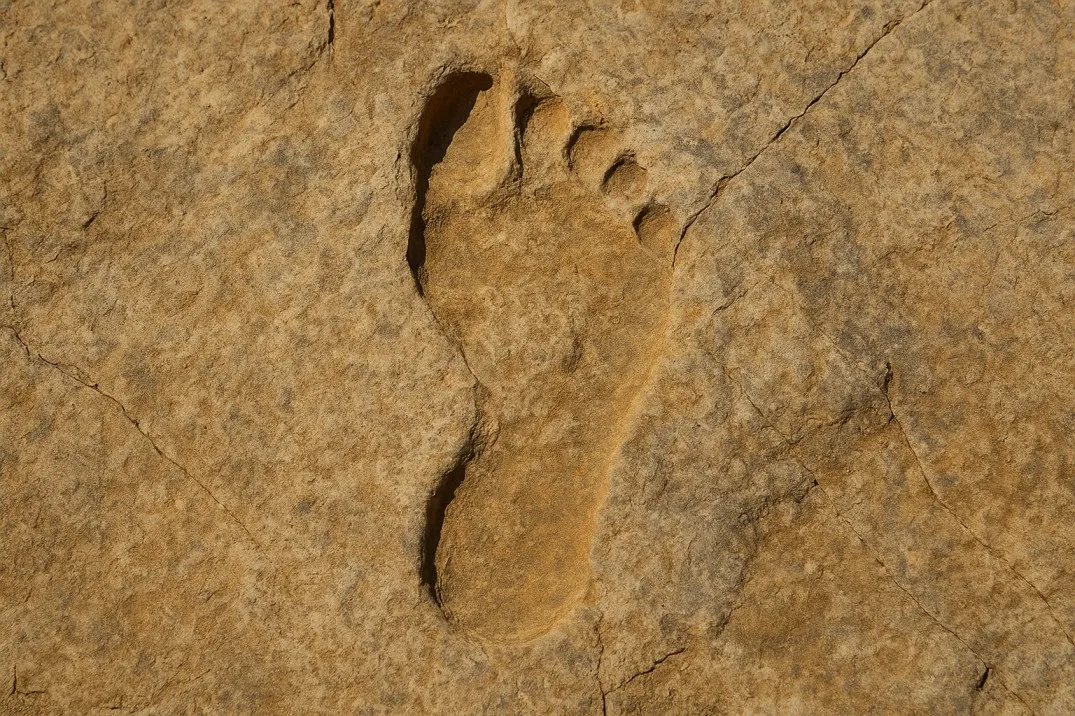
The 6-million-year-old Trachilos footprints from Crete suggest early bipedal hominins may have ranged beyond Africa, challenging the Africa-only account of human evolution.
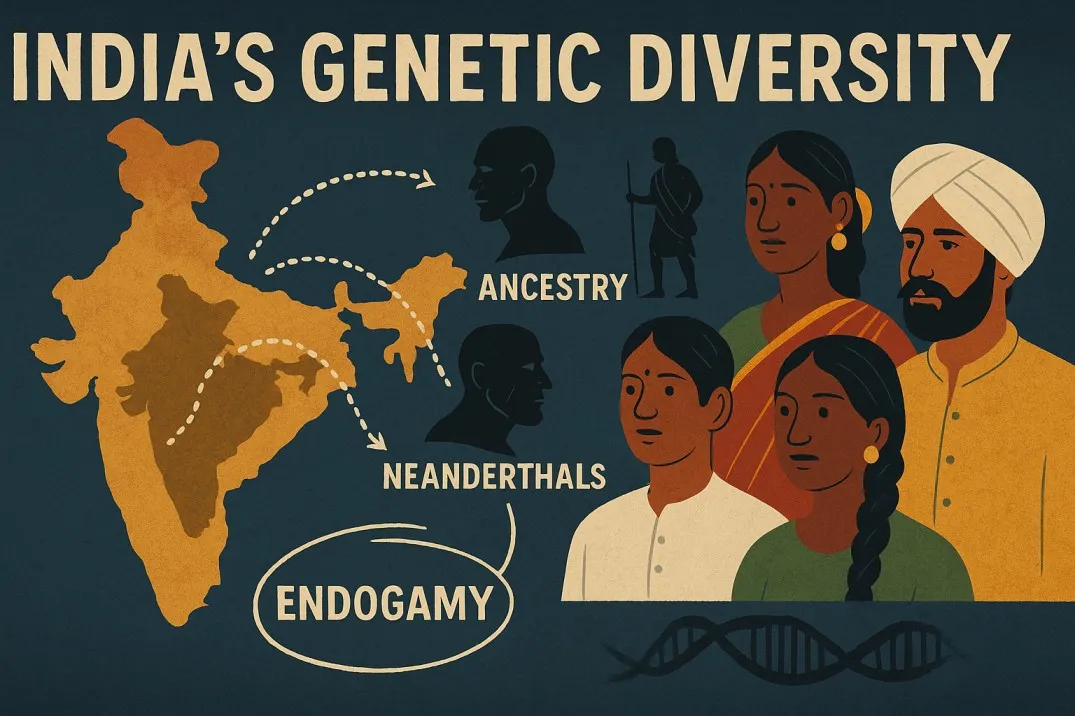
The genetic diversity of Indian populations reflects multiple ancestral groups and endogamy, a key theme in population genetics for UPSC Anthropology.
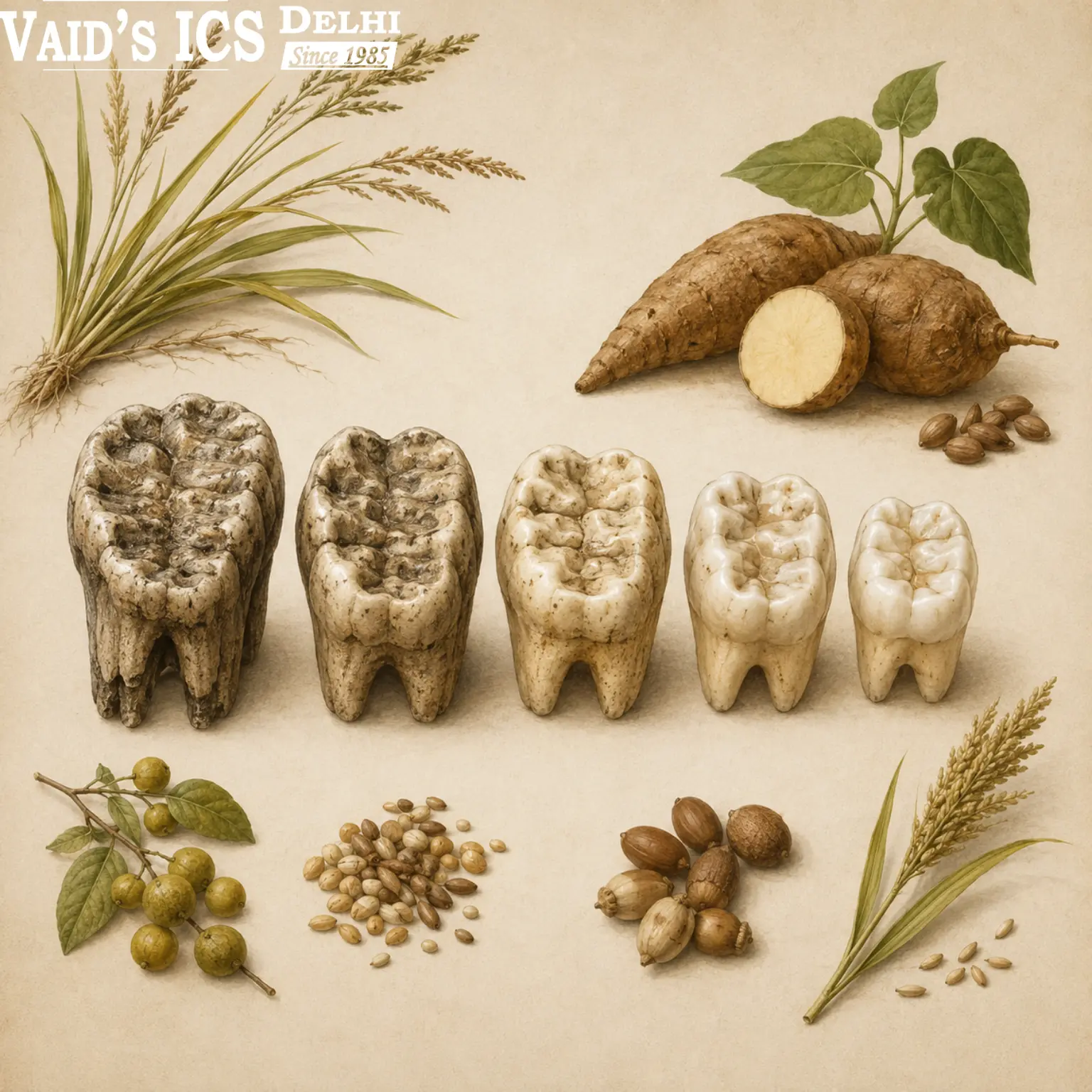
A 2025 Science study shows how shifting diets reshaped hominin teeth from Australopithecus to early Homo — key dental and dietary evidence for UPSC Anthropology Paper 1.
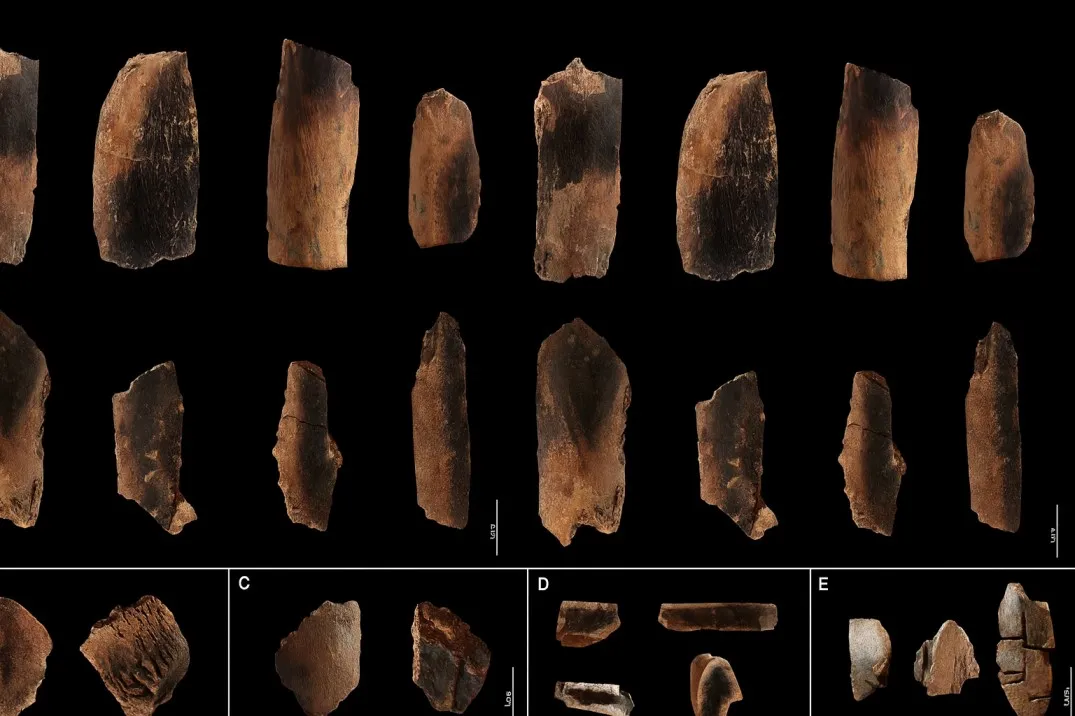
Evidence suggests early humans made controlled use of fire around a million years ago, with major implications for diet, cooking and human evolution.